
Chinese Classifiers: Precision and Poetry
Table of Contents
- I. Introduction: The Overlooked "Wisdom of Classification" in Chinese Grammar
- II. Deep Analysis: The Thousand-Year Bond Between "Pǐ" and the Horse
- III. The Beauty of Distinction: The Micro-World of "Tiáo," "Zhāng," and "Wèi">
- IV. The Evolution of Classifiers: From "Practicality" to "Aesthetics">
- V. Conclusion: Classifiers—The Unique Poetic Code of Chinese
- Frequently Asked Questions (FAQ)
I. Introduction: The Overlooked "Wisdom of Classification" in Chinese Grammar
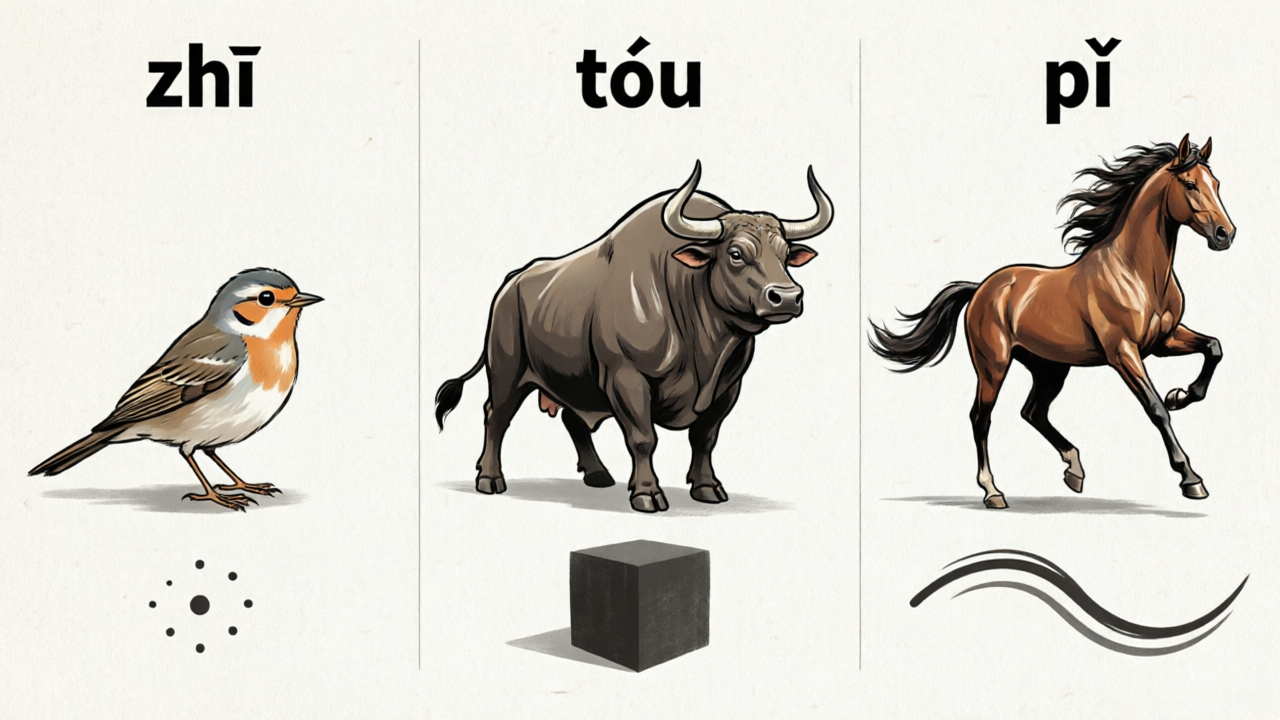
In the vast galaxy of human languages, Chinese shines with unique grammatical brilliance. Yet, one of its most fascinating yet easily overlooked corners for those who learn Chinese is the classifier (or measure word). When we casually say "yī pǐ mǎ" (一匹马 - one horse), few pause to ask: Why "pǐ" (匹)? Why can't we simply say "one horse" as in English, or treat the horse like a chicken ("yī zhī mǎ" - 一只马) or a cow ("yī tóu mǎ" - 一头马)? Behind this seemingly arbitrary pairing lies thousands of years of meticulous observation and classification wisdom regarding the myriad things of the world, a core concept in Chinese linguistics.
Unlike the common Indo-European structure of directly combining "numeral + noun," Mandarin Chinese forcibly inserts a "classifier" between them. This step is far from superfluous; it is the core muscle of Chinese logic. It compels the speaker to perform a rapid "3D modeling" of an object's shape, nature, function, and even emotional color before counting. If you say "yī zhī mǎ" (using the classifier zhī/只 typically for birds or small animals), the listener might envision a tiny, chirping creature, clashing with the horse's tall and vigorous image. If you say "yī tóu mǎ" (using the classifier tóu/头 for cattle/pigs), while the size fits, it inexplicably imbues this agile spirit with a sense of clumsiness and dullness, as if it were merely a lump of meat awaiting slaughter. Understanding these nuances is essential for mastering advanced Chinese grammar.
The existence of classifiers in Chinese transforms the counting process into an aesthetic one. It is not merely mathematical statistics but literary depiction. Every precise measure word is a key unlocking the door to the essence of things. It tells us that in the Chinese worldview, all things are not cold objects but living entities with unique personalities, forms, and dignity. From the winding flow of "tiáo" (条) to the unfolding spread of "zhāng" (张), to the solemn respect of "wèi" (位), Chinese classifiers construct a world full of texture. In this world, language is no longer a dry pile of symbols but a series of vivid paintings. When we re-examine these habitual pairings, we discover that Chinese precision lies precisely in this relentless pursuit of subtle distinctions. This "wisdom of classification" not only reflects the ancient ancestors' profound cognition of nature but also mirrors the delicate, implicit, and poetic thinking style of the Chinese nation. Today, let us look through the small incision of "one horse" to enter the marvelous world of measure words and explore the cultural genes and aesthetic logic hidden behind the words.
II. Deep Analysis: The Thousand-Year Bond Between "Pǐ" and the Horse
1. Etymological Tracing: From "Four Zhang of Silk" to "Strategic Asset" in Chinese Characters
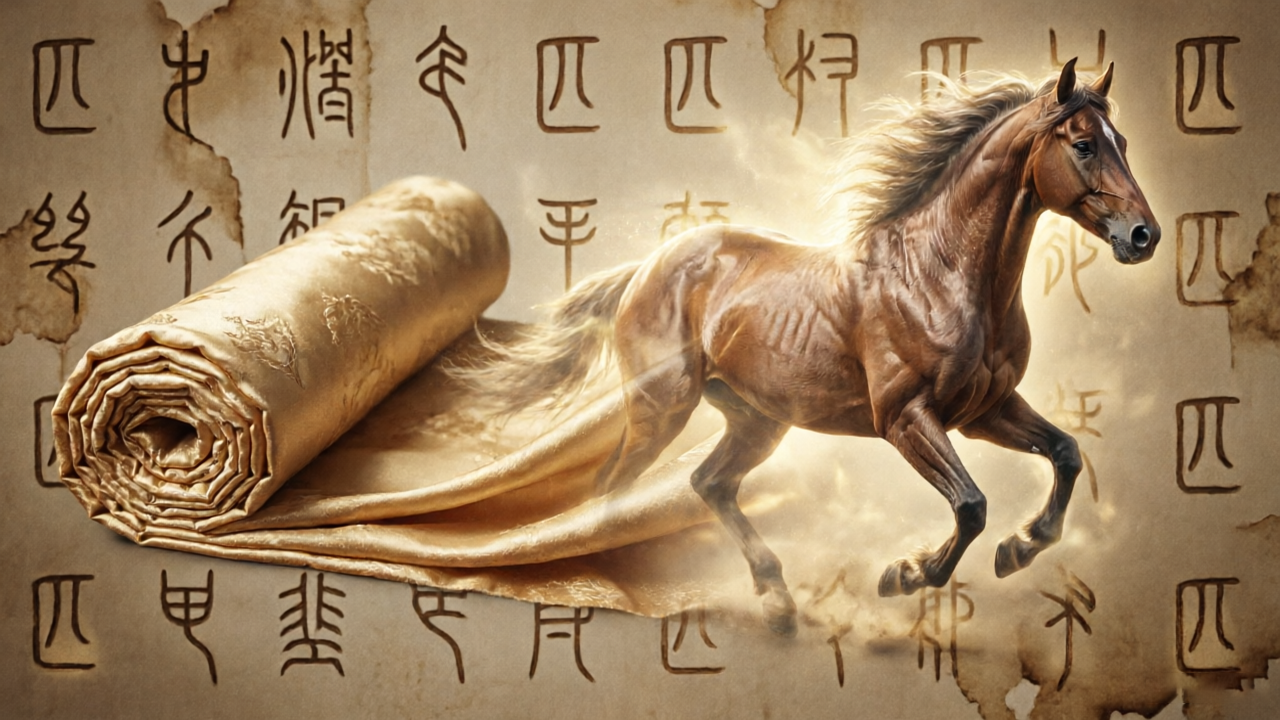
"Yī pǐ mǎ" (一匹马) rolls off the tongue with an open and vigorous rhythm. However, swapping "pǐ" (匹) for "zhī" (只) or "tóu" (头) instantly collapses the flavor of the phrase. Why is "pǐ" uniquely bound to the horse? We must return to the source of the character, a key aspect of Chinese character etymology. The Shuowen Jiezi states: "Pǐ means four zhang (a unit of length)." In Oracle Bone and Bronze scripts, the character 匹 vividly depicts the shape of folded silk or rolled ends, originally denoting a length unit for fabric (four zhang long). Mr. Xu Zhongshu, in his Dictionary of Oracle Bone Script, points out that "pǐ" resembles silk folded at both ends, sharing roots with "shū," both deriving from the measurement of cloth.
How did a unit for silk become the exclusive classifier for horses? This traces back to the ancient socio-economic structure. In the pre-Qin period, silk and horses were equally precious strategic assets and hard currency. Ancients often listed "bundles of silk" and "single horses" together as significant betrothal gifts or rewards. Comparing a horse to "pǐ" implied that horses, like exquisite silk, were valuable, integral, and rolled up as a whole. This analogy not only established the horse's noble status but also elevated it from ordinary "livestock" to the category of "valuable assets" in the underlying logic of Mandarin. Zheng Xuan, in his Commentary on the Rites of Zhou, explicitly recorded: "Generally, a 'pǐ' is four zhang long and two chi two cun wide," confirming its original meaning as a textile unit before extending to horses, showcasing the deep link between Chinese history and language.
2. Core Metaphor: The Way of "Matching" and Individual Integrity in Measure Words
Beyond value analogy, the deeper meaning of "pǐ" (匹) lies in "matching" and "integrity." In the ancient chariot warfare system, horses did not exist in isolation; they had to coordinate highly with the chariot and the warrior. Two horses driving side-by-side were called "pián," and four horses drawing a chariot were "sì." The horse and chariot had to be perfectly balanced and compatible to maximize combat effectiveness.
Here, a crucial linguistic distinction must be made to avoid a common misconception for students learning Chinese: In modern Chinese and most historical contexts, we never use "pǐ" as a direct classifier for humans. You cannot say "yī pǐ rén" (one pǐ person); doing so would be grammatically incorrect and deeply offensive, as it would reduce a human to the status of livestock. In the term "pǐ fū pǐ fù" (匹夫匹妇 - common men and women), "pǐ" functions as a morpheme within a compound noun, meaning "single," "solitary," or "matched (with a spouse)." It emphasizes the individuality of a complete social unit, not its usage as a standalone measure word.
However, the semantic root connects them profoundly. In "pǐ fū", the character "pǐ" underscores that even an ordinary person is a complete, independent unit within the social fabric. Similarly, when applied to horses, "pǐ" elevates the animal from being just one of a herd to being a distinct, standalone entity worthy of individual recognition. Inscriptions on the Shan Bo Zhong bell record "bì pǐ xiān wáng" (assisting and matching the former kings), where "pǐ" means to assist or match.
Applying this concept of "integrity and partnership" to horses implies that they were viewed as independent partners in battle, not mere labor forces. In contrast, "tóu" (头 - head) is mostly used for cows and pigs, focusing on their wholeness as food or labor, carrying a static, heavy, or even objectifying connotation. "Zhī" (只) originates from a hand catching a bird, emphasizing smallness and agility; using it for a horse seems frivolous and unworthy. Only "pǐ" contains both the tactical meaning of "pairing" (with the chariot) and the sense of "individual integrity" (as a single, significant unit), perfectly fitting the horse's core status in Chinese military history and social life. The horse was not just transport; it was the steed of gentlemen, the comrade of heroes, possessing an anthropomorphized independent personality. This nuance is vital for understanding the depth of Chinese culture.
3. Historical Selection: From "Hoof" and "Chariot-Unit" to the Fixation of "Pǐ"
The establishment of "pǐ" was not overnight but a long evolution of language. In pre-Qin literature, units for horses included "chéng" (乘 - a chariot unit of four horses) and "tí" (蹄 - based on body parts, e.g., hooves). For instance, Mencius mentions "horse hooves can tread on frost and snow," reflecting the thinking of using body parts to represent the whole. During the Warring States period, specialized characters with the "horse" radical even appeared to count horses. However, as Chinese language developed, usages that were too specific or limited were gradually eliminated. "Pǐ" won the fierce competition due to its unique cultural metaphor—emphasizing both the integrity of the horse (like a bolt of cloth) and its "matching" attribute in social function. Records of "four pǐ of horses" already appear in Western Zhou bronze inscriptions, marking the early fixation of this usage. Whenever we mention a horse, the word "pǐ" rings like a crisp hoofbeat, awakening imaginations of speed, strength, and loyalty, upholding the unique nobility and freedom of the horse in Chinese culture.
III. The Beauty of Distinction: The Micro-World of "Tiáo," "Zhāng," and "Wèi"
1. The Rhythm of "Tiáo": Linear Aesthetics and the Flow of Life in Mandarin
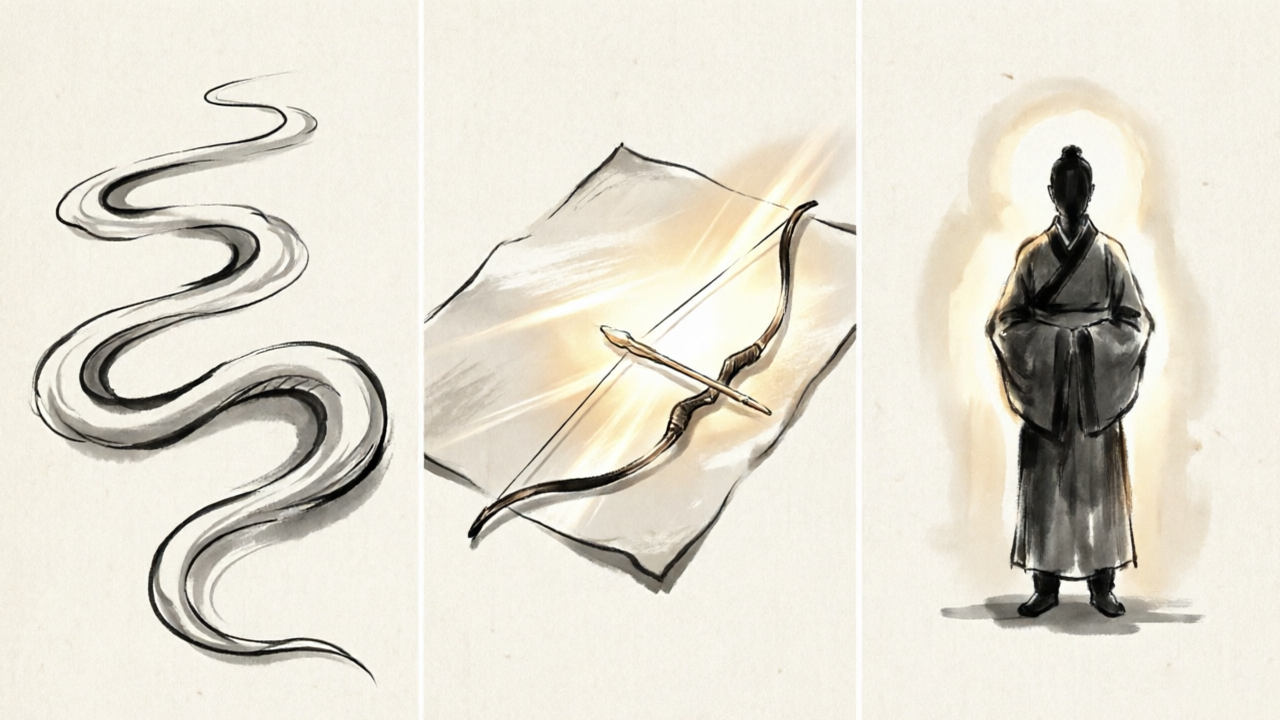
The character "tiáo" (条,originally written as 條) is defined in Shuowen Jiezi as "small branches," i.e., slender twigs. From this concrete image, "tiáo" rapidly extended to anything possessing long, thin, soft, and continuous characteristics, constructing a unique "linear aesthetics." We say "yī tiáo hé" (一条河 - a river) because river water winds and flows endlessly, endowing the river with the pulse of life; "yī tiáo lù" (一条路 - a road) because the road extends into the distance, holding the hope of exploration; "yī tiáo shé" (一条蛇 - a snake) or "yī tiáo yú" (一条鱼 - a fish) because their bodies are elongated, undulating like waves when moving, showcasing biological agility.
More wonderfully, "tiáo" crosses the boundary between the concrete and the abstract to measure intangible concepts, a fascinating feature of Chinese semantics. We often say "yī tiáo mìng" (一条命 - a life) or "yī tiáo hǎo hàn" (一条好汉 - a good fellow/hero). Why use "tiáo" for the intangible "life"? Scholars suggest ancients viewed life as a continuous trajectory, like a slender branch or a river, possessing continuity and fluidity. Life from birth to death is a line with a beginning and an end; thus, "tiáo" embodies a metaphor for the wholeness of life. "Yī tiáo hǎo hàn" summarizes a person's overall image (upright figure, resolute temperament), implying praise for their vitality. In classical novels like Water Margin, "tiáo" is frequently used for heroes. Notably, when used for people, "tiáo" often carries a rough, rugged commendation, emphasizing the integrity and prominence of character and spirit. Compared to the bland "gè" (个) or the overly solemn "wèi" (位), only "tiáo" perfectly conveys the rugged vitality of these grass-roots heroes, a key distinction in expressive Chinese.
2. The Tension of "Zhāng": Planar Expansion and Functional Bearing
The aesthetic feature of "zhāng" (张) lies in "tension" and "bearing." Its etymology traces back to Oracle Bone script, resembling a bow with an arrow, originally meaning "to draw a bowstring." Evolving from a verb, "zhāng" as a classifier is dedicated to objects that can be spread out, possess a large surface area, or need to be "opened" to be used. "Yī zhāng zhǐ" (一张纸 - a sheet of paper), thin and flat, bears text and thought; "yī zhāng zhuō zi" (一张桌子 - a table) provides a bearing plane, gathering the smoke and fire of human life; "yī zhāng chuáng" (一张床 - a bed) allows people to stretch out and place their dreams.
Interestingly, animal skins are also counted in "zhāng", such as "yī zhāng niú pí" (一张牛皮 - a cowhide). This is because in ancient leather making, peeled hides had to be forcefully stretched and laid flat to dry; this process is the embodiment of the action "zhāng". Without this action, the skin could not become usable material. Thus, "zhāng" carries a sense of spatial expansion, implying the object's functional attribute—whether for writing, placing, or resting, an expanded space is needed. It gives static objects the potential to be "opened," full of pragmatic wisdom. When we say "zhāng dēng jié cǎi" (张灯结彩 - to hang lanterns and decorate with colored silks), the word "zhāng" concretizes the festive atmosphere through the action of "spreading." Additionally, "zhāng" is often used for facial organs, like "yī zhāng zuǐ" (一张嘴 - a mouth), not only because of the shape but because the mouth's function lies in opening and closing for speech and eating, full of dynamic sensation. This illustrates the functional logic of Chinese measure words.
3. The Warmth of "Wèi": Social Roles and Humanistic Respect
"Wèi" (位) represents the highest embodiment of humanistic temperature in Chinese classifiers, a direct projection of social etiquette onto language. Unlike other measure words that mainly describe form, "wèi" purely points to social relationships and emotional attitudes. It is exclusively used for people, specifically those who are respected or hold specific social roles. We can say "yī wèi lǎo shī" (一位老师 - a teacher), "yī wèi kè rén" (一位客人 - a guest), or "yī wèi zhuān jiā" (一位专家 - an expert), but never "yī wèi xiǎo tōu" (一位小偷 - a thief) or "yī wèi huài rén" (一位坏人 - a bad person) unless being ironic. Misusing "wèi," such as saying "several Japanese invaders" or "a rapist" with this classifier, is not only grammatically wrong but creates absurd or offensive effects, as it equates to honoring villains. Understanding these rules is critical for cultural competence in Chinese.
The original meaning of "wèi" relates to the position where one stands, extending to seats and status. In Oracle Bone script, "wèi" and "lì" (to stand) shared the same form, simulating a person standing frontally, specifically referring to the ranks of ministers in the court. Later, the "person" radical was added to differentiate "wèi," specifically indicating the place where a person stands and the official ranks derived from it. Used as a classifier, it embodies the Confucian ethical order of "respecting teachers and valuing the Dao." Research suggests "wèi" as a classifier became widely used no earlier than the Ming Dynasty, sprouting and maturing during the Song and Yuan periods. When you use "wèi," you are not just counting; you are expressing respect and affirming the other's dignity. This usage imbues Chinese interpersonal communication with inherent humility and politeness, turning cold numerical counting into warm human interaction. In modern Chinese, despite the severe generalization of "gè" (个), people still subconsciously choose "wèi" in formal occasions, demonstrating the tenacious retention of cultural genes in language.
IV. The Evolution of Classifiers: From "Practicality" to "Aesthetics"
1. Historical Chaos: "Casual" Pairings in Qin and Han Bamboo Slips
Classifiers are not rigid rules frozen in time but a flowing river of history. In the pre-Qin and even Han periods, classifier usage was far less strict than today, filled with "pragmatic" arbitrariness. Archaeological discoveries of Qin and Han bamboo slips reveal pairings that baffle modern people. For instance, in some tax lists, donkey skins might be counted as "jié" (截 - cut), deer skins as "zhāng" (张), and horses sometimes by "tí" (蹄 - hoof), based on body parts. At that time, measure words were more products of temporary, practical needs or even dialect habits. As social economy developed and linguistic exchange frequentized, people began seeking more efficient and precise expressions. Those classifiers that best reflected the essential characteristics of things won out in the long elimination contest, gradually solidifying into standard Mandarin usage. For example, "pǐ" unified horse measurement because its meaning of "matching" best fit the horse's core status; "zhāng" ruled planar objects because its imagery of "opening" was the most generalizable.
2. Modern Crisis: The Generalization of "Gè" and the Degradation of Perception
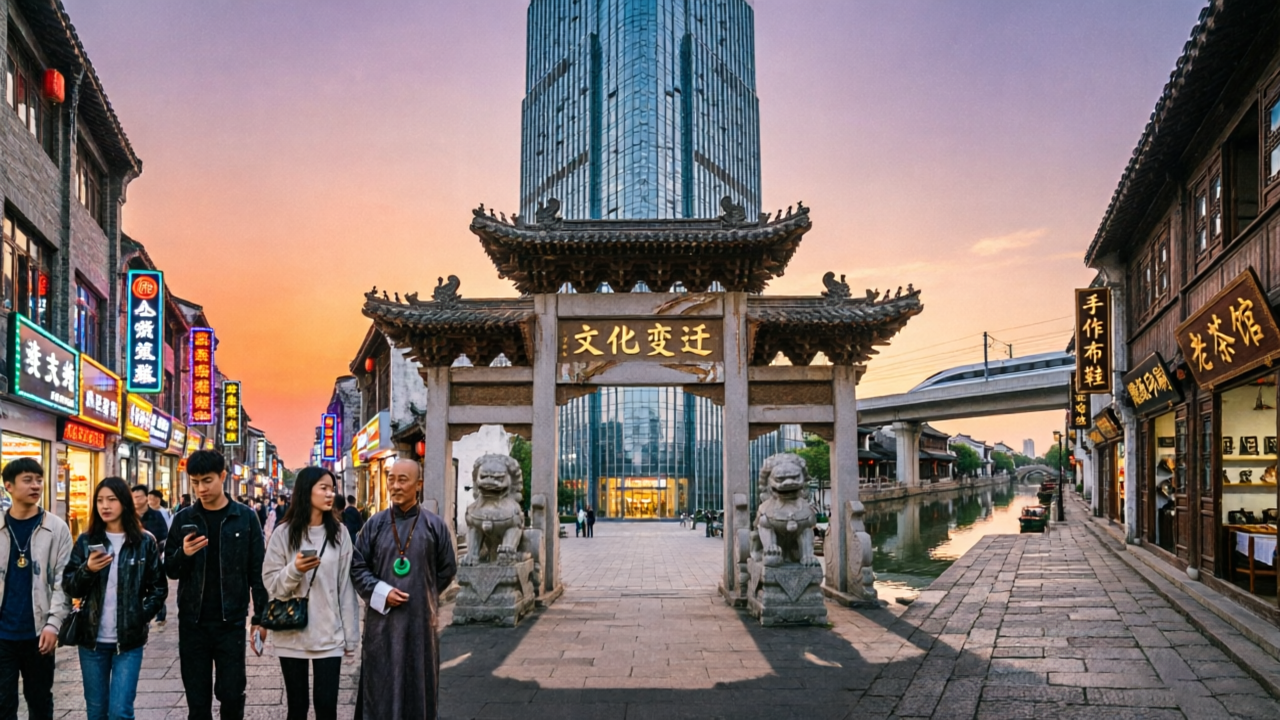
However, entering modern society, especially in spoken Chinese, we seem to be experiencing a crisis of "classifier simplification." The scope of the universal classifier "gè" (个) is expanding infinitely, a phenomenon linguists call the "generalization of gè." Studies show that in modern spoken Chinese and internet language, phrases like "yī gè mǎ" (一个马 - a horse), "yī gè gǒu" (一个狗 - a dog), and "yī gè lǎo shī" (一个老师 - a teacher) are increasingly common among the younger generation. While this trend improves communication efficiency, it comes at a huge aesthetic cost for the Chinese language.
The generalization of "gè" is essentially a degradation of linguistic perception. When we apply the omnipotent "gè" to everything, the uniqueness of things is flattened. Horses lose their spirit, dogs their agility, and teachers their dignity; everything becomes dry symbols. The rich sensory experiences—the horse's vigor, the river's flow, the paper's flatness, the person's dignity—become blurred under the shadow of "gè." Linguists point out that this generalization not only affects expressive precision but also weakens the cultivation of the image-based thinking unique to Chinese. For children and those learning Mandarin, over-reliance on "gè" causes them to lose the habit of observing forms and pondering natures before speaking. Furthermore, in recent years, "wèi" has been misused with neutral or derogatory nouns (e.g., "several suspects"), ignoring its coloristic meaning, which is another significant challenge for language standardization.
3. Cultural Persistence: Guarding the "Granularity" of Chinese Language
This evolution reminds us that the standardization of classifiers is not just a victory of grammar but of aesthetics. Every retained specialized measure word is a crystal of ancestral wisdom and a carrier of Chinese unique beauty. If we allow "gè" to swallow everything, Chinese will lose its most fascinating delicacy and texture. We must remain vigilant against this tendency of oversimplification, guarding that ancient precision and poetry while pursuing efficiency. After all, language is not just a tool for communication but the home of thought. Preserving rich classifiers means preserving our ability to perceive the diversity of the world, retaining the pictorial sense and artistic conception found in lines like "withered vines, old trees, and dusk crows." In the field of Chinese education, guiding students to appreciate the emotional colors and image characteristics of different measure words is crucial. Only by letting the new generation rediscover the charm of classifiers can this unique heritage be inherited. We should advocate using precise classifiers in formal writing and daily communication as much as possible, rejecting the laziness of the "omnipotent gè," allowing Chinese to maintain its unique "granularity" and vitality.
V. Conclusion: Classifiers—The Unique Poetic Code of Chinese
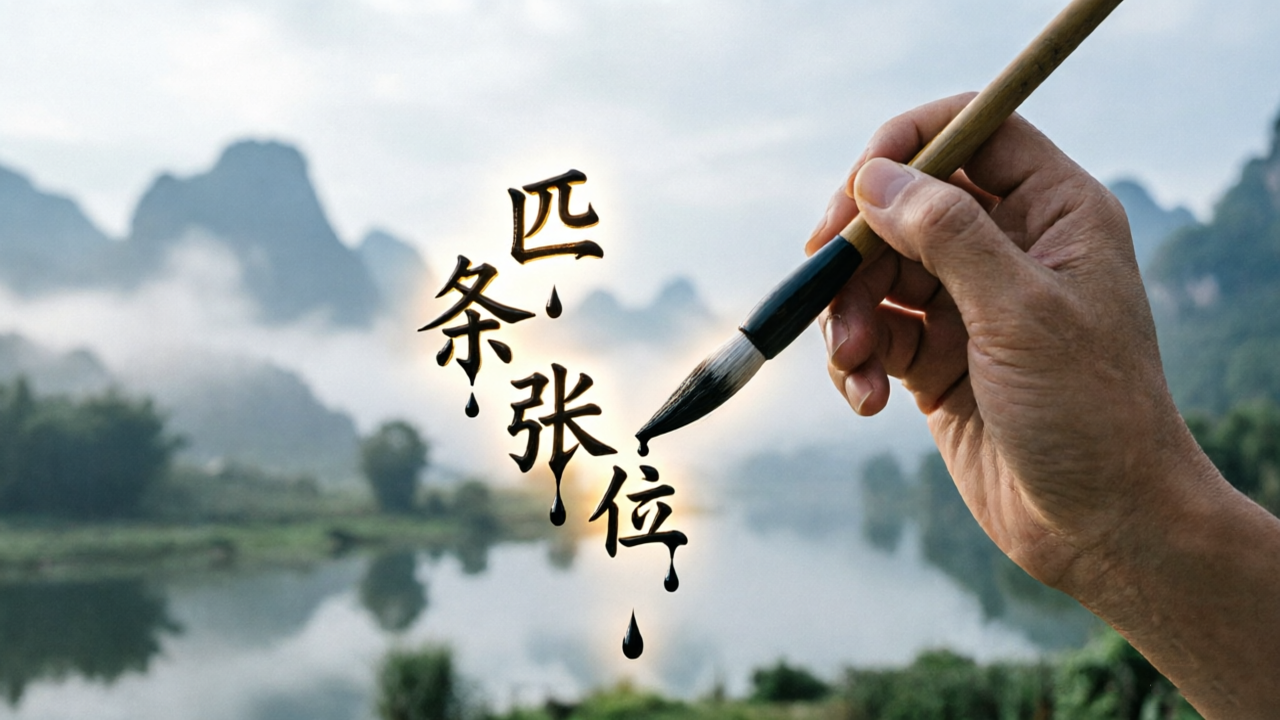
When we have traversed the marvelous world of Chinese classifiers, from the vigorous posture of "yī pǐ mǎ" (一匹马 - one horse) to the surging endlessness of "yī tiáo hé" (一条河 - one river), and then to the refined elegance of "yī wèi xiān sheng" (一位先生 - one gentleman), we easily discover: classifiers are indeed the unique poetic code of Chinese. They are not merely an indispensable link in grammatical structure but the concentrated embodiment of the Chinese nation's thinking style and aesthetic taste.
Among the world's many languages, few require people to conduct a "qualitative" thought process before counting, as Chinese grammar does. This mechanism forces us, when facing all things, to not merely view them as abstract collections of quantity but to attend to their shape, texture, dynamics, and emotional connection with us. Chinese measure words act like miniature lenses, filtering out rough appearances and extracting the most essential characteristics of things. They make language three-dimensional, vivid, and full of imagery. When we say "yī yè piān zhōu" (一叶扁舟 - a leaf-like small boat), the word "yè" (叶 - leaf) not only writes the smallness of the boat but also captures its light, floating posture on the water. When we say "yī mǒ xī yáng" (一抹夕阳 - a smear of sunset), the word "mǒ" (抹 - smear/wipe) not only describes the form of light but also endows the twilight with the gentle action of painting.
This precision and poetry are precious gifts bestowed by the Chinese language. It teaches us to survey this world with delicate and reverent eyes. Seeing the independence and nobility of "pǐ" (匹) in the horse, the unfolding and inclusiveness of "zhāng" (张) in paper, and the dignity and etiquette of "wèi" (位) in people. The existence of classifiers gives warmth to cold numbers and life to static nouns. It reminds us that all things have spirits and emotions; the key lies in whether we possess eyes to discover and a sensitive heart.
In the fast-paced modern life, may we not lose this treasure of language. Let us add more deliberation and polishing to classifiers in writing and conversation, and less perfunctoriness and laziness with the "omnipotent gè" (个). When we can accurately use every classifier, we are not just speaking correctly; we are inheriting a culture, performing an aesthetic, and embracing this colorful world in the unique way of Chinese. The marvelous world of Chinese classifiers awaits every attentive person to explore, to savor, and to find within it the unique spiritual belonging of the Chinese people.
Frequently Asked Questions (FAQ)
1. Why can’t I just use the universal classifier “gè” (个) for everything in Chinese?
While “gè” is the most common and versatile classifier in modern spoken Chinese, relying on it exclusively strips the language of its descriptive power and cultural nuance. Specific classifiers like “pǐ” for horses, “tiáo” for rivers, or “wèi” for respected people act as "miniature lenses" that instantly convey an object’s shape, nature, or social status. Using “gè” for everything flattens these distinctions, turning a vigorous horse or a respected teacher into a generic, dry symbol. Mastering specific classifiers is key to sounding natural, expressive, and culturally competent in advanced Chinese.
2. What is the historical reason why the horse uses the classifier “pǐ” (匹)?
The pairing of “pǐ” with horses dates back to the pre-Qin period when silk and horses were both considered precious strategic assets and forms of currency. The character “pǐ” originally described a bolt of folded silk (four zhang long). By applying this unit to horses, ancient Chinese elevated the animal from mere livestock to a valuable, integral asset comparable to fine silk. Furthermore, “pǐ” carries a connotation of "matching" or "pairing" (as in chariot warfare), implying that the horse is an independent, noble partner rather than just a beast of burden.
3. Is the classifier “wèi” (位) appropriate for counting every person?
No, “wèi” is not a neutral classifier; it carries a strong tone of respect and honor. It should only be used for people who hold a respected social role or whom you wish to honor, such as teachers, guests, experts, or elders (e.g., “yī wèi lǎo shī”). Using “wèi” for criminals, enemies, or people you intend to insult (e.g., “a thief” or “an invader”) is grammatically possible but socially absurd and offensive, as it ironically attributes dignity to them. For neutral or informal contexts, “gè” is safer, while “míng” (名) is often used for formal lists without emotional coloring.
4. How do Chinese classifiers reflect the ancient Chinese worldview?
Chinese classifiers reveal a worldview where objects are not seen as abstract quantities but as living entities with unique personalities, shapes, and functions. Unlike Indo-European languages that often count nouns directly, Chinese forces the speaker to perform a rapid "3D modeling" of the object before counting. Whether it’s the linear flow of a river (“tiáo”), the flat expansiveness of paper (“zhāng”), or the dignified stance of a person (“wèi”), classifiers embed an aesthetic and philosophical observation of nature directly into the grammar, turning simple counting into a poetic depiction of reality.
5. Are traditional Chinese classifiers disappearing in modern usage?
There is a noticeable trend called the "generalization of gè," where the universal classifier “gè” is increasingly replacing specific measure words in casual speech and internet language, especially among younger generations. While this improves communication efficiency, linguists argue it leads to a "degradation of perception," causing speakers to lose the habit of observing the subtle characteristics of things. However, specialized classifiers remain robust in formal writing, literature, and educated speech. Preserving them is seen not just as maintaining grammatical correctness, but as guarding the "granularity" and aesthetic beauty of the Chinese language.