
How to learn Chinese characters
Table of Contents [hide]
- Why Chinese Characters Are Different from an Alphabet
- The Chinese Writing System Explained: From Oracle Bones to Digital Screens
- How Chinese Characters Work: Meaning, Sound, and Structure
- Chinese Language and Characters: Why You Can’t Separate Them
- Learn Chinese Characters for Beginners: A Realistic First-Step Strategy
- Beyond Memorization: Techniques That Build Character Intuition
- Common Pitfalls—and How to Avoid Them
- From Recognition to Fluency: What Comes After the First 300 Characters
- Comparison of Key Features: Chinese Characters vs Alphabet-Based Systems
- FAQ
Why Chinese Characters Are Different from an Alphabet
Unlike English, Spanish, or Russian—which use alphabets where letters represent sounds—Chinese characters are logograms: each character primarily represents a *meaning* and a *syllable*, not just a sound. This is the core distinction at the heart of the Chinese writing system explained. In an alphabet, the word 'cat' breaks down into three phonetic units (c-a-t), each with no inherent meaning on its own. In contrast, the Chinese word for 'cat' is 猫 (māo)—a single character that conveys both the concept of a feline *and* its pronunciation in one compact unit. That’s how Chinese characters work: they’re self-contained units of meaning and sound, not building blocks of speech. For beginners trying to learn Chinese characters for beginners, this shift in thinking—from decoding sounds to recognizing holistic forms—is often the first major hurdle. You don’t ‘spell’ words in Mandarin; you select and combine characters based on meaning and grammatical function. The Chinese language and characters evolved over 3,000 years without adopting an alphabet, precisely because their structure serves semantic clarity across diverse dialects. While spoken Mandarin, Cantonese, or Shanghainese may pronounce the same character very differently (e.g., 人 is 'rén' in Mandarin but 'yan' in Cantonese), the written form remains identical—making the Chinese writing system uniquely unifying across China’s linguistic landscape. This also means that mastering pronunciation alone won’t let you read or write; you must internalize shape, stroke order, component parts (like radicals), and meaning simultaneously. Consider the character 好 (hǎo, 'good'): it combines 女 (nǚ, 'woman') and 子 (zǐ, 'child')—a visual etymology suggesting harmony or auspiciousness. An alphabet has no such built-in conceptual layer. And while English uses ~26 letters to generate infinite words, Chinese relies on roughly 3,500–4,000 high-frequency characters to cover 99% of daily written material—a manageable set once patterns emerge. Still, there’s no shortcut: unlike alphabetic systems where learning 20 letters unlocks basic reading, Chinese characters vs alphabet demand parallel development of visual memory, semantic association, and phonetic awareness. That’s why effective strategies for beginners include grouping characters by shared radicals (e.g., 氵for water-related meanings like 河 'river', 海 'sea', 泪 'tears'), practicing stroke order rigorously (it reinforces muscle memory and character recognition), and using spaced repetition with real-word context—not isolated glyphs.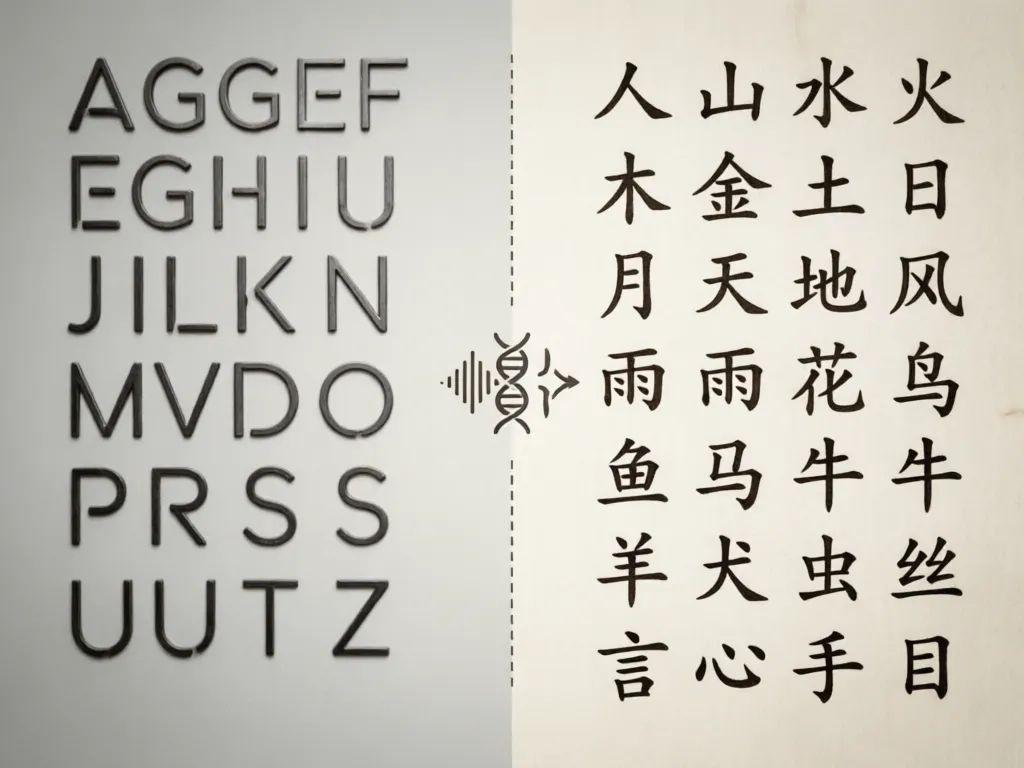 Recognizing this fundamental difference isn’t just academic—it reshapes your entire approach. You’re not learning a code for speech; you’re acquiring a visual-semantic toolkit. That’s why Mandarin language basics emphasize character literacy *alongside* pinyin (the Romanized pronunciation aid), never as a substitute. Pinyin helps bridge pronunciation, but it fades from textbooks after early stages—because fluency requires reading the characters themselves. Embracing this logographic logic unlocks deeper cultural insight, faster reading comprehension, and long-term retention. It’s not harder—it’s different. And understanding *why* is the first, indispensable step in learning Chinese characters.
The Chinese Writing System Explained: From Oracle Bones to Digital Screens
The Chinese writing system explained is a story of remarkable continuity and quiet revolution—spanning over 3,000 years without ever abandoning its core logic. Unlike alphabetic systems, where letters represent sounds, Chinese characters vs alphabet reveals a fundamentally different architecture: each character encodes meaning *and* sound (often partially), functioning as a self-contained unit of language. This logographic nature allowed the script to unify diverse spoken dialects—from Cantonese to Mandarin—long before standardized pronunciation existed. The earliest confirmed examples appear on oracle bones (c. 1200 BCE) from the Shang Dynasty: inscriptions carved into turtle plastrons and ox scapulae for divination. These early forms were pictographic and highly stylized, capturing objects like ‘sun’ (日), ‘tree’ (木), or ‘person’ (人) with striking visual fidelity. As writing moved onto bronze vessels and bamboo strips, scripts evolved toward greater efficiency: the ornate, symmetrical seal script (Qin Dynasty, 221–206 BCE) standardized character forms across newly unified China; clerical script (Han Dynasty, 206 BCE–220 CE) introduced the distinctive ‘silkworm head and wild goose tail’ brushstrokes, enabling faster ink-on-paper writing. Over centuries, regular script (kǎishū) emerged—the clear, balanced form still taught in schools today—and later, cursive and semi-cursive variants prioritized speed over legibility. Crucially, the system never ‘rebooted’; instead, it layered adaptations onto ancient foundations. Even modern simplified characters—introduced in the 1950s to increase literacy—retain the semantic components (radicals) and phonetic clues of their traditional counterparts. For example, the character for ‘language’ (语 / yǔ) keeps the ‘speech’ radical (讠) and the phonetic element (吾 / wú), preserving both meaning and sound logic. This structural consistency is why learners can trace etymologies across millennia—and why understanding how Chinese characters work unlocks deeper memory and pattern recognition. When you learn Chinese characters for beginners, you’re not memorizing arbitrary symbols; you’re engaging with a living archive. A single character like ‘mother’ (妈 / mā) combines the ‘female’ radical (女) with the phonetic ‘horse’ (马 / mǎ)—a clue that helps recall both meaning and pronunciation. That same radical appears in ‘sister’ (姐), ‘aunt’ (姨), and ‘marriage’ (婚), revealing conceptual links no alphabet could encode so compactly. Today’s digital screens render these characters with pixel-perfect fidelity, yet the underlying principles remain unchanged: stroke order matters for legibility and learning; radicals guide dictionary lookup; and phonetic components scaffold pronunciation—even in Mandarin language basics.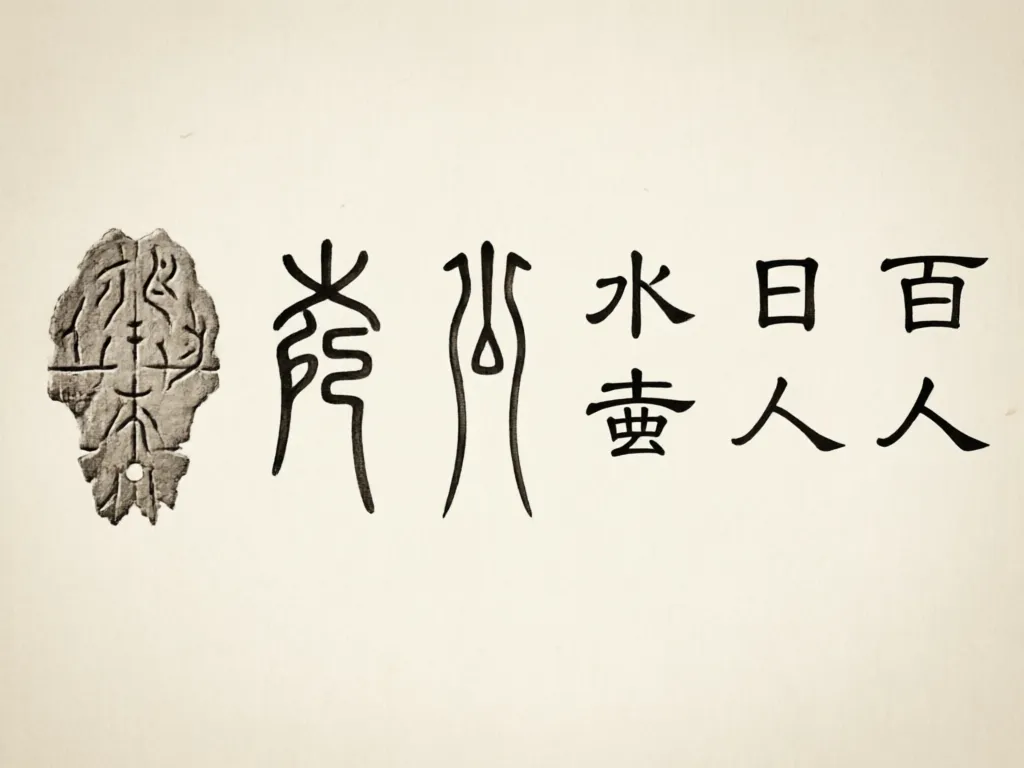
How Chinese Characters Work: Meaning, Sound, and Structure
Chinese characters aren’t random symbols—they’re intelligently engineered units where meaning, sound, and structure work together. Unlike alphabetic systems—where letters represent sounds and combine to form words—the Chinese writing system explained through characters relies on three core functional elements: radicals, phonetic components, and stroke order. Understanding how Chinese characters work unlocks efficient learning, especially for beginners aiming to learn Chinese characters for beginners. First, radicals (often on the left or top) act as semantic anchors, offering a broad clue about meaning—like 氵(water) in 河 (river), 海 (sea), or 泡 (bubble). There are 214 traditional radicals, but just 50 appear in over 80% of common characters; mastering these gives immediate context. Second, phonetic components (typically on the right or bottom) provide pronunciation hints—e.g., 马 (mǎ, “horse”) appears in 妈 (mā, “mom”), 麻 (má, “hemp”), and 吗 (ma, question particle), sharing similar initial consonants and tones. While not perfect—due to historical sound shifts—phonetics help learners decode unfamiliar characters and reinforce Mandarin language basics like tone patterns and syllable structure. Third, stroke order isn’t arbitrary calligraphy—it’s cognitive scaffolding. Writing characters in the correct sequence (top-to-bottom, left-to-right, horizontal before vertical) builds muscle memory, improves recognition speed, and reduces errors. For example, writing 你 (nǐ, “you”) with its correct 7-stroke sequence reinforces its component parts (亻+ 尔) and distinguishes it from look-alikes like 他 (tā, “he”). Crucially, Chinese characters vs alphabet isn’t a comparison of ‘better’ or ‘worse’—it’s about different design philosophies: alphabets prioritize phonetic efficiency across languages; the Chinese writing system prioritizes cross-dialectal meaning stability. A Cantonese speaker and a Mandarin speaker may pronounce the same character differently—but they read and understand it identically. This makes characters uniquely resilient across the Chinese language and characters landscape. To start, pick 10 high-frequency characters (e.g., 人, 大, 子, 日, 月, 山, 水, 火, 木, 金), identify their radicals and phonetics, practice them with timed stroke-order drills, and use flashcards that highlight both meaning and sound clues. Avoid rote copying—instead, ask: ‘What does the radical suggest? What might the phonetic sound like?’ This active decoding transforms memorization into pattern recognition.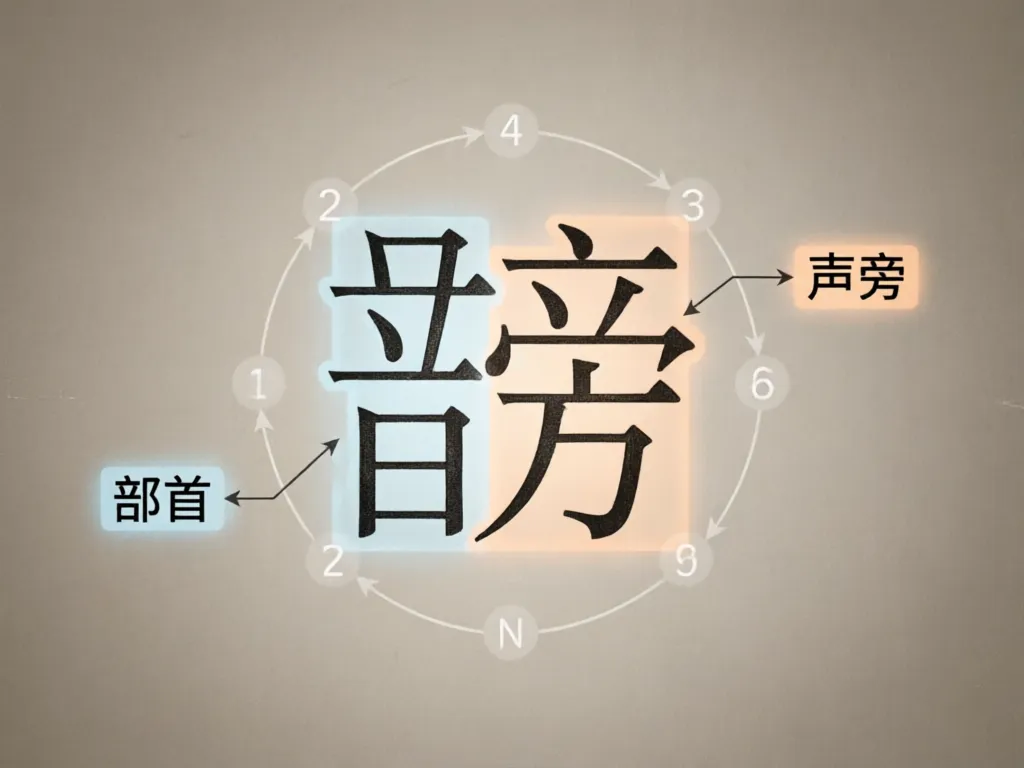
Chinese Language and Characters: Why You Can’t Separate Them
Chinese language and characters are not two separate skills to master—they’re interwoven at every level of Mandarin language basics. Unlike alphabetic systems where letters combine phonetically to form words, the Chinese writing system explained through characters means each symbol carries meaning, sound, and grammatical function simultaneously. A single character like ‘好’ (hǎo) isn’t just ‘good’—it’s a lexical unit that appears in compounds (e.g., ‘好人’ rén—‘good person’), functions as an adjective or verb depending on context, and changes syntactic behavior when paired with particles like ‘了’ (le) or ‘很’ (hěn). This is why beginners who try to ‘learn Chinese characters for beginners’ as isolated flashcards often stall: they’re memorizing shapes without grasping how Chinese characters work in real linguistic contexts. For example, the character ‘打’ (dǎ) means ‘to hit’, but in over 20 common phrases—like ‘打电话’ (dǎ diànhuà, ‘to make a phone call’) or ‘打篮球’ (dǎ lánqiú, ‘to play basketball’)—its meaning shifts entirely based on what follows. Without knowing the grammar governing these combinations, learners misinterpret usage or produce unnatural speech. Tone comprehension is equally inseparable: ‘mā’ (mother), ‘má’ (hemp), ‘mǎ’ (horse), and ‘mà’ (scold) are four distinct words sharing the same base character shape in many cases—but only differentiated by tone. Ignoring tones while studying characters leads directly to confusion in listening and speaking. Moreover, Chinese characters vs alphabet systems differ fundamentally in information density: one character conveys what English often expresses with multiple morphemes (e.g., ‘火车’ huǒchē = ‘fire vehicle’ → ‘train’), so vocabulary expansion depends on recognizing character components (radicals, phonetic elements) and their recurring patterns—not rote letter-sound mapping. When you encounter ‘清’ (qīng, ‘clear’), its water radical (氵) signals semantic association with liquids or purity, while its right-side component ‘青’ (qīng, ‘blue/green’) hints at pronunciation—a built-in mnemonic that supports both reading and memory. That’s why effective study must integrate character recognition with pinyin practice, tone drills, sentence construction, and listening exposure from day one. Relying solely on apps that drill characters in isolation—or worse, skipping character study altogether in favor of pinyin-only input—undermines long-term fluency. You’ll struggle to read signs, menus, or WeChat messages; you’ll mispronounce words because you can’t map written forms to sounds reliably; and you’ll fail to grasp subtle grammatical distinctions encoded in character choice (e.g., ‘做’ zuò vs. ‘作’ zuò—both pronounced identically but used in different collocations and registers). To build true proficiency, treat each character as a living node in a web of sound, meaning, grammar, and culture—not as a static glyph to be copied. Start small: pick five high-frequency characters per week, learn their standard pronunciations *with tones*, study two authentic phrases using each, and write sentences applying them in context. That’s how Chinese language and characters become inseparable—and indispensable—to your Mandarin journey.
Learn Chinese Characters for Beginners: A Realistic First-Step Strategy
Starting to learn Chinese characters for beginners can feel overwhelming—especially when you’re used to an alphabet-based system. Unlike the Mandarin language basics of English or Spanish, the Chinese writing system explained isn’t built on 26 letters representing sounds; instead, it’s a logographic system where each character conveys meaning and often hints at pronunciation. Chinese characters vs alphabet is a fundamental distinction: there’s no ‘spelling’ in the Western sense, and no phonetic decoding shortcut for most learners early on. So your first step isn’t memorizing thousands of characters—it’s building a realistic, scaffolded foundation. Begin with the first 50 high-frequency characters—the ones that appear in over 40% of everyday written Chinese language and characters. These include essentials like 的 (de, possessive marker), 是 (shì, “to be”), 不 (bù, “not”), 了 (le, aspect particle), and common nouns like 人 (rén, “person”), 大 (dà, “big”), and 小 (xiǎo, “small”). Prioritize characters that function as grammatical glue *and* concrete vocabulary—this dual utility accelerates comprehension far more than learning rare or purely pictorial characters first. Use a three-layer study method: (1) Meaning + core pronunciation (pinyin), (2) Stroke order animation or guided tracing (not just copying), and (3) One high-utility word or phrase per character—e.g., for 好 (hǎo, “good”), learn 好的 (hǎo de, “okay”) and 我很好 (wǒ hěn hǎo, “I’m fine”). Skip dictionary definitions; focus on functional usage. Avoid flashcards with isolated characters or obscure compounds—context is non-negotiable from Day One. Resist the urge to ‘learn 20 characters a day.’ Cognitive science shows retention plummets beyond 5–7 new characters weekly for absolute beginners. Instead, aim for mastery—not exposure: write each of your 50 characters 10 times *with correct stroke order*, say its meaning and pinyin aloud, then use it in two original sentences (even if simple: “这是我的书” — “This is my book”). Review daily using spaced repetition—but only the characters you’ve *practiced*, not just seen. Also, demystify how Chinese characters work by learning just four foundational components early: radicals like 亻(person), 氵(water), 扌(hand), and 讠(speech). These aren’t decorative—they signal meaning categories and appear across dozens of characters (e.g., 说 shuō “to speak”, 话 huà “speech”, 语 yǔ “language” all contain 讠). Recognizing them helps you group, infer, and remember—not guess. Finally, pair character study with listening and speaking *from week one*. Read aloud the pinyin and English translations of your 50-character list. Hear native audio. Say the words—even silently—while writing. This multisensory loop wires the brain for long-term recall far better than silent drilling alone. Remember: your goal isn’t fluency in 30 days. It’s building a stable, expandable base—where every character you learn unlocks patterns, not just isolated symbols. With this approach, you’ll move from ‘How do I even start?’ to ‘I recognize that character in the wild!’ within weeks—and that momentum is your most powerful tool.
Beyond Memorization: Techniques That Build Character Intuition
Memorizing Chinese characters by rote—writing each one 20 times or drilling isolated flashcards—is inefficient and rarely leads to lasting fluency. The Chinese writing system explained through cognitive science reveals that long-term retention hinges on *how* you engage with characters, not just how often. Start with spaced repetition (SRS), an evidence-based technique proven to strengthen memory by reviewing characters just before you’re likely to forget them. Apps like Anki or Skritter use algorithms that adapt to your recall accuracy, pushing familiar characters further apart in time while prioritizing those you struggle with—turning passive review into active, durable learning. Pair SRS with mnemonic strategies: link a character’s form, sound, and meaning using vivid, personal stories. For example, the character 好 (hǎo, “good”) combines 女 (nǚ, “woman”) and 子 (zǐ, “child”)—imagine “a woman and child together = good.” These associations leverage the brain’s natural preference for narrative and imagery, especially helpful when you learn Chinese characters for beginners who lack linguistic scaffolding. Crucially, handwriting practice isn’t outdated—it’s neurologically essential. Research shows that physically forming characters activates motor memory circuits, deepening recognition and recall far more than typing or passive viewing. Spend 5–10 minutes daily writing characters slowly, focusing on stroke order and structure; this builds muscle memory and reinforces component awareness (e.g., recognizing that 河 “river” contains 氵“water” on the left and 可 “can” on the right). Understanding how Chinese characters work also means grasping their logographic logic: unlike an alphabet where letters represent sounds, most Chinese characters encode both meaning and pronunciation through components (radicals and phonetics). This makes the Chinese language and characters highly systematic—once you know ~100 common radicals, you can decode thousands of characters. Finally, avoid treating Chinese characters vs alphabet as opposites; instead, see them as complementary systems. Mandarin language basics include mastering pinyin for pronunciation *alongside* character study—not as substitutes, but as interlocking tools. Prioritize high-frequency characters first (the top 500 cover ~75% of written texts), and integrate them immediately into simple sentences. Consistency beats intensity: 15 focused minutes daily with SRS, mnemonics, and handwriting yields stronger results than 2-hour weekly cram sessions.Common Pitfalls—and How to Avoid Them
Beginners diving into the Chinese language and characters often stumble over the same few foundational missteps—missteps that slow progress, breed frustration, and sometimes cement bad habits early on. One of the most pervasive errors is treating Mandarin like an alphabet-based language: learners try to ‘sound out’ characters as if they were phonetic syllables, ignoring tones entirely. But the Chinese writing system explained simply reveals that tones are non-negotiable—they’re part of the word’s identity. Saying ‘mā’ (mother) with a falling tone (mà) means ‘scold’; skipping or flattening tones isn’t just ‘accent’—it’s semantic sabotage. Fix this by drilling tone pairs from Day 1: use apps with real-time pitch visualization, record yourself against native audio, and practice minimal pairs (e.g., bā/bá/bǎ/bà) *before* adding vocabulary. Another frequent pitfall is neglecting radicals—the building blocks of Chinese characters. Many beginners memorize characters as isolated shapes, like passwords, rather than understanding how radicals signal meaning or pronunciation. For example, the water radical (氵) appears in characters related to liquids (e.g., 河 ‘river’, 泡 ‘bubble’), while the ‘speech’ radical (讠) flags words about language (e.g., 说 ‘to speak’, 论 ‘discussion’). Skipping radicals makes learning Chinese characters for beginners exponentially harder—and far less scalable. Instead, study 10–15 high-frequency radicals first (e.g., 人, 心, 手, 日, 月), then actively deconstruct new characters using them. Flashcards should show the radical + meaning + 2–3 example characters—not just the whole character and its pinyin. A third trap is blurring simplified and traditional forms without intention. While mainland China uses simplified characters (e.g., 国 for ‘country’), Taiwan and Hong Kong use traditional ones (國). Confusing them mid-study—like writing 体 (simplified) when your textbook teaches 體 (traditional)—creates inconsistency in handwriting, reading, and digital input. Clarify your goal upfront: Are you aiming for mainland Mandarin proficiency? Then commit to simplified *and* learn the official PRC stroke order rules. Studying both systems simultaneously before mastering one dilutes focus. Use tools like Skritter or Pleco that let you toggle display modes—but only after you’ve solidified one set. Finally, many assume Chinese characters vs alphabet means ‘no phonetics at all.’ That’s false: ~80% of characters contain a phonetic component (e.g., 清 qīng shares the ‘qing’ sound with 情 qíng and 请 qǐng). Ignoring these patterns forfeits a powerful memory anchor. When learning how Chinese characters work, treat phonetic components as clues—not guarantees—but ones worth noting. Avoiding these pitfalls isn’t about perfection—it’s about designing smarter habits. Prioritize tones before vocabulary, decode radicals before rote copying, choose one script and stick to it, and leverage phonetic hints deliberately. These adjustments transform the Mandarin language basics from overwhelming to intelligible—and make learning Chinese characters for beginners not just possible, but deeply rewarding.From Recognition to Fluency: What Comes After the First 300 Characters
Reaching 300 Chinese characters is a major milestone—but it’s not the finish line. It’s the launchpad. At this stage, you’ve built foundational recognition for high-frequency characters like 的 (de), 是 (shì), and 人 (rén), and you can likely identify radicals and basic components. Now the real work begins: shifting from isolated character recognition to functional literacy in the Chinese language and characters. The Chinese writing system explained through rote memorization alone won’t carry you forward; instead, focus on *how Chinese characters work* as building blocks of meaning. Most modern Mandarin words are compounds—two or more characters fused into a single lexical unit (e.g., 电话 diànhuà = 'electric speech' → 'telephone'). Start actively grouping characters by semantic field (food, travel, emotions) and practice forming common two-character combinations. Use flashcards with example words—not just definitions—and prioritize words you’ll actually encounter: 咖啡 (kāfēi), 地铁 (dìtiě), 天气 (tiānqì). This bridges the gap between learning individual glyphs and grasping Mandarin language basics in context. Next, move deliberately into sentence-level practice. Don’t wait until you ‘know enough’—start reading simple, graded sentences *now*. Use beginner readers with pinyin and English glosses, but cover the pinyin after your first read-through to train character recall. Pay attention to grammar particles (了, 吗, 过) and function words that glue meaning together—these are often overlooked by beginners but are essential for comprehension. Remember: Chinese characters vs alphabet systems demand different cognitive strategies. You’re not decoding sounds letter-by-letter; you’re interpreting meaning units and syntactic patterns. So while English learners parse phonemes, you’re learning to parse morphemes and collocations. Once you’re comfortable with ~500–600 characters and 800+ compound words, begin dipping into authentic materials: children’s comics, bilingual news snippets (like The Chairman’s Bao Level 1), or short WeChat posts with familiar topics. Focus on extracting gist first—not perfect translation. Ask yourself: Who? What? When? Where? Then revisit for nuance. Finally, layer in cultural context: why does 学校 mean ‘school’ (‘study + building’)? Why is 火车 ‘fire vehicle’ for ‘train’? These insights deepen retention and make the Chinese writing system feel logical, not arbitrary. With consistent, pattern-focused practice—even 20 focused minutes daily—you’ll progress from recognizing characters to confidently navigating menus, messages, and mini-stories within 3–6 months.Comparison of Key Features: Chinese Characters vs Alphabet-Based Systems
| Step | Key Practice | Why It Works |
|---|---|---|
| 1. Learn Radicals | Study common components (e.g., 氵for water, 木 for wood) | Radicals reveal meaning and aid pattern recognition |
| 2. Master Stroke Order | Write characters following standard stroke sequence | Builds muscle memory and improves character recall |
| 3. Use Spaced Repetition | Review with apps like Anki or Skritter | Strengthens long-term retention through timed intervals |
| 4. Contextual Learning | Learn characters in words and sentences, not isolation | Reinforces usage, pronunciation, and meaning together |
FAQ
How many Chinese characters do I need to learn to be functionally literate?
You’ll need to know about 1,500–2,000 characters to read most everyday materials (e.g., newspapers, social media, signs); the HSK Level 4 benchmark is 1,200 characters, while HSK Level 6 covers around 2,600.
Should I learn simplified or traditional characters first?
If your goal is mainland China or Singapore, start with simplified; for Taiwan, Hong Kong, or classical texts, begin with traditional. Most learners prioritize simplified due to broader digital and educational resources.
Is memorizing radicals really helpful for learning characters?
Yes—radicals provide clues to meaning and pronunciation and appear in over 80% of characters; learning the 100 most common radicals significantly accelerates recognition and retention.
What’s the best way to practice writing Chinese characters by hand?
Use grid paper (like rice paper or squared notebooks), follow stroke order rigorously, and practice each character in context (e.g., as part of common words) rather than in isolation—aim for 10–15 minutes daily with spaced repetition.
Can I skip handwriting and focus only on reading and typing?
You can prioritize reading and typing for functional communication, but handwriting reinforces memory, improves character structure awareness, and is essential for exams like HSK and real-world tasks (e.g., filling forms, note-taking).