
Hanyu pinyin
Table of Contents [hide]
- What Is Hanyu Pinyin?
- Why Learn Pinyin for Beginners?
- The Structure of the Hanyu Pinyin System
- Mastering Chinese Pronunciation with Pinyin
- How to Read Pinyin: A Step-by-Step Guide
- Tones: The Heartbeat of Mandarin
- Pinyin in Practice: From Textbooks to Technology
- Common Mistakes and How to Avoid Them
- Quick Reference: Pinyin Initials, Finals, and Tone Marks
- FAQ
What Is Hanyu Pinyin?
Hanyu Pinyin—often shortened to just 'Pinyin'—is the official Mandarin phonetic system adopted by the People’s Republic of China in 1958 and later endorsed by the International Organization for Standardization (ISO) and the United Nations. But what is Hanyu Pinyin, really? It’s not a language or a dialect; it’s a precise, rule-based Romanization method that uses the familiar Latin alphabet to represent the sounds of Standard Mandarin Chinese. Developed by a team of linguists led by Zhou Youguang, the Hanyu Pinyin system was designed to promote literacy, standardize pronunciation across diverse regional speech communities, and serve as a bridge for global learners. Unlike older systems like Wade-Giles (which rendered Beijing as 'Peking'), Pinyin reflects modern Mandarin phonology with scientific consistency—making it the universal standard used in textbooks, dictionaries, digital input methods, street signage, and even passport transliterations. For beginners asking how to read Pinyin, the answer lies in mastering three core components: initials (consonant-like starting sounds), finals (vowel-centered syllable endings), and tone marks (diacritics indicating one of four lexical tones—or the neutral tone). For example, the word for 'mother'—mā—is written with the initial 'm', the final 'a', and the first-tone macron (ā), signaling a high, flat pitch. Misplacing a tone mark changes meaning entirely: mā (mother), má (hemp), mǎ (horse), mà (scold). That’s why learning Pinyin for beginners isn’t optional—it’s foundational. Without it, you cannot reliably decode Chinese pronunciation from written characters, type on a smartphone, or engage with audio resources. Chinese pronunciation with Pinyin works because every Mandarin syllable maps cleanly to a Pinyin spelling—no silent letters, no irregular exceptions. The system deliberately avoids English pronunciation habits (e.g., 'q' is never pronounced like English 'queue' but as a voiceless alveolo-palatal affricate, similar to 'chy' in 'cheese'—but sharper and more forward in the mouth). Likewise, 'x' sounds like 'shy' without the 'h', and 'c' is an aspirated 'ts', not a soft 's'. These distinctions are explicitly taught in the Hanyu Pinyin system, supported by tone charts, audio guides, and minimal pair drills. Importantly, Pinyin is a *learning tool*, not a replacement for characters. It appears alongside characters in beginner materials, helps learners verify correct articulation using native-speaker audio, and enables accurate dictionary lookups. While fluent speakers eventually internalize character-sound relationships, all serious learners start with Pinyin—because mastering the Mandarin phonetic system unlocks listening comprehension, speaking confidence, and long-term retention. Whether you’re using flashcards, language apps, or classroom instruction, your ability to progress hinges on understanding how initials, finals, and tones combine systematically.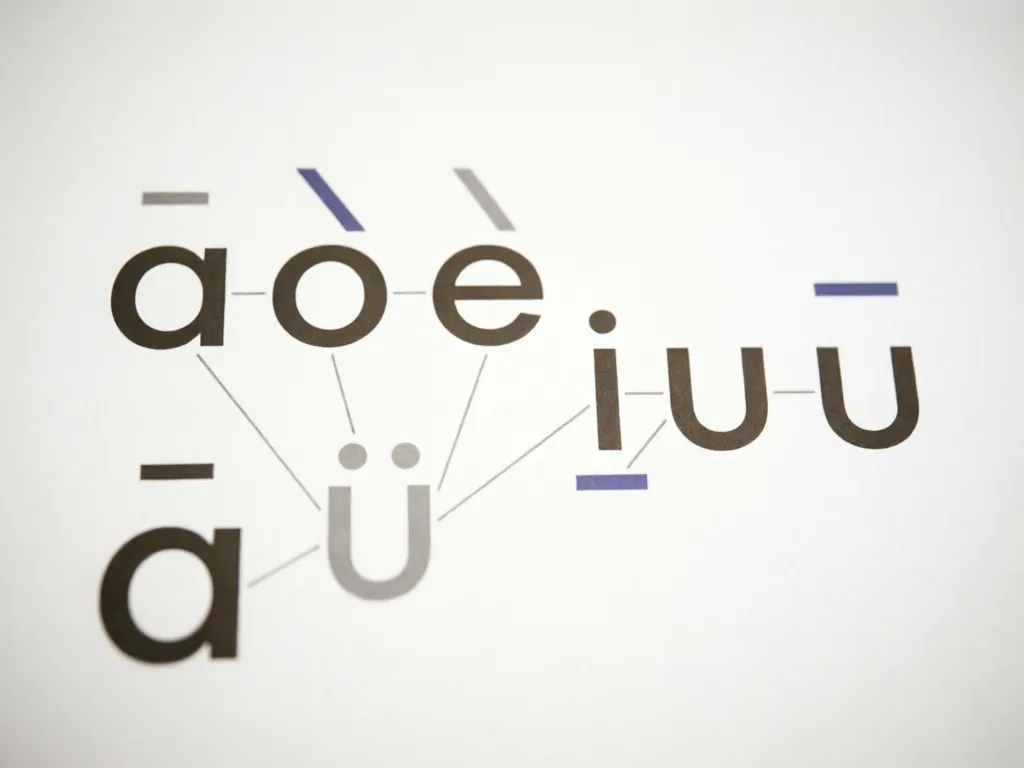 Learn more: Study Chinese | Programs & Services - RPL School.
Why Learn Pinyin for Beginners?
If you're asking 'what is Hanyu Pinyin?', the answer is both simple and profound: it’s the official Mandarin phonetic system adopted by China in 1958 — a precise, Roman-letter-based transcription method that represents every sound in Standard Mandarin. For beginners, learning Pinyin isn’t just a helpful shortcut; it’s the indispensable scaffolding upon which all four core language skills are built. Without it, accurate Chinese pronunciation with Pinyin remains out of reach — and mispronunciation habits formed early are notoriously difficult to correct later. The Hanyu Pinyin system breaks down Mandarin’s tonal, syllabic structure into manageable components: initials (like 'b', 'zh', 'x'), finals (like 'ai', 'ong', 'üe'), and the four lexical tones (plus neutral tone), each marked clearly with diacritical marks (e.g., mā, má, mǎ, mà). This precision allows learners to decode spoken input far more reliably — turning ambiguous auditory input into intelligible, reproducible speech. When you learn Pinyin for beginners, you’re not memorizing arbitrary symbols; you’re internalizing a consistent, rule-governed code that maps directly to mouth position, airflow, and pitch contour. That’s why mastering how to read Pinyin transforms listening practice: instead of guessing at unfamiliar characters, you recognize syllable patterns (e.g., 'shui', 'qian', 'yue') instantly, reinforcing phonemic awareness and enabling faster comprehension of real-world speech — from subway announcements to casual conversations. Speaking improves just as dramatically: Pinyin gives you immediate, actionable feedback. Struggling with the retroflex 'sh' versus the alveolar 's'? Pinyin notation highlights the distinction — no character ambiguity, no guesswork. Reading also becomes accessible long before mastering hundreds of characters. With Pinyin, you can sound out children’s books, song lyrics, or news headlines — building fluency while expanding vocabulary organically. Crucially, dictionary use hinges entirely on Pinyin. Whether using a physical dictionary or apps like Pleco, you’ll search by Pinyin spelling (e.g., typing 'hao3' to find 好), not stroke order or radicals — making vocabulary acquisition efficient and scalable. Even handwriting practice benefits: many apps and textbooks use Pinyin input to generate characters, helping you connect sound → symbol → meaning in real time. Neglecting the Mandarin phonetic system means navigating Mandarin blindfolded — mistaking 'lèi' (tired) for 'lěi' (accumulate), confusing 'jī' (chicken) with 'qī' (wife), or misplacing tones that change meaning entirely. But when you invest focused time in learning Pinyin for beginners — practicing tone pairs, drilling minimal pairs ('bā' vs. 'pā'), and using audio resources side-by-side with written Pinyin — you build muscle memory, auditory discrimination, and confidence that lasts throughout your Mandarin journey. It’s not a phase to rush through; it’s the foundation that makes everything else possible.
The Structure of the Hanyu Pinyin System
The Hanyu Pinyin system is the official Mandarin phonetic system adopted by China in 1958—and it remains the most effective tool to learn Pinyin for beginners. At its core, what is Hanyu Pinyin? It’s a romanization method that uses the Latin alphabet to represent the sounds of Standard Mandarin, enabling learners to grasp Chinese pronunciation with Pinyin before mastering characters. Every Mandarin syllable in the Hanyu Pinyin system breaks down into three interdependent components: initials, finals, and tone marks—each playing a non-negotiable role in accurate articulation.Initials are consonant sounds that begin a syllable—like ‘b’, ‘d’, ‘j’, or ‘x’. There are 23 standard initials, and many differ subtly from English equivalents: for example, ‘q’ is pronounced like a soft ‘ch’ with strong aspiration (as in ‘cheese’ but sharper), while ‘x’ resembles a light ‘sh’ said with the tongue forward, almost like ‘she’ whispered through a smile. Crucially, Mandarin has no standalone vowel-initial syllables; every syllable must begin with an initial—or use the null initial (represented by the final alone, as in ‘ān’ or ‘ōu’).
Finals form the remainder of the syllable—the vowel(s), diphthongs, or nasal endings—and there are 36 standard finals. They range from simple vowels (‘a’, ‘i’, ‘u’) to complex combinations like ‘uang’ (as in ‘guāng’) or ‘iong’ (as in ‘xiōng’). Finals carry inherent sound qualities: ‘-i’ after ‘z’, ‘c’, ‘s’ is a buzzing, tongue-tip vowel (like the ‘r’ in ‘measure’), whereas ‘-i’ after ‘zh’, ‘ch’, ‘sh’, ‘r’ is a retroflex vowel, produced with the tongue curled back. Understanding these distinctions is essential to how to read Pinyin accurately—not as English spelling, but as precise phonetic cues.
Tone marks are diacritical symbols placed over the main vowel of the final (e.g., mā, má, mǎ, mà) and indicate one of four lexical tones—or the neutral tone. Tones change meaning entirely: ‘mā’ (mother), ‘má’ (hemp), ‘mǎ’ (horse), and ‘mà’ (scold) are identical in spelling except for tone. The placement rule is specific: mark the *first* vowel in ‘ai, ei, ao, ou’, but the *second* in ‘ia, ie, ua, uo, üe’, and the only vowel in ‘a, e, o, i, u, ü’. Misplacing the tone mark leads to mispronunciation—even if the letters are correct.
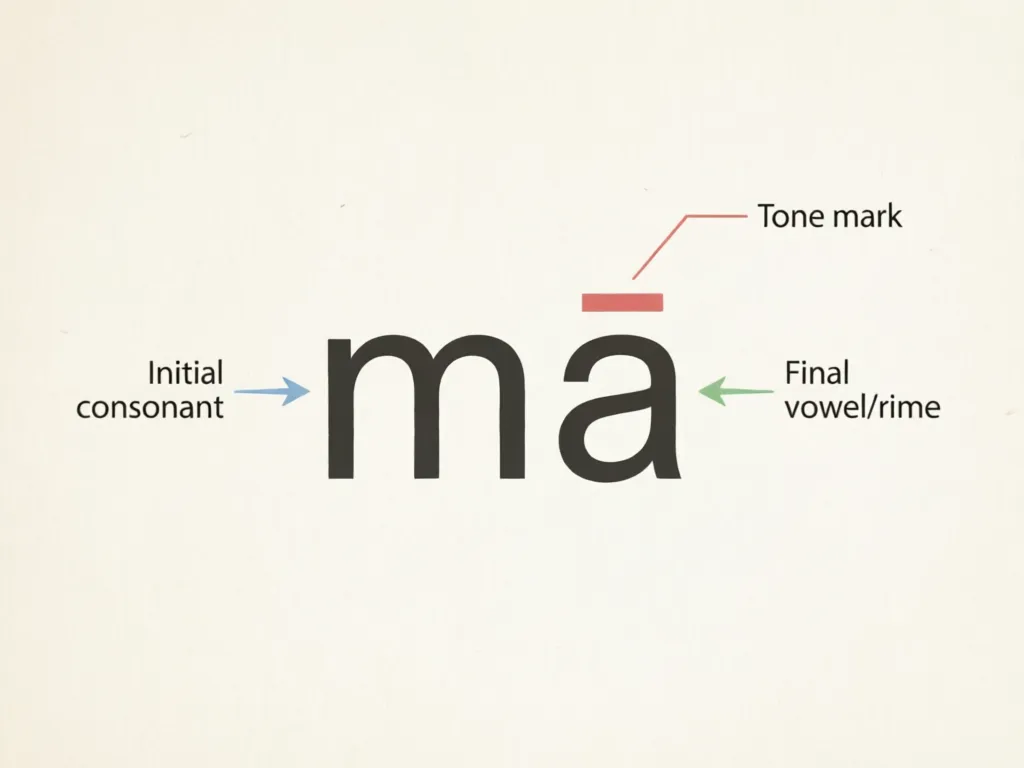
Mastery comes from practicing how these three elements combine: an initial + a final + a tone = one meaningful syllable. For instance, ‘zh’ (initial) + ‘ong’ (final) + third tone = ‘zhǒng’ (meaning ‘seed’ or ‘to plant’). When learning Pinyin for beginners, treat each component as a building block—drill initials in isolation, map finals to mouth positions, and pair tones with physical pitch gestures (e.g., hand rising for first tone, falling sharply for fourth). This systematic approach transforms Chinese pronunciation with Pinyin from guesswork into reproducible skill.
Mastering Chinese Pronunciation with Pinyin
Mastering Chinese pronunciation with Pinyin isn’t just about memorizing letters—it’s about retraining your ears and mouth to perceive and produce sounds that don’t exist in English. The Hanyu Pinyin system, China’s official Mandarin phonetic system adopted in 1958, uses the Roman alphabet not as a translation tool but as a precise acoustic map. What is Hanyu Pinyin? It’s a rigorously designed transcription method that captures tonal contours, consonant aspiration, vowel quality, and articulation points—none of which are intuitive for English speakers. For beginners, learning Pinyin isn’t optional; it’s the foundational step before touching a single character. Without it, you’ll mispronounce ‘shì’ (to be) as ‘shee’ instead of the retroflex ‘sh’—a sound made by curling the tongue tip upward toward the hard palate, not the flat ‘sh’ in ‘ship’. Similarly, the distinction between ‘zh’, ‘ch’, ‘sh’ and ‘z’, ‘c’, ‘s’ trips up even diligent learners: the former are retroflex (tongue curled), the latter are alveolar (tongue flat behind upper teeth). Pinyin notation makes this visible—no extra symbols, just consistent letter pairings that signal specific articulations. Equally critical—and often overlooked—is aspiration. In English, ‘p’, ‘t’, ‘k’ are strongly aspirated (think ‘pin’, ‘top’, ‘key’), while ‘b’, ‘d’, ‘g’ are voiced. Mandarin has *no voiced stops*. Instead, it contrasts *aspirated* (p, t, k) and *unaspirated* (b, d, g) voiceless stops. So ‘bā’ (eight) sounds like the ‘p’ in ‘spit’—no puff of air—while ‘pā’ (to clap) matches the ‘p’ in ‘pit’. The Hanyu Pinyin system encodes this difference clearly: b/d/g = unaspirated; p/t/k = aspirated. This is why ‘how to read Pinyin’ demands active listening practice—not passive reading. Record yourself saying ‘bā’ and ‘pā’, then compare waveforms: the unaspirated ‘b’ shows near-zero airflow delay after the release, unlike English ‘b’. Vowels pose subtler traps. ‘e’ in ‘è’ (hungry) is a mid-back unrounded vowel—closer to the ‘u’ in ‘but’ than the ‘e’ in ‘bed’. And ‘ü’ (as in ‘lǜ’, green) requires lip rounding while keeping the tongue high and front—a sound absent in English and marked explicitly in Pinyin with the umlaut. Beginners often skip the dots or misread ‘j/q/x + ü’ as ‘ju/qu/xu’, erasing a crucial phonemic distinction. The Mandarin phonetic system resolves ambiguity: ‘jū’ (wine) vs. ‘jǖ’ (not valid—‘j’ only pairs with ‘ü’, written ‘jū’ but pronounced with rounded lips). To learn Pinyin for beginners effectively, use tone drills paired with minimal pairs (e.g., ‘mā’/‘má’/‘mǎ’/‘mà’) and shadow native speakers daily. Remember: Chinese pronunciation with Pinyin works only when you treat the romanization as a *phonetic instruction manual*, not an English spelling guide. Master the system’s logic—not just its symbols—and you build muscle memory for authentic Mandarin speech from day one.
How to Read Pinyin: A Step-by-Step Guide
Reading Hanyu Pinyin isn’t about memorizing random letter combinations—it’s about decoding a precise, rule-based Mandarin phonetic system. To truly learn Pinyin for beginners, start by understanding its three core components: initial (consonant), final (vowel or vowel-nasal combination), and tone (marked by diacritics). For example, in ‘mā’ (mother), ‘m’ is the initial, ‘a’ the final, and the macron (¯) signals first tone—high and level. Unlike English spelling, every Hanyu Pinyin syllable maps consistently to one Mandarin sound—no silent letters *except* ‘i’ after ‘zh’, ‘ch’, ‘sh’, and ‘r’, where it’s not pronounced (e.g., ‘zhi’ sounds like “jrr” with a retroflex buzz, not “zhee”). What is Hanyu Pinyin? It’s the official romanization standard adopted by China in 1958, designed to represent every syllable in Standard Mandarin—not dialects or historical pronunciations—with scientific accuracy. Consonant-vowel combinations follow predictable patterns, but watch for key distinctions: ‘q’, ‘x’, and ‘j’ are palatal sounds—never pronounced like English ‘q’, ‘x’, or ‘j’. ‘Qian’ (front) starts with a voiceless alveolo-palatal affricate—like ‘ch’ in “cheese”, but with the tongue raised higher and farther forward; ‘xue’ (snow) begins with a fricative similar to ‘sh’ but sharper and more fronted. Meanwhile, ‘zhong’ (center) uses a retroflex stop—tongue curled back, not the English ‘j’ in “jump”. Nasal endings—‘-n’ and ‘-ng’—are critical: ‘-n’ ends at the alveolar ridge (‘fan’ = “fahn”), while ‘-ng’ resonates deep in the velum (‘feng’ = “fung”, not “feng” as in English “singer”). Confusing them changes meaning: ‘tān’ (to spread out) vs. ‘tāng’ (soup). Tones aren’t optional—they’re lexical. The same syllable ‘ma’ means “mother” (mā), “hemp” (má), “horse” (mǎ), or “scold” (mà) depending on tone contour. Practice tone pairs early: contrast mā (flat) with má (rising), then mǎ (dipping) with mà (falling). Also note that ‘ü’ (with umlaut) appears only after ‘j’, ‘q’, ‘x’, and ‘y’—never after ‘l’ or ‘n’ (where it becomes ‘u’: ‘lu’ ≠ ‘lü’). In ‘ju’, ‘qu’, ‘xu’, and ‘yu’, the dots are omitted for simplicity—but the sound remains /y/ (like French ‘tu’). Finally, remember that ‘c’ is always ‘ts’ (as in ‘cats’), ‘z’ is ‘dz’ (not ‘zoo’), and ‘e’ varies: it’s /ə/ in ‘de’ (of), /ɤ/ in ‘ge’ (song), and /ɛ/ in ‘ie’ (‘xie’, to thank). Chinese pronunciation with Pinyin works only when you treat it as a phonetic code—not an English transliteration.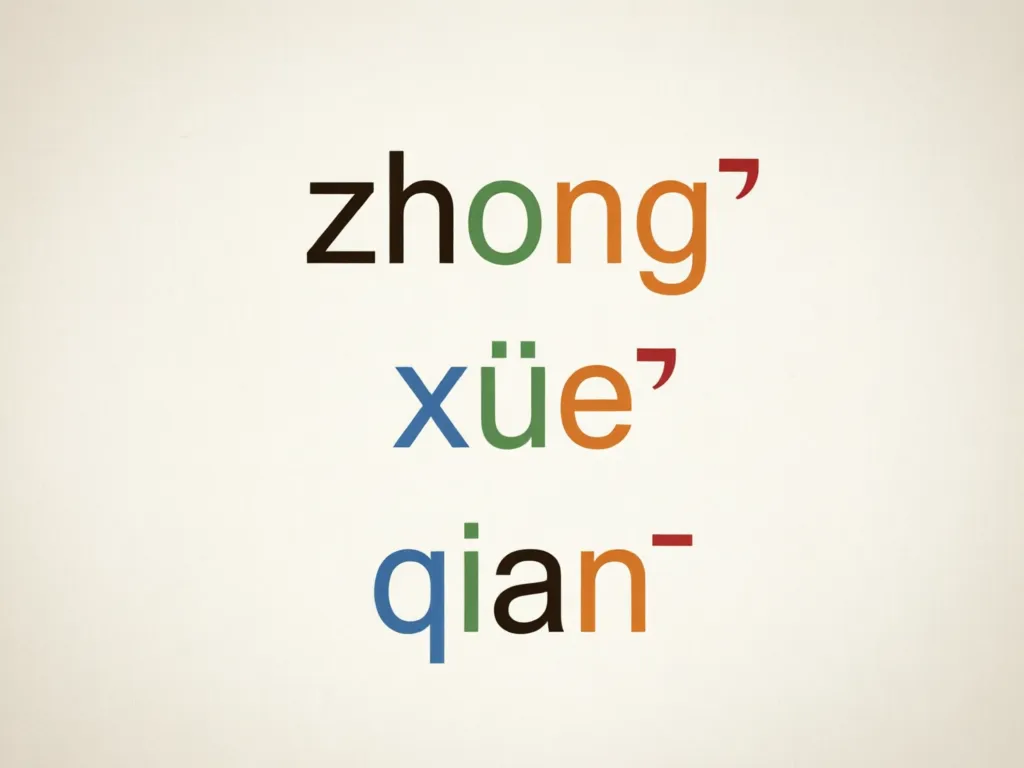 To internalize how to read Pinyin, drill minimal pairs daily: ‘bo’ (wave) vs. ‘po’ (grandfather) vs. ‘mo’ (ink) vs. ‘fo’ (Buddha)—same final, different initials and tones. Record yourself, compare with native audio (e.g., official Ministry of Education resources), and focus on mouth shape—not just sound. With consistent practice, the Hanyu Pinyin system transforms from abstract symbols into muscle memory, laying the unshakeable foundation for authentic Mandarin fluency.
Tones: The Heartbeat of Mandarin
Tones are the heartbeat of Mandarin—without them, words lose meaning entirely. Unlike English, where intonation conveys emotion or questions, Mandarin uses four distinct lexical tones (plus a neutral tone) to differentiate word meanings. This is central to the Hanyu Pinyin system: what is Hanyu Pinyin? It’s the official Mandarin phonetic system adopted by China in 1958, designed to represent spoken Chinese using the Latin alphabet and diacritical tone marks. For beginners aiming to learn Pinyin for beginners, mastering tones isn’t optional—it’s foundational. Chinese pronunciation with Pinyin hinges on accurately pairing vowel sounds with their corresponding pitch contours. How to read Pinyin correctly means hearing and producing these tonal shifts—not just memorizing symbols. The first tone (mā, high-level) is flat and steady, like singing a sustained note at the top of your range—think ‘ma’ as in ‘mama’ said calmly and evenly. The second tone (má, rising) climbs sharply, like asking ‘Huh?’—it starts mid-pitch and rises, mirroring the contour of ‘What?’ The third tone (mǎ, dipping) falls then rises: start low, dip lower, then lift slightly—practice it slowly before speeding up; many native speakers simplify it to a low fall in connected speech. The fourth tone (mà, falling) is decisive and sharp, like a command—start high and drop abruptly, as if saying ‘No!’ The neutral tone (ma) is light, short, and unstressed—often appearing on grammatical particles like ‘de’ (of) or ‘le’ (aspect marker); it carries no tone mark and relies on context and rhythm. Why does this matter? Because mā (mother), má (hemp), mǎ (horse), and mà (scold) are completely different words—identical spelling without tones, identical Pinyin letters, but utterly distinct meanings. Misplacing a tone mark can turn an innocent greeting into an insult—or worse, cause confusion in daily communication. To internalize them, use physical cues: trace the tone shape in the air with your finger (flat line → rising slash → V-shape → downward stroke → dot for neutral). Record yourself saying minimal pairs (e.g., bā/bá/bǎ/bà) and compare with native audio. Apps that visualize pitch in real time reinforce muscle memory. Remember: the Hanyu Pinyin system assigns each tone a specific diacritic—ā á ǎ à—and these marks appear over the main vowel (the one that carries the most sonority, usually a, e, o, i, u, or ü). When two vowels appear, follow standard Pinyin vowel priority rules (e.g., in ‘iao’, the tone goes on ‘a’). Consistent practice—even five minutes daily—builds neural pathways for automatic tone recognition and production. Learn more: Programs | Browse All Programs in One Place - RPL School.Pinyin in Practice: From Textbooks to Technology
Pinyin in Practice: From Textbooks to TechnologyWhat is Hanyu Pinyin? It’s far more than an alphabet—it’s the official Mandarin phonetic system adopted by China in 1958 and now used globally as the standard bridge between spoken sound and written character. For beginners, learning Pinyin is the indispensable first step: it equips you with precise tools to decode tones, consonants, and vowel combinations that don’t exist in English—like distinguishing ‘zh’ (retroflex, tongue curled back) from ‘j’ (palatal, tongue raised), or mastering the four lexical tones that change meaning entirely (e.g., mā ‘mother’, má ‘hemp’, mǎ ‘horse’, mà ‘scold’).
In textbooks, the Hanyu Pinyin system appears as small romanized annotations above Chinese characters—enabling learners to read aloud immediately without memorizing thousands of characters first. Publishers like *Integrated Chinese* and *New Practical Chinese Reader* embed tone marks directly over vowels (e.g., nǐ, shuǐ, lǚ), reinforcing auditory-visual mapping. Teachers often use color-coded Pinyin charts (red for first tone, green for second, etc.) to accelerate tone recognition—a proven strategy for beginners.
Digital input methods rely entirely on the Hanyu Pinyin system: typing ‘wo ai ni’ instantly converts to 我爱你 on smartphones, laptops, and tablets. Modern IMEs (Input Method Editors) even predict characters contextually—typing ‘xian’ suggests both 先 (first) and 现 (now), letting users select based on meaning. This real-time feedback makes Chinese pronunciation with Pinyin deeply interactive and practical.
Language apps leverage Pinyin intelligently: HelloChinese uses animated tone contours and side-by-side audio waveforms; Pleco displays stroke-order animations alongside Pinyin and IPA; while Duolingo breaks down syllables into onset-rime units (e.g., ‘b-ān’ → ‘bān’) to reinforce how to read Pinyin phonetically. Speech recognition tools—from WeChat’s voice-to-text to Google Translate’s Mandarin mode—train on native speaker Pinyin transcriptions, allowing instant feedback on your tonal accuracy. Record yourself saying ‘qǐng wèn’ and compare pitch curves against a native model: this kind of granular, tech-enabled practice transforms abstract rules into muscle memory.
Ultimately, the Hanyu Pinyin system isn’t a temporary crutch—it’s the operating system for Mandarin fluency. Whether you’re annotating flashcards, dictating messages, or analyzing spectrograms in linguistics software, Pinyin remains the consistent, scalable key. For those who want to learn Pinyin for beginners, start with tone pairs (mā/má), minimal syllable contrasts (ba/pa/ma), and daily voice recording. With deliberate, tech-supported practice, Chinese pronunciation with Pinyin evolves from approximation to precision—turning every ‘shì’ into a confident, correctly pitched ‘yes.’
Common Mistakes and How to Avoid Them
Beginners often stumble on the Hanyu Pinyin system because they instinctively map its letters to English sounds—a fundamental misunderstanding of what is Hanyu Pinyin. The Hanyu Pinyin system isn’t an alphabet; it’s a precise Mandarin phonetic system designed to represent tones and articulation points unique to Chinese. For instance, ‘q’ is not a hard /k/ or /kw/—it’s a voiceless alveolo-palatal affricate, produced with the tongue raised toward the hard palate (like a soft ‘ch’ but sharper and aspirated). Misreading it as ‘kuh’ leads to unintelligible words like *qī* (seven) sounding like ‘chee’ instead of the correct ‘chēe’ (with a light, forward aspiration). Similarly, ‘x’ is not /ks/ or /z/—it’s a voiceless alveolo-palatal fricative, akin to a whispered ‘sh’ made with the tongue tip lower and flatter: *xiǎo* (small) should sound like ‘shyaow’, not ‘zee-ow’. And ‘c’ isn’t /s/ or /k/—it’s a voiceless alveolar affricate with strong aspiration: *cǎo* (grass) is ‘tsaow’, not ‘sow’. To internalize these, practice minimal pairs daily: *qī* vs. *jī* (seven vs. chicken), *xī* vs. *shī* (west vs. teacher), *cǎo* vs. *cào* (grass vs. to curse)—record yourself and compare with native audio from authoritative sources like the official Pinyin Chart or apps aligned with the Ministry of Education’s standards. Equally critical are tone sandhi oversights—especially the third-tone change. When two third tones appear consecutively (*nǐ hǎo*), the first becomes a rising second tone (*ní hǎo*), not ‘nee haow’. Ignoring this violates core Chinese pronunciation with Pinyin and obscures meaning. Drill tone pairs using flashcards that force context: say *lǎoshī hěn hǎo* aloud, then isolate *hěn hǎo*—notice how *hěn* shifts from low-dipping to rising. Finally, avoid over-relying on English approximations. Instead, learn Pinyin for beginners through muscle memory: use mirror work to observe tongue placement, hum vowel shapes (*a*, *e*, *i*, *o*, *u*, *ü*), and repeat tone contours on a single syllable (*mā, má, mǎ, mà*) while tapping pitch height on your arm. How to read Pinyin accurately hinges on treating it not as spelling—but as a set of articulatory instructions. Consistent, focused practice transforms confusion into confidence—and unlocks authentic Chinese pronunciation with Pinyin.Quick Reference: Pinyin Initials, Finals, and Tone Marks
| Topic | Key Detail | Example |
|---|---|---|
| Tones | Four main tones + neutral tone; marked with diacritics (e.g., mā, má, mǎ, mà) | mā (mother) vs. mà (scold) |
| Initials & Finals | 23 initials (e.g., b, p, m) and 36 finals (e.g., -ai, -ou, -eng); combine to form syllables | b + āi = bāi (to split) |
| Common Pitfalls | Mispronouncing q, x, zh, j; ignoring tone sandhi (e.g., third-tone changes) | qī (seven) ≠ 'chee'; nǐ hǎo → ní hǎo |
| Learning Tips | Practice tone pairs daily; use audio resources; write pinyin with tone marks consistently | hǎo hǎo (very good) — both third tones become second + third |
FAQ
What is Hanyu Pinyin and why is it essential for learning Mandarin?
Hanyu Pinyin is the official romanization system for Standard Mandarin Chinese, using the Latin alphabet to represent pronunciation. It’s essential because it provides a consistent, phonetic bridge between written characters and spoken language—enabling learners to accurately pronounce words before mastering characters.
Does Pinyin use the same sounds as English letters?
No—many Pinyin letters represent sounds unfamiliar to English speakers (e.g., 'q' is like 'ch' in 'cheese' but with tongue raised, and 'x' sounds like 'sh' in 'sheep' but with flatter tongue position). The guide includes audio references and mouth-position diagrams to clarify these distinctions.
How are tones represented in Pinyin, and why can’t they be omitted?
Tones are marked with diacritical marks (ā, á, ǎ, à) over vowels and indicate pitch contour—critical because tone changes meaning (e.g., mā ‘mother’ vs. mà ‘scold’). Omitting tones leads to misunderstanding; the guide explains tone sandhi rules and offers practice drills for all four tones plus the neutral tone.
Can I rely solely on Pinyin instead of learning Chinese characters?
No—Pinyin is a pronunciation aid, not a writing system. It cannot replace characters for reading, writing, or distinguishing homophones (e.g., shì could mean ‘is’, ‘market’, ‘affair’, or ‘to try’ depending on character). The guide emphasizes using Pinyin *alongside* character study from day one.
Are there common Pinyin pitfalls beginners should avoid?
Yes—frequent errors include mispronouncing ‘zh’, ‘ch’, ‘sh’ as English ‘j’, ‘ch’, ‘sh’ (they’re retroflex, not palatal), conflating ‘ü’ with ‘u’ (especially after j/q/x), and ignoring tone contours in connected speech. The guide highlights these with side-by-side audio comparisons and corrective exercises.