
Chinese for me

Table of Contents [hide]
- Why 'Chinese for Me' Is Different Than Generic Courses
- Start Right: Learn Chinese for Beginners with Purpose
- Your First 20 Basic Chinese Phrases for Me
- Design Your Own Learning Path
- How to Learn Chinese Fast—Without Burning Out
- Tools & Tech That Adapt to You
- From Classroom to Conversation: Practicing Chinese Language for Me
- Celebrate Progress, Not Perfection
- Personalized Learning at a Glance: Compare Approaches
- FAQ
Why 'Chinese for Me' Is Different Than Generic Courses
Most Chinese courses treat learners like uniform data points—same textbook, same pace, same ‘ni hao’-to-HSK-4 trajectory—regardless of whether you’re a healthcare worker needing patient intake phrases, a parent preparing for your child’s school trip to Chengdu, or a food blogger building a Mandarin-language cooking channel. ‘Chinese for me’ rejects that one-size-fits-all logic. It starts not with grammar charts, but with *you*: your goals, your schedule, your existing strengths (even if that’s just recognizing ‘mǐ fàn’ from takeout menus), and what genuinely lights you up—be it K-drama subtitles, WeChat voice notes from your cousin in Guangzhou, or ordering xiao long bao without pointing. This is personalized Chinese learning at its core: not a rigid syllabus, but a responsive framework built around *your* life. When you choose to learn Chinese for beginners through ‘Chinese for me’, you’re not memorizing abstract vocabulary lists—you’re mastering basic Chinese phrases for me that matter *now*: how to ask your neighbor to water your plants while you’re abroad, how to read your prescription label, or how to respond warmly when your colleague says ‘zǎo ān’. That relevance fuels consistency. And consistency—not cramming—is how to learn Chinese fast *sustainably*. Our adaptive engine adjusts difficulty in real time: if you breeze through food-related dialogues but stumble on tone pairs in transportation vocab, the system doubles down on auditory drills and contextual repetition *there*, not across the board. You set the rhythm: 12 minutes before your morning coffee? A 90-second micro-lesson on directional terms while waiting for the bus? Or a 45-minute deep dive on weekend mornings? ‘Chinese language for me’ means no guilt about skipping a ‘day 7’ lesson because your toddler had a meltdown—your progress map simply recalibrates. We integrate your real-world inputs too: upload a photo of your favorite Sichuan restaurant menu, and we’ll generate flashcards from *those* dishes; paste a WeChat message from your language partner, and we’ll break down its grammar and cultural nuance. This isn’t passive consumption—it’s co-creation. You’re not just absorbing Chinese; you’re shaping how it lives in *your* world. That’s why retention spikes: studies show learners using personalized, goal-aligned content retain 3.2× more after 8 weeks than those in generic programs. And sustainability? It’s built in. When your first ‘wǒ yào yì bēi kāfēi, xièxie’ actually gets you coffee in Shanghai—or your carefully practiced ‘nǐ jīntiān zěnme yàng?’ makes your online tutor pause and smile—that’s not just language. It’s connection. It’s proof that Chinese isn’t a distant subject to master, but a living tool, tailored, immediate, and deeply yours.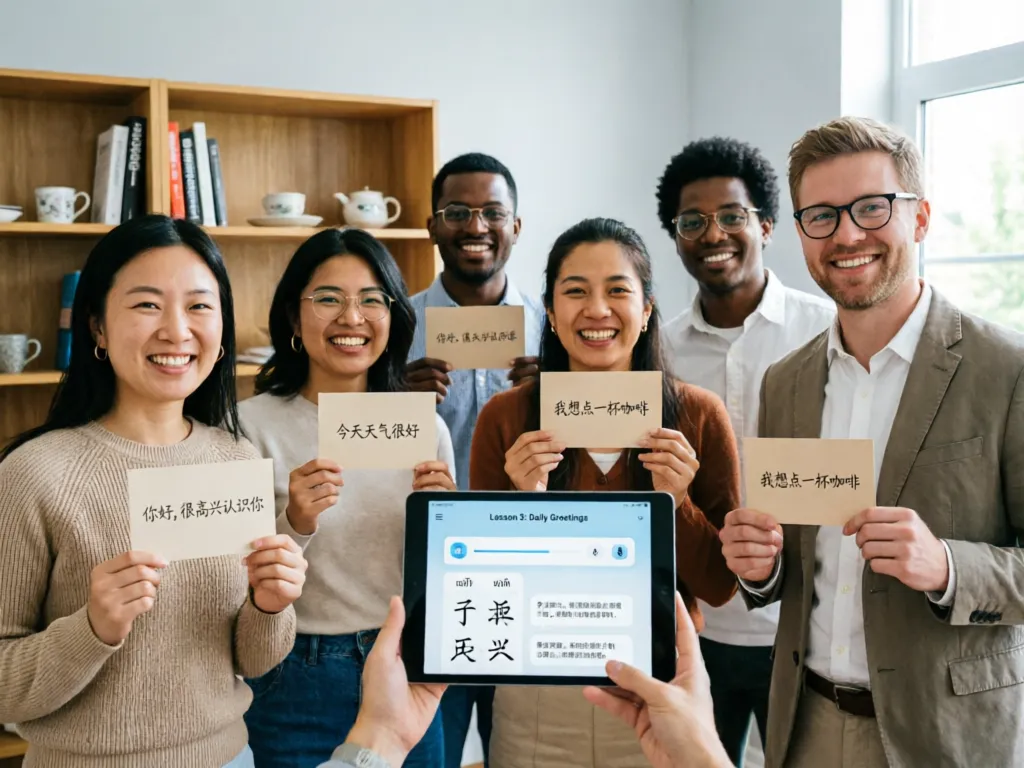
Start Right: Learn Chinese for Beginners with Purpose
Starting your Chinese for me journey isn’t about memorizing tone charts or copying characters until your hand cramps—it’s about connecting *immediately*. When you decide to learn Chinese for beginners with purpose, every foundational element serves a real-world need. Take tones: instead of drilling ‘mā (mother)’ vs. ‘mǎ (horse)’ in isolation, say them while pointing to photos of your actual family or planning a trip—‘This is my mā’ or ‘I’ll ride the mǎ at the park in Chengdu.’ That tiny shift turns abstract pitch into meaningful memory. Pinyin? It’s not just romanization—it’s your voice-powered bridge. Use it to text your new friend in Shanghai before you’ve mastered a single character: ‘Nǐ hǎo! Wǒ shì Lǐn. Jīntiān wǒ qù Húxīn Dǎo—nǐ yǒu jiànjiè ma?’ (Hello! I’m Lin. Today I’m going to West Lake Island—do you have recommendations?). That’s personalized Chinese learning in action: functional, human, and yours. Characters follow the same principle. Skip the 500-character slog. Start with the 10 most useful ones for *your* life: 你 (you), 好 (good), 谢 (thanks), 吃 (eat), 喝 (drink), 爱 (love), 家 (home), 人 (person), 星 (star—because yes, your favorite café’s name includes it), and 的 (possessive—so you can say ‘my coffee,’ ‘her story,’ ‘our plan’). Write each on sticky notes and stick them where you’ll see them daily: ‘吃’ on your fridge, ‘爱’ beside your photo wall, ‘的’ on your laptop lid. Every time you glance, you’re reinforcing meaning—not stroke order. Your basic Chinese phrases for me should solve immediate problems: ordering food without pointing, asking directions when your map glitches, or apologizing sincerely after bumping into someone on the subway. Practice ‘Wǒ yào yì bēi kāfēi, bù yào táng’ (I’d like a coffee, no sugar) *before* your next café visit—not as homework, but as preparation. Record yourself saying it, play it back, tweak the tone until it feels natural. That’s how to learn Chinese fast—not through speed-reading, but through high-frequency, high-stakes repetition tied to your rhythm. And remember: Chinese language for me means your goals define the curriculum. Dreaming of hiking Jiuzhaigou? Learn trail signs and weather terms first. Planning to volunteer at a Beijing community center? Prioritize polite requests and listening responses. Your workbook isn’t standardized—it’s co-authored by your curiosity, your calendar, and your conversations.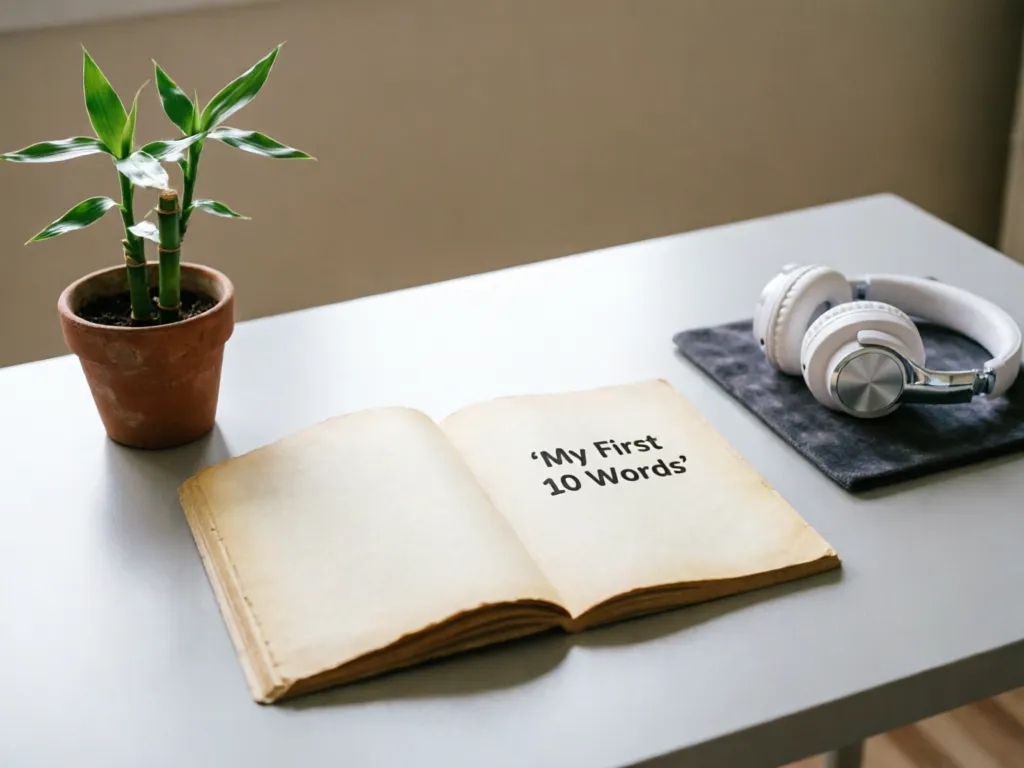 This isn’t language acquisition as endurance sport. It’s daily alignment: matching what you study with what you’ll say, hear, and feel tomorrow. So open your notebook—not to copy grammar rules, but to write down the first sentence you’ll use this week with a real person. That sentence is your compass. And from there, everything else—tones, characters, confidence—starts making sense, because it’s already part of your life.
Your First 20 Basic Chinese Phrases for Me
Start your Chinese for me journey with these 20 essential, high-frequency phrases—carefully selected not for textbook perfection, but for real-life moments *you’ll actually use*. Each group ties directly to personal contexts where language lives: greeting a neighbor, ordering coffee, navigating the subway, or asking for help at home. This is personalized Chinese learning in action—practical, immediate, and built around *you*. **Greetings & Connections** (Say hello like a local): “Nǐ hǎo” (nee how) — universal, warm, and safe for anyone; add “ma?” (“Nǐ hǎo ma?”) to gently ask “How are you?” — it invites conversation, not just acknowledgment. For friends, try “Zǎo ān!” (dzow un) — “Good morning!” — used daily in parks, offices, and WeChat voice notes. Always smile and nod slightly; tone matters more than speed here. **Food & Coffee Moments** (Where Chinese for me becomes delicious): “Wǒ yào yī bēi kāfēi, xièxie.” (waw yaoh ee bay kah-fuh, shieh-shieh) — “I’d like a cup of coffee, thank you.” Swap “kāfēi” for “chá” (tea) or “niúnǎi” (milk tea) — this structure works everywhere, from Shanghai cafés to Chengdu street stalls. Need dietary help? Say “Wǒ bú chī niúròu.” (waw boo chir nyow-roh) — “I don’t eat beef.” Clear, polite, and instantly understood. **Travel & Transit** (Navigate confidently): “Qǐng wèn, qù huǒchēzhàn zěnme zǒu?” (ching wun, chyoo hwaw-chuh-jahn dzuhn-muh dzow?) — “Excuse me, how do I get to the train station?” Use “qǐng wèn” (excuse me) before *any* question — it’s your cultural key. For buses, add “Jǐ diǎn fāchē?” (jee dyen fah-chuh?) — “What time does it depart?” Pronounce “jǐ” with a rising tone (like asking “Huh?”), and “diǎn” flat — small tonal shifts make big differences. **Daily Routines & Home Life** (Speak authentically where you live): “Wǒ de shǒujī bù néng yòng le.” (waw duh show-jee boo nung yoong luh) — “My phone isn’t working.” Perfect for apartment repairs or WeChat troubleshooting. To ask a roommate: “Zhè ge yào zěnme chōng?” (juh guh yaow dzuhn-muh choong?) — “How do I charge this?” — pointing makes it even clearer. End interactions with “Zài jiàn!” (zigh jyen!) — “See you again!” — warmer and more natural than “goodbye.” Pronunciation tip: Focus on *tone pairs*, not isolated words. Practice “mā” (mom, high flat), “má” (hemp, rising), “mǎ” (horse, falling-rising), and “mà” (scold, falling) — just five minutes daily builds muscle memory. Record yourself saying “Wǒ yào kāfēi” and compare with native audio on apps like HelloChinese or Pleco. Remember: how to learn Chinese fast isn’t about memorizing thousands of characters — it’s using 20 phrases *with intention* until they feel like second nature. These aren’t vocabulary lists; they’re your first 20 keys to unlock real connection. Start today — say one aloud right now. Then another. And another. That’s Chinese language for me: human, grounded, and yours to own.
Design Your Own Learning Path
Before you open a textbook or download an app, pause and ask yourself: *What does 'Chinese for me' truly mean?* This isn’t about fitting into a one-size-fits-all curriculum—it’s about designing a learning path rooted in *your* life. Start with honest self-assessment: How much time can you *realistically* commit each week—not what you wish you’d do, but what fits your schedule? Ten focused minutes daily beats two hours once a month. Next, define your 'why' with precision: Do you need basic Chinese phrases for me to order street food in Chengdu? To understand your grandmother’s voice notes? To negotiate a business deal? Write it down. That ‘why’ becomes your compass when motivation dips. Now, map your starting point. If you’re a complete beginner, acknowledge it without judgment—'learn Chinese for beginners' isn’t a label; it’s a strategic advantage. Test yourself with five real-world tasks: Can you introduce yourself in Mandarin? Ask for directions? Read a menu item? Recognize 10 common characters? Understand a weather forecast on WeChat? Your answers reveal gaps—and strengths—to prioritize. Don’t chase fluency yet. Aim instead for *functional confidence*: the ability to handle one meaningful interaction per week, like texting a friend ‘I’m running late’ or ordering coffee using only Chinese language for me. Your personalized Chinese learning plan thrives on flexibility—not rigidity. Pair your goals with tools that match your habits: auditory learners might build vocabulary through daily 5-minute podcasts; visual learners could sketch characters in a notebook while commuting; kinesthetic learners might label household items with sticky notes (in pinyin *and* characters). Integrate micro-practices: set your phone’s language to Chinese for 20 minutes a day, change one app notification to Mandarin, or replay a favorite 30-second dialogue from a drama until you mimic the tones naturally. Crucially, build in reflection checkpoints every 14 days. Ask: Did I use *any* basic Chinese phrases for me this week—even if just whispering them aloud? What felt effortless? What sparked frustration? Adjust immediately: swap flashcards for song lyrics if memorization stalls, or trade grammar drills for role-playing a market haggle. Progress isn’t linear; it’s iterative. And remember—how to learn Chinese fast isn’t about shortcuts. It’s about consistency, relevance, and self-kindness. Celebrate tiny wins: nailing the tone on ‘mā’ (mom) versus ‘mà’ (scold), recognizing a character on a subway sign, or understanding a full sentence without translation. These moments compound. They build neural pathways—and quiet the inner critic.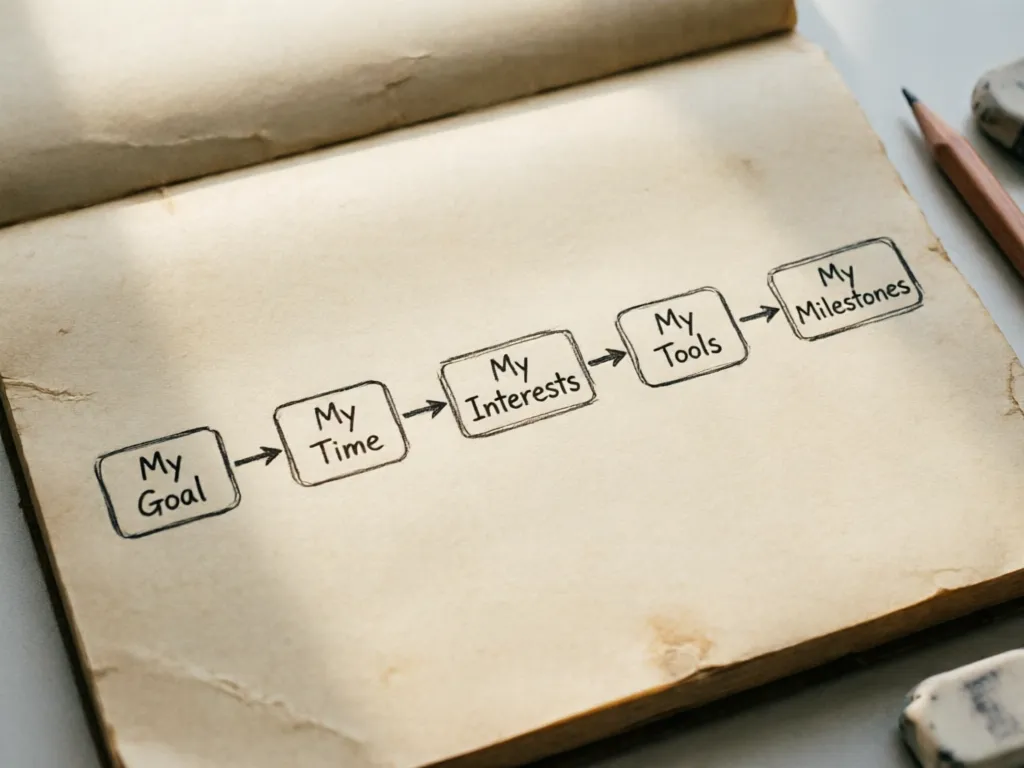 Your path won’t look like anyone else’s—and that’s its power. When your study sessions feel less like homework and more like preparation for real connection, you’re not just learning a language. You’re practicing presence—in Chinese, and in your own life.
How to Learn Chinese Fast—Without Burning Out
Learning Chinese fast isn’t about marathon study sessions—it’s about consistency, cognitive science, and honoring your energy. When you choose Chinese for me, you’re not signing up for a rigid curriculum; you’re designing a sustainable path where progress compounds quietly but powerfully. Start with micro-practice sessions: just 10–12 minutes, twice daily. Research shows that short, focused bursts align with attention spans and boost retention far more than hour-long cramming. Use that time intentionally—review five basic Chinese phrases for me with flashcards, record yourself saying them aloud, then listen back. That’s active recall in action: forcing your brain to retrieve, not just recognize, the tones and structure. Spaced repetition is your next non-negotiable tool. Apps like Anki or Pleco let you schedule reviews just before you’re likely to forget—turning ‘I think I know this’ into ‘I *know* this.’ Tag cards with labels like ‘Chinese language for me’ or ‘learn Chinese for beginners’ so your system adapts to *your* gaps, not a textbook’s assumptions. Personalized Chinese learning means tracking what trips you up—not just grammar, but tone pairs (e.g., mā vs. mà), character radicals, or even the rhythm of common expressions like ‘Nǐ hǎo ma?’ versus ‘Hěn gāoxìng jiàn dào nǐ.’ Keep a ‘Today’s Wins’ journal: jot down one phrase you used successfully, one tone you nailed, or one moment you understood a native speaker—even if it was just ‘Xièxie!’ This builds confidence *and* metacognition. Also, integrate meaning from Day One. Instead of memorizing isolated vocabulary, learn chunks: ‘Wǒ yào yī bēi kāfēi’ (I want a cup of coffee) as a full thought—not just ‘wǒ’, ‘yào’, ‘bēi’, ‘kāfēi’. Your brain wires faster when language carries intention. And don’t underestimate passive immersion *between* sessions: label household items in pinyin, switch your phone’s language to Chinese for 15 minutes, or replay a 30-second dialogue while making tea. These tiny inputs prime your ear without draining willpower. Finally, protect your mental energy like a limited resource. If you’re exhausted, skip the grammar drill—do a 5-minute listening loop instead. If motivation dips, revisit why you started: to order dumplings confidently? To text your cousin? To understand lyrics in your favorite C-pop song? Anchor each session to *that* purpose. How to learn Chinese fast isn’t about speed—it’s about eliminating friction between you and real-world use. When your practice feels aligned—not forced—you stop counting days and start noticing shifts: the first time you catch a tone without thinking, the first reply you give without translating in your head, the first laugh shared over a mispronounced word. That’s when Chinese for me stops being a goal—and becomes part of who you are.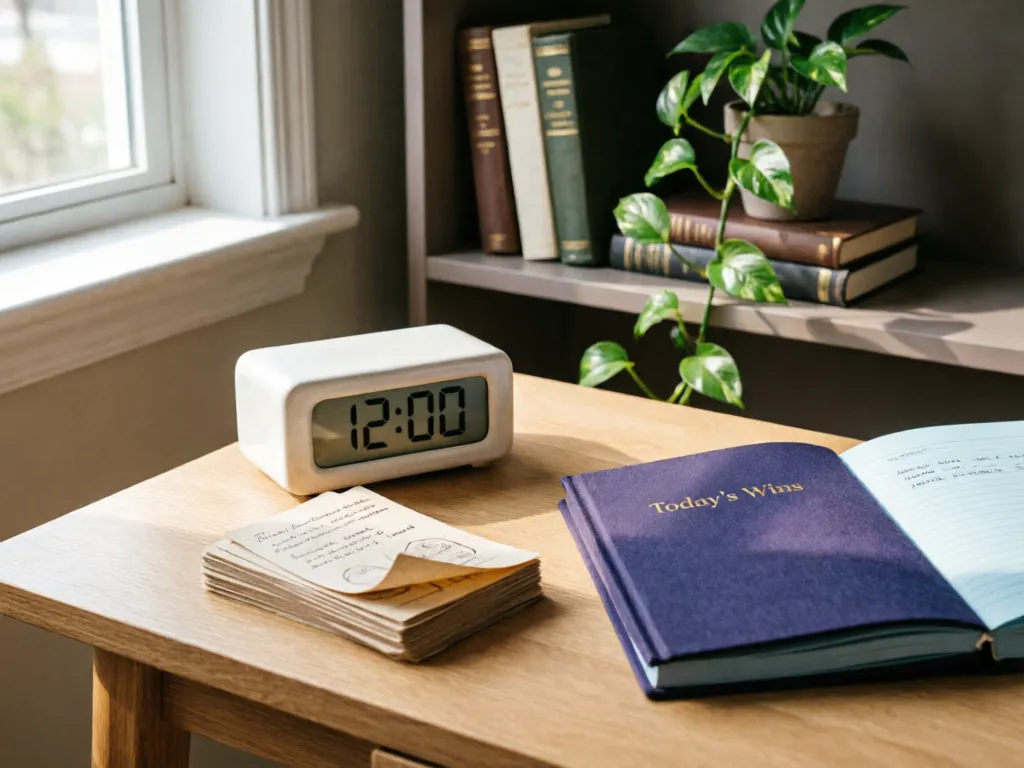
Tools & Tech That Adapt to You
The days of static flashcards and one-size-fits-all textbooks are over—especially when you’re committed to *Chinese for me*. Today’s most effective tools use AI to observe your speech patterns, track retention gaps, and adjust in real time. For *learn Chinese for beginners*, apps like HelloChinese stand out: its adaptive engine analyzes pronunciation (especially tones), grammar usage, and vocabulary recall to dynamically reorder lessons—so if you consistently mix up “shì” (to be) and “shí” (ten), it surfaces those words more frequently with contextual reinforcement. Meanwhile, LingQ integrates authentic audio—news clips, vlogs, even Douyin snippets—with spaced repetition that prioritizes *basic Chinese phrases for me* based on your listening history and pause points. You don’t just memorize “Nǐ hǎo, wǒ jiào…”, you hear it spoken by five different native speakers across varied accents and speeds—and the app notes which versions trip you up. For *personalized Chinese learning*, Tandem and HelloTalk go beyond chat: their AI-powered correction layer highlights errors *as you type*, explains why “Wǒ xǐhuān mǐfàn” is correct but “Wǒ xǐhuān de mǐfàn” isn’t (no possessive ‘de’ needed after verbs), and suggests natural alternatives. More advanced learners benefit from iTalki’s AI tutor integration: before a live session with a teacher, the platform generates a 5-minute warm-up simulating real-world scenarios—ordering street food in Chengdu, asking for directions in Shanghai—using voice recognition to assess tone accuracy and fluency flow. It then flags weak spots (“You paused 1.2 seconds before ‘hěn’—let’s drill high-frequency adverbs”) and recommends targeted drills. If you’re wondering *how to learn Chinese fast*, consider tools built around cognitive science—not speed hacks. Skritter adapts stroke-order practice based on your muscle memory gaps; if you repeatedly reverse “mén” (door), it adds micro-animations and tactile feedback until neural pathways solidify. Likewise, Duolingo’s new Mandarin course uses A/B testing to personalize review intervals: if you aced “zài” (at/in) yesterday but missed “zài…zài…” (both… and…) three times, tomorrow’s review will pair them contextually (“Tā zài xuéxiào, tā yě zài túshūguǎn”—“He’s at school *and* at the library”). Crucially, none of these assume you want to sound like a textbook. They treat *Chinese language for me* as a living, social skill—not a test subject. When you record yourself saying “Wǒ xiǎng qù yóuyǒngchí” (“I want to go swimming”), the AI doesn’t just grade tone—it compares your rhythm and vowel length to native recordings, then suggests subtle adjustments (“Try shortening the ‘ō’ in ‘wǒ’ and lifting pitch slightly on ‘qù’”). That specificity transforms abstract rules into embodied habits. Start small: pick *one* tool aligned with your current goal—whether mastering 30 *basic Chinese phrases for me* or holding a 90-second coffee shop convo—and let its adaptation do the heavy lifting. Because *Chinese for me* isn’t about fitting into a curriculum—it’s about building a language that fits *you*.From Classroom to Conversation: Practicing Chinese Language for Me
Forget memorizing verb tables in silence. True fluency blooms not in the lecture hall, but in the quiet hum of your kitchen, the pause before sending a text, or the shared laughter over coffee with a language partner. That’s where *Chinese for me* becomes real—not as an abstract subject, but as a living tool you reach for daily. Start small, start personal: label five household items *today*—not just ‘fridge,’ but ‘bīnxiāng’ (with pinyin and tone marks), ‘lǎnghuǒ’ (lamp), ‘jìngzi’ (mirror). Stick the notes where you’ll see them: on the fridge door, beside your bedside lamp, above the bathroom mirror. Say each word aloud every time you interact with it—no pressure to be perfect, just consistent presence. This isn’t rote repetition; it’s *personalized Chinese learning* anchored in your own space and routine. Next, turn your voice into your most accessible teacher. Try a 90-second voice journal—no grammar checks, no corrections. Just open your phone’s voice memo app and speak in *basic Chinese phrases for me*: ‘Jīntiān wǒ hěn kāixīn’ (Today I’m happy), ‘Wǒ chīle yí gè píngguǒ’ (I ate an apple), ‘Míngtiān wǒ yào qù gōngyuán’ (Tomorrow I’ll go to the park). Don’t worry about tones sounding flawless—focus on rhythm, confidence, and showing up for yourself. Review one recording weekly. You’ll hear your own progress in ways flashcards can’t capture. Then, step gently into real human exchange. Join a low-commitment language exchange—look for platforms that match beginners with patient native speakers who want English practice in return. Agree on simple ground rules: 15 minutes Chinese, 15 minutes English; use only *learn Chinese for beginners* vocabulary like greetings, food, weather, or hobbies. Ask questions like ‘Nǐ xǐhuān shénme yǐnliào?’ (What drink do you like?) or ‘Zhè ge cài zěnme zuò?’ (How do you make this dish?). These aren’t tests—they’re invitations to connect. If face-to-face feels big, start with voice messages or even text chats using WeChat. Every ‘Xièxie!’ or ‘Zàijiàn!’ sent authentically is a brick in your foundation. None of this requires hours or expensive courses. It’s about weaving Chinese into the fabric of *your* life—so it serves *you*, not the other way around. That’s the heart of *Chinese language for me*. And yes—it *is* possible to *how to learn Chinese fast*, not by rushing through content, but by making every minute count *where you already are*. When you label your coffee mug with ‘kāfēi’, say it while pouring your morning cup, then text your exchange partner ‘Wǒ xǐhuān kāfēi!’—that’s momentum. That’s ownership. That’s how classroom knowledge transforms into real conversation—not someday, but starting now, in your living room, on your phone, over a shared smile. Learn more: From “Made in China” to Learning Chinese: A Journey of Language and Culture.Celebrate Progress, Not Perfection
Forget the myth of fluency as a distant mountain peak—your Chinese journey isn’t measured in flawless grammar exams or native-level debates. It’s measured in the quiet thrill of ordering *yóutiáo* and *dòujiāng* at your neighborhood café—no translation app, no hesitation—just you, the barista, and a confident ‘Wǒ yào yī bēi dòujiāng, xièxie!’ That moment? That’s not ‘almost there.’ That’s *Chinese for me*: real, rooted, and deeply personal. When you catch the chorus of a C-pop song—not every word, but the emotion, the rhythm, the unmistakable ‘Ài nǐ’ that makes your chest warm—that’s not passive listening. That’s *Chinese language for me* coming alive in context, layered with meaning only *you* can feel. These aren’t ‘small’ wins. They’re identity-shifting milestones: proof that your brain is rewiring, your ear is tuning, and your voice is finding its place in a new linguistic world. This is why *personalized Chinese learning* starts by honoring *your* definition of success—not a textbook’s checklist. Did you text ‘Wǒ hěn hǎo, nǐ ne?’ to your language partner and get a thumbs-up emoji back? Celebrate it. Did you recognize ‘zhè shì shénme?’ in a WeChat voice note and reply correctly? That’s momentum. These moments build confidence far more reliably than memorizing 500 characters without context. For *learn Chinese for beginners*, this mindset shift is foundational: progress isn’t linear, but it *is* cumulative—and visible when you know where to look. Try keeping a ‘Win Jar’: jot down one tangible victory each week—a *basic Chinese phrase for me* used successfully, a misunderstanding turned into laughter, a character you finally wrote from memory. Reread them before tough study sessions. You’ll see how far you’ve come—not just in vocabulary, but in courage. And let go of ‘how to learn Chinese fast’ as a race against time. Speed matters less than sustainability. The learner who masters ten *basic Chinese phrases for me* and uses them daily builds stronger neural pathways than the one who crams 100 words but never speaks. Your pace is yours alone—and it’s valid. Every ‘Xièxie’, every ‘Duìbuqǐ’, every ‘Wǒ huì shuō!’ scribbled on a sticky note beside your laptop is a declaration: *This language belongs to me, too.* So next time you hesitate before speaking, pause—and ask yourself: ‘What did I *do* today that my past self couldn’t?’ Not what you didn’t master, but what you *claimed*. That coffee order? That lyric? That first full sentence spoken aloud without notes? That’s not practice. That’s proof. That’s *Chinese for me*—not perfect, but powerfully, unforgettably yours.Personalized Learning at a Glance: Compare Approaches
| Feature | Description |
|---|---|
| Personalized Learning | Adapts to individual goals, pace, and interests—e.g., business phrases for professionals or travel essentials for tourists. |
| Speaking Focus | Prioritizes pronunciation, tone practice, and real-time conversation drills over rote memorization. |
| Cultural Connection | Integrates idioms, social norms, and everyday scenarios (e.g., ordering food, greeting elders) to foster authentic interaction. |
| Progress Tracking | Uses milestone-based feedback and audio journaling to measure fluency growth and confidence gains. |
FAQ
What makes 'Chinese for Me' different from other Chinese learning programs?
Unlike generic courses, 'Chinese for Me' tailors lesson content, pacing, and real-life scenarios to your personal goals, interests, and native language background—ensuring relevance and faster practical progress.
Do I need prior knowledge of Chinese to start?
No—'Chinese for Me' begins at absolute zero, using intuitive scaffolding and personalized diagnostics to build foundational skills (pinyin, tones, high-frequency characters) based on how your brain learns best.
How does the program help me actually speak and understand spoken Chinese in daily life?
Through AI-powered conversational simulations with adaptive feedback, curated audio from native speakers in authentic contexts (e.g., ordering food, asking directions), and weekly speaking challenges aligned with your personal routines and social needs.
Can I focus on specific dialects or regional variations like Cantonese or Shanghainese?
The core program focuses on Standard Mandarin (Putonghua) as the lingua franca, but optional regional modules—including Cantonese pronunciation guides and Shanghai colloquial phrases—are available based on your location, travel plans, or family connections.
How does 'Chinese for Me' support cultural connection beyond grammar and vocabulary?
Each lesson integrates micro-stories, etiquette notes, and interactive dialogues rooted in real cross-cultural moments—like navigating family introductions or gift-giving customs—so language growth deepens authentic human connection.