
Chinese Near Me

Table of Contents [hide]
- Why 'Chinese Near Me' Is Your Best Learning Shortcut
- Find Authentic Chinese Speakers Without Leaving Home
- Turn Daily Errands Into Chinese Practice Opportunities
- Join Local Chinese Cultural Events and Workshops
- Leverage Local Businesses for Immersive Language Exposure
- Create Your Own Neighborhood Language Exchange
- Use Public Spaces to Build Listening & Comprehension Skills
- Track Progress Through Real-Life Milestones, Not Just Tests
- Quick-Start Guide: 5 'Chinese Near Me' Actions You Can Take This Week
- FAQ
Why 'Chinese Near Me' Is Your Best Learning Shortcut
Proximity isn’t just convenient—it’s pedagogically powerful. When you search for 'Chinese near me', you’re not just finding a class or tutor; you’re unlocking a living, breathing language ecosystem where grammar rules dissolve into real-time decisions, tones sharpen through genuine feedback, and vocabulary sticks because it solves an actual need—like ordering dumplings, asking for bus directions, or thanking your neighbor for sharing homemade mooncakes. Unlike textbook drills, immersive Chinese learning methods thrive on immediacy and consequence: mispronouncing 'shū' (book) as 'shū' (lose) might get you a puzzled look—but it also etches the correct tone into memory far more deeply than any flashcard. Start small but consistently: swap your weekly coffee run for a café in a neighborhood with a visible Chinese community—order in Mandarin, even if it’s just 'Yī bēi kāfēi, xièxie'—and listen closely to how staff respond. Visit a local Chinese grocery store: read labels, ask about ingredients ('Zhè ge shì shénme?'), compare prices, and practice numbers aloud while scanning aisles. These are not 'extra' activities—they’re everyday Chinese learning tips that turn passive exposure into active acquisition. Join a free tai chi session at a nearby park where instructors often speak Mandarin; attend Lunar New Year street fairs not just as a spectator, but by volunteering at a calligraphy booth or helping hand out red envelopes—language emerges naturally when you’re focused on shared purpose, not perfection. Libraries, community centers, and university extension programs frequently host low-cost or drop-in conversation circles labeled 'Mandarin Meetup' or 'Language Exchange Night'—search 'Chinese near me' with those terms to uncover hidden gems. Crucially, this isn’t about fluency overnight; it’s about building neural pathways through repetition in context. Every time you learn Chinese in daily life—whether confirming a subway transfer, reading a pharmacy sign, or bargaining gently at a weekend market—you reinforce syntax, rhythm, and pragmatics in ways no app can replicate. The classroom teaches you *about* Chinese; learning Chinese outside classroom teaches you *how to be in Chinese*. And when you make a mistake? A smile, a patient correction, or even a shared laugh becomes part of the lesson—not a setback. That human connection transforms anxiety into curiosity, and curiosity into confidence. So next time you wonder how to practice Chinese in real life, don’t reach for another video lesson. Step outside. Look up. Listen. Ask. That ‘Chinese near me’ search bar? It’s not just a tool—it’s your first doorway into fluency.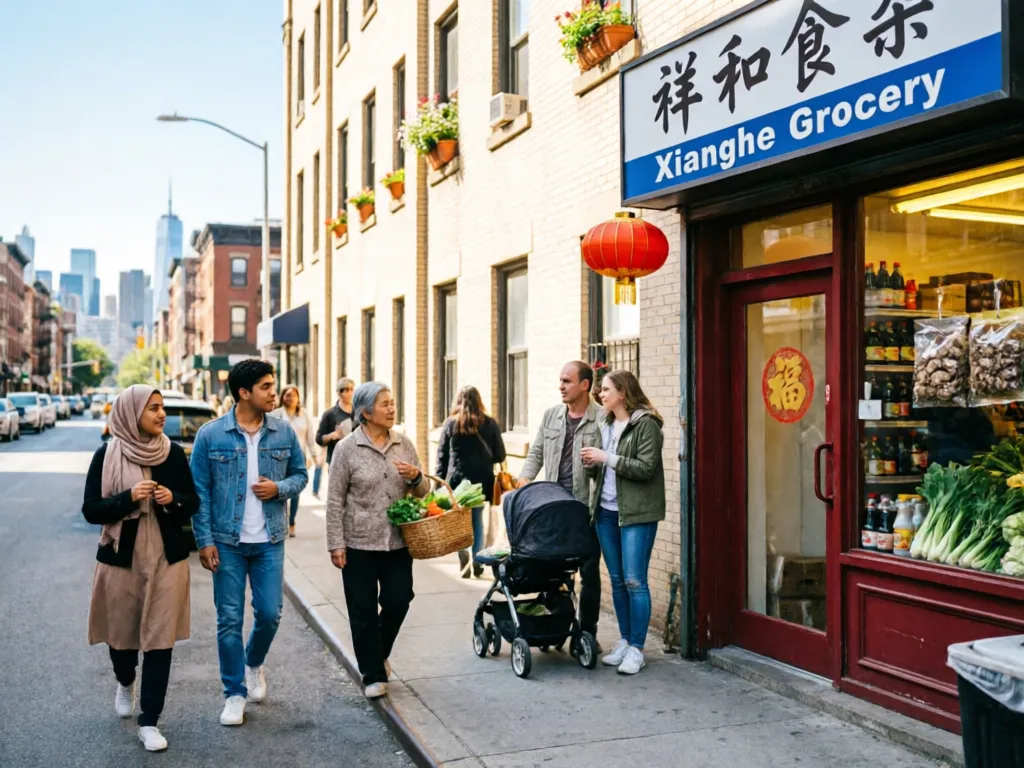
Find Authentic Chinese Speakers Without Leaving Home
You don’t need to book a flight to practice Mandarin—authentic Chinese speakers are likely already in your neighborhood. Start by searching “Chinese near me” on Google Maps or Facebook, filtering for community centers, cultural associations, and language exchange hubs. Many cities host active Chinese Cultural Associations or Confucius Institutes (often affiliated with local universities) that offer free or low-cost conversation hours, calligraphy workshops, and holiday celebrations—ideal settings to learn Chinese in daily life through shared activities, not textbooks. Universities are goldmines: check bulletin boards near student unions or language departments for bilingual tutoring programs, international student mixers, or volunteer opportunities where you can assist Chinese-speaking newcomers while practicing everyday phrases. Don’t overlook religious spaces—Buddhist temples, Christian churches with Mandarin congregations, and even interfaith centers frequently host weekly gatherings open to the public; attending a tea ceremony or Sunday lunch is a natural, low-pressure way to hear conversational tones, ask about food names, or practice ordering dishes. Social platforms like Meetup.com and Tandem list local “Mandarin Conversation Circles” and “Language Exchange Cafés”—look for groups meeting at libraries, co-working spaces, or cafés with bilingual facilitators. Pro tip: When joining, arrive 10 minutes early, bring a small notebook labeled “Today’s Phrases,” and prepare three simple questions (“What’s your favorite local restaurant?” “How do you say ‘this weather is perfect’?” “Can you teach me one word for something I’m holding?”). These micro-interactions build confidence faster than solo app drills. Immersive Chinese learning methods thrive on consistency—not perfection. Aim for two 30-minute real-life sessions per week: one structured (e.g., a library-hosted language café), one organic (e.g., greeting the cashier at your local Asian grocery in Mandarin, then asking, “Nǐ hǎo! Zhège duō shǎo qián?”). Even brief exchanges reinforce tone recognition, listening stamina, and cultural nuance—like understanding when to use “nín” versus “nǐ.” Remember, most native speakers appreciate the effort deeply; many will gently correct your pronunciation or suggest more natural phrasing. To stay accountable, keep a voice memo journal: record snippets of your conversations (with permission), replay them later to spot patterns in your mistakes, and celebrate small wins—like successfully asking for directions or complimenting someone’s child in Chinese. This is how you learn Chinese outside classroom walls: through warmth, repetition, and human connection.
Turn Daily Errands Into Chinese Practice Opportunities
Turn your grocery run, coffee stop, or subway commute into a language lab—no textbook required. When you search for 'Chinese near me,' you’re not just finding restaurants or markets; you’re uncovering daily touchpoints where authentic, low-stakes Chinese practice happens naturally. Start small: at the boba shop, point to the menu and say 'Wǒ yào yī bēi zhèn zhū nǎi chá' (I’d like one bubble tea) — then listen closely to the staff’s reply. Don’t aim for perfection; aim for participation. Repeat their response aloud, even if it’s just 'Xiè xie!' or 'Hǎo de!' That’s how to practice Chinese in real life: through repetition, rhythm, and real human exchange. Next, head to an Asian supermarket — ideally one with bilingual signage and Mandarin-speaking staff. Instead of rushing through your list, pause at the produce section and name three items aloud: 'xī hóng shì' (tomato), 'bái cài' (napa cabbage), 'shān yào' (yam). Ask the cashier, 'Zhège duō shǎo qián?' (How much is this?) and confirm the price by echoing the number back: 'Yī shí èr kuài?' (Twelve yuan?). These micro-interactions build neural pathways faster than flashcards because they’re tied to movement, sight, and consequence — classic immersive Chinese learning methods. Public transport is another goldmine. If your city has Chinese-speaking drivers or announcements, download a transit app with Mandarin audio (like Beijing Subway or Shenzhen Metro) and follow along. On the bus, try counting stops in Chinese: 'Yī, èr, sān...' or identify landmarks: 'Zhè shì yí gè yóu jú' (This is a post office). Even waiting for the light to turn green? Whisper 'Hóng dēng pāi duì' (Red light — line up) as people gather — it’s a tiny but potent act of learn Chinese outside classroom integration. The key isn’t fluency — it’s frequency. Aim for 3–5 intentional exchanges per day: ordering lunch, asking for directions at a local shop, reading packaging labels, or thanking a neighbor who greets you with 'Nǐ hǎo!'. Keep a pocket notebook or voice memo app to jot down new phrases heard *in context* — like 'Qǐng wǎng qián zǒu' (Please walk forward) on a train platform — then rehearse them before your next outing. This is everyday Chinese learning tips rooted in reality, not theory. You’ll notice progress not in test scores, but in the moment your barista starts anticipating your order with a smile and 'Jīntiān hái yào lěng de ma?' (Still cold today?). That’s when you know you’ve shifted from studying Chinese to living it — turning routine into resonance, one 'Nǐ hǎo' at a time. Learn more: The Meaning and Cultural Significance of the Chinese Character “累” (Tired / To Bother / To Involve).
Join Local Chinese Cultural Events and Workshops
Looking for 'Chinese near me' isn’t just about finding a tutor or app—it’s about stepping into living, breathing contexts where language and culture intertwine. Local Chinese cultural events and workshops offer some of the most authentic, low-pressure opportunities to *learn Chinese in daily life*. Think beyond textbooks: when you attend a Mid-Autumn Festival at your neighborhood community center, you’re not just tasting mooncakes—you’re hearing phrases like “yuè liàng zhēn yuán” (the moon is truly round) from elders, asking vendors “zhè ge duō shǎo qián?” (how much is this?), and laughing along as kids chant rhymes during lantern-making. These aren’t scripted drills—they’re spontaneous, human moments where listening, speaking, and comprehension happen organically. Calligraphy classes are especially powerful for *how to practice Chinese in real life*. As you grip the brush and trace characters like 和 (harmony) or 福 (blessing), instructors often explain stroke order, radicals, and cultural symbolism aloud—in simple, repeated Mandarin. You’ll pick up everyday vocabulary (“this is the horizontal stroke,” “lift lightly here”) while building visual memory for characters you’ll see on signs, menus, and packaging. Tai chi sessions—often held in parks at sunrise—offer rhythmic, embodied learning: instructors cue movements with clear, slow speech (“zhuǎn yāo,” “shǒu wǎng qián,” “xū líng”), reinforcing verbs, directions, and body terms through repetition and motion. No translation needed—you *feel* the language. Cooking demos are another delicious entry point. At a local Chinatown kitchen studio or library workshop, you’ll hear ingredient names (“gāng cài,” “dòu fu,” “xiāng cōng”), measurements (“yī sháo,” “bàn chá bēi”), and cooking actions (“jiǎo bàn,” “qīng chǎo,” “wēi huǒ” )—all delivered in context-rich, practical speech. Ask questions like “zhè ge yào fàng duō jiǔ?” (how long do I cook this?) or “kě yǐ yòng bié de dài tì ma?” (can I substitute something else?) and get immediate, useful feedback. These interactions build confidence far faster than classroom role-plays. The beauty? These experiences are *immersive Chinese learning methods* that require no enrollment in formal courses. Check your city’s cultural affairs office, university extension programs, Confucius Institutes (if nearby), or even WeChat groups like “Chinese Near Me [Your City]”—many post bilingual event flyers with QR codes linking to registration. Bring a small notebook—not to transcribe grammar rules, but to jot down 3 new words you heard, a phrase someone used naturally, or a question you want to ask next time. That’s *everyday Chinese learning tips* in action: consistent, contextual, and rooted in real connection.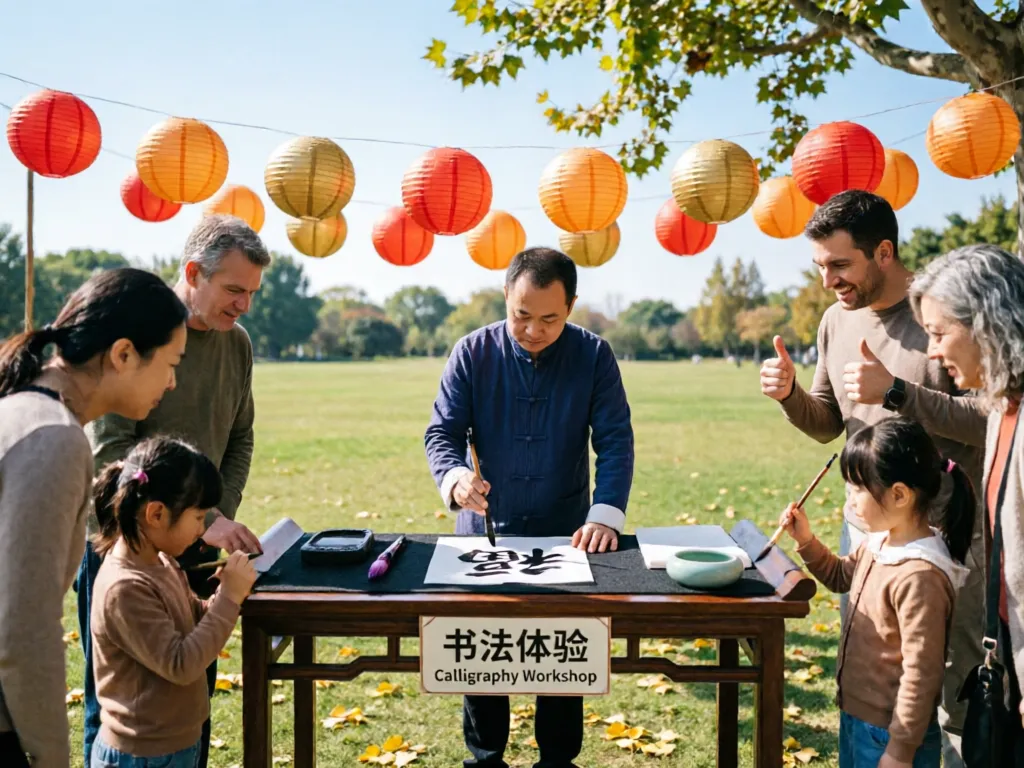 Remember: *learn Chinese outside classroom* doesn’t mean going it alone—it means showing up, listening closely, gesturing when words fail, and letting curiosity lead. Each dumpling folded, each brushstroke made, each slow tai chi pivot is quiet, joyful practice—and proof that fluency grows not just in classrooms, but in shared laughter, steaming woks, and the rustle of rice paper under your fingertips.
Leverage Local Businesses for Immersive Language Exposure
Instead of waiting for the ‘perfect’ language exchange partner or polished textbook dialogue, turn your neighborhood into a living classroom—starting with the people who serve you every day. When you search for ‘Chinese near me,’ don’t just look for classes or tutors; scan your local coffee shop, bodega, laundromat, food delivery app, or bike repair shop. Baristas who speak Mandarin, Cantonese, or other Chinese dialects often welcome short, friendly exchanges—if you approach with humility and consistency. Try ordering your usual drink *entirely* in Chinese (even if it’s just “Yī bēi kāfēi, xièxie” — “One coffee, thank you”), then pause to ask, “Zhè ge zěnme shuō?” (“How do you say this?”) while pointing to the milk pitcher or pastry case. Many shopkeepers appreciate repeat customers who make an effort: buy snacks weekly, greet them with “Nǐ hǎo” and “Jīntiān guò de zěnmeyàng?” (“How’s your day going?”), and gradually add one new phrase each visit—like asking for change (“Qǐng wèn, yǒu líng qián ma?”) or commenting on the weather (“Jīntiān hěn lěng!”). Delivery drivers are another underused resource: when they arrive, step outside, smile, and practice basic courtesies—“Xīn kǔ le!” (“You’ve worked hard!”) or “Qǐng jìn!” (“Please come in!”)—then ask how to say ‘thank you for the quick delivery’ in their dialect. These aren’t formal lessons, but they’re high-frequency, low-stakes interactions that build muscle memory for tone, rhythm, and real-world pragmatics. The key is consistency—not perfection. Show up twice a week at the same place, use the same phrases, and gently request corrections (“Kěyǐ jiǎo wǒ ma?” — “Can you teach me?”). Over time, these micro-interactions accumulate: you’ll notice tones clicking into place, recognize common sentence patterns in receipts or labels, and even overhear natural expressions like “Méi guānxi” (“It’s okay”) or “Zài jiàn, chī hǎo!” (“Bye, eat well!”) that no textbook highlights. This is how to practice Chinese in real life—not through isolated drills, but through repeated, respectful human connection. It transforms routine errands into everyday Chinese learning tips rooted in context, culture, and care. And because it happens where you already live, work, and eat, it’s one of the most sustainable immersive Chinese learning methods available. You don’t need a classroom to learn Chinese outside classroom walls—you just need curiosity, kindness, and the willingness to say ‘hello’ in Mandarin before grabbing your morning baozi.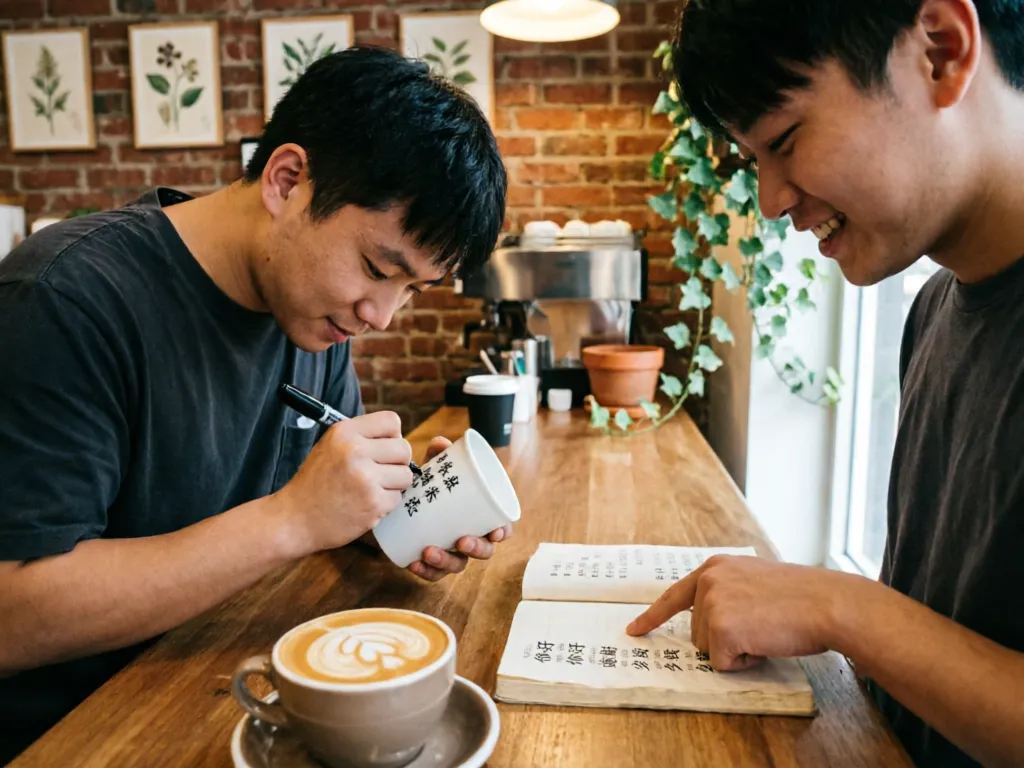 Learn more: Programs | Browse All Programs in One Place - RPL School.
Create Your Own Neighborhood Language Exchange
Creating your own neighborhood language exchange is one of the most effective, low-cost, and joyful ways to learn Chinese in daily life—especially when you’re searching for ‘Chinese near me’. Forget waiting for formal classes or apps; real fluency grows through consistent, friendly, face-to-face interaction. Start by identifying three to five local spots where people naturally gather: a quiet corner of your public library (check if they allow informal meetups), a shaded bench in a central park during weekday mornings, or a café with ample seating and free Wi-Fi (call ahead to confirm their policy on small group language practice). Next, post simple, bilingual flyers—handwritten or printed—with just three elements: a friendly title (“Let’s Learn Together: English ↔ Chinese!”), a QR code linking to a Google Form (ask for name, native language, Chinese/English level, availability, and preferred location), and a note like “No fees, no pressure—just 30–60 minutes of real talk.” Distribute them at community bulletin boards, local grocery stores with international aisles, and near university campuses—places where bilingual curiosity thrives. Within 48 hours, review responses and match participants by time, location, and complementary goals (e.g., an English teacher from Guangdong paired with a local nurse who wants to order food confidently in Mandarin). Suggest starting with structured yet flexible 45-minute sessions: first 15 minutes on themed vocabulary (‘ordering coffee’, ‘asking for directions’), next 20 minutes role-playing real scenarios (one person pretends to be a street vendor, the other a tourist), and last 10 minutes reviewing pronunciation and writing one new character together. Encourage participants to bring notebooks—not textbooks—and use everyday objects: menus, bus schedules, or even weather apps as conversation prompts. This is immersive Chinese learning in action: no scripts, no grades, just authentic listening and speaking. To keep momentum, rotate locations weekly and invite participants to co-facilitate—maybe someone shares how to say ‘I’m running late’ using subway delays as context. Track progress informally: after two weeks, ask each pair to text one ‘win’—e.g., ‘I successfully asked for the bill in Chinese at lunch!’—and celebrate those wins in a shared WhatsApp voice note. Remember, consistency beats intensity: meeting twice a week for 45 minutes delivers more lasting gains than a single two-hour cram session. This isn’t about perfection—it’s about showing up, laughing at mispronunciations, and turning your neighborhood into a living classroom. You’ll soon find that ‘learn Chinese outside classroom’ isn’t aspirational—it’s your Tuesday at 4 p.m. in Riverside Park, sharing bubble tea and stumbling through ‘How much is this?’ until it finally clicks.Use Public Spaces to Build Listening & Comprehension Skills
Step outside your home or classroom and turn public spaces into dynamic listening labs—this is where ‘Chinese near me’ transforms from a search phrase into lived experience. When you’re commuting, shopping, or waiting in line, treat ambient Chinese as raw material for skill-building: train your ear to catch rhythm, tone shifts, and common phrases without needing full comprehension at first. Start with transit hubs—subway stations and bus terminals often broadcast Mandarin announcements (e.g., ‘Next stop: Xizhimen. Please prepare to disembark.’) over speakers. Stand still for 30 seconds, close your eyes, and focus solely on the cadence and repeated words like ‘xià yí zhàn’ (next stop) or ‘qǐng’ (please). Don’t reach for translation; instead, note how tones rise, fall, or stay level—this builds tonal intuition faster than any app drill. Next, observe bilingual signage: metro maps, pharmacy labels, or supermarket aisle markers often pair English with simplified characters and pinyin. Read them aloud silently, then whisper, then say them aloud—linking visual input, pronunciation, and context. Overhearing snippets of real conversations—cashiers greeting customers with ‘Nín hǎo!’ or parents urging kids with ‘Kuài diǎn ér!’—is gold: these are unscripted, high-frequency exchanges you won’t find in textbooks. Carry a small notebook (or voice memo app) to jot down one unfamiliar but recurring phrase per outing—like ‘Mǎi dān’ (receipt) at a restaurant counter—and verify its meaning later. Background media counts too: cafés playing CCTV news, local radio in bubble tea shops, or even WeChat voice notes shared by neighbors—all expose you to natural speed, contractions (‘zěnme’ → ‘zěnme’), and regional intonation. Consistency matters more than duration: three focused 5-minute sessions weekly in different settings—grocery store checkouts, park benches near community centers, or laundromats with Mandarin-speaking regulars—builds ‘listening stamina’ organically. This is how you learn Chinese in daily life: not by memorizing lists, but by anchoring language to movement, sound, and place. It’s immersive Chinese learning methods rooted in reality—not simulation. And it’s accessible whether you live in Flushing, San Francisco, or Sheffield: wherever there’s Chinese near me, there’s opportunity. These everyday Chinese learning tips require no enrollment, no subscription—just presence, curiosity, and the willingness to listen like a linguist and live like a local.Track Progress Through Real-Life Milestones, Not Just Tests
Forget grade-based report cards—real progress in Chinese happens when you order dumplings solo at your neighborhood bao shop, not when you score 92% on a vocabulary quiz. The most effective way to learn Chinese in daily life is through tangible, real-world milestones that reflect actual competence—not abstract fluency benchmarks. Instead of asking, “How many characters do I know?” ask, “Can I read the menu at the Chinese near me restaurant without pointing or switching to English?” That shift—from theory to action—is where authentic growth begins. Start small but specific: your first milestone might be ordering breakfast at a local jianbing stand using only Chinese—no translation apps, no fallback phrases like “I want this.” Just you, the vendor, and the words you’ve practiced aloud while waiting for the bus. Next, try asking for directions to the nearest post office using basic question structures (e.g., “Qǐng wèn… zài nǎr?”) and listening closely—not just for keywords, but for tone shifts and common filler sounds like “ā” or “ne” that signal confirmation or hesitation. These micro-interactions build neural pathways far more effectively than flashcards alone. Track each success in a physical journal or simple notes app—label it your “Real-Life Chinese Log.” Record the date, location, what you did, and one thing you noticed (e.g., “The cashier smiled when I used ‘qǐng wèn’—she repeated my request slowly, which helped me catch the tones”). Celebrate even imperfect attempts: mispronouncing “xièxie” as “xièxīe” but still getting your tea? That’s a milestone. Understanding *half* of a weather bulletin on the subway screen? Another win. Over time, these accumulate into unmistakable evidence of progress—and confidence. This approach turns everyday Chinese learning tips into lived experience. It transforms passive consumption (watching dramas with subtitles) into active participation (repeating street signs aloud, mimicking the rhythm of a fruit vendor’s call). Immersive Chinese learning methods aren’t reserved for study-abroad programs; they’re embedded in your commute, your grocery run, your chat with the barista who also speaks Mandarin. When you learn Chinese outside classroom walls, every interaction becomes data—not just practice. So next time you wonder how to practice Chinese in real life, skip the grammar drill—and head to the nearest park, market, or laundromat where Chinese near me is spoken naturally. Your next milestone isn’t on a syllabus. It’s waiting at the counter, on the bus schedule, or in the quiet pause before someone answers your question—with patience, clarity, and maybe even a little pride in your effort.Quick-Start Guide: 5 'Chinese Near Me' Actions You Can Take This Week
| Method | Key Benefit | Real-Life Example |
|---|---|---|
| Language exchange meetups | Immediate conversational practice | Weekly gatherings at local cafes with native speakers |
| Chinese-speaking neighbors | Natural, low-pressure immersion | Exchanging recipes or helping with grocery lists |
| Local Chinese restaurants | Contextual vocabulary building | Ordering food using Mandarin phrases daily |
| Community center classes | Structured learning with local support | Beginner workshops taught by bilingual volunteers |
FAQ
Where can I find native Chinese speakers to practice with locally?
Check community centers, university language exchange programs, local Confucius Institutes, or meetups hosted on platforms like Meetup.com—many cities have regular Mandarin conversation groups open to beginners.
Do I need prior knowledge of Chinese to join a local class or workshop?
No—most community-based classes and workshops listed in the article offer beginner-friendly options, including zero-start courses that teach Pinyin, basic characters, and everyday phrases.
How can I use everyday activities (like grocery shopping or ordering food) to practice Chinese?
The article suggests simple, actionable strategies: labeling household items in Chinese, practicing scripted dialogues before ordering at local Chinese restaurants, or using translation apps to read signs and menus while speaking key phrases aloud.
Are there free or low-cost resources recommended for learners who want to start immediately?
Yes—the article highlights free tools like HelloTalk for language exchange, Pleco for dictionary support, and local library access to Mango Languages, plus tips for leveraging bilingual signage and public announcements in Chinatown or Asian neighborhoods.
What if there’s no Chinese-speaking community near me?
The article recommends starting with virtual connections—joining online local-interest groups (e.g., ‘Chinese Learners in [Your City]’ on Facebook), scheduling video exchanges with native speakers via Tandem, and attending hybrid events hosted by nearby cultural organizations.