Introduction to Traditional Chinese Characters
Table of Contents
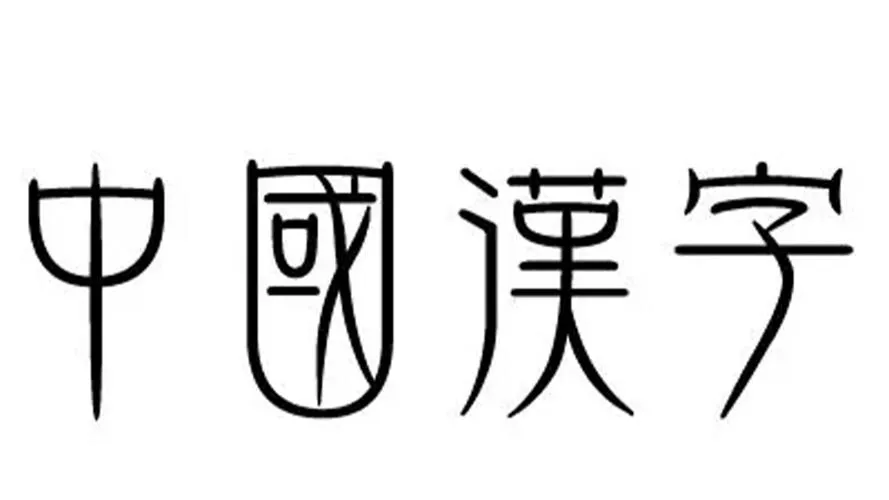
Traditional Chinese characters represent the original forms of the Chinese writing system, shaped and standardized over centuries of historical use. Many of these characters preserve complex structures that reflect their earliest pictographic or semantic origins, making them closely tied to the cultural and literary history of the Chinese language.
Before the mid-20th century, traditional characters were the standard written form used across the Chinese-speaking world. They remain in use today in regions such as Taiwan and Hong Kong, as well as in many overseas Chinese communities. Understanding traditional characters therefore offers insight not only into how Chinese is written, but also into how the language has evolved and been preserved over time.
Traditional vs. Simplified Chinese Characters: What’s the Real Difference?
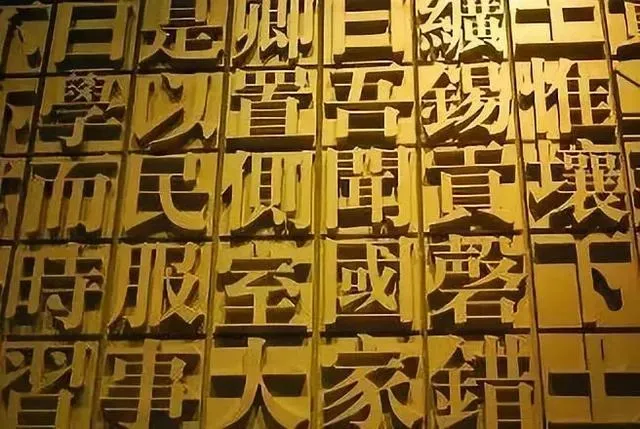
When people talk about traditional and simplified Chinese, they are referring solely to the written form of the language, not how Chinese is spoken. The distinction has nothing to do with pronunciation and everything to do with how Chinese is represented in writing.
China is linguistically diverse, with hundreds of spoken dialects. Because Chinese is not a phonetic language like those that use alphabetic systems, people across Mainland China write using the same set of characters regardless of which dialect they speak in daily life.
As a result, speakers of many mutually unintelligible dialects can write the same words using either simplified or traditional characters. These terms describe two parallel writing systems, not differences in speech or sound.
Do Taiwan and Hong Kong Use Traditional Characters?
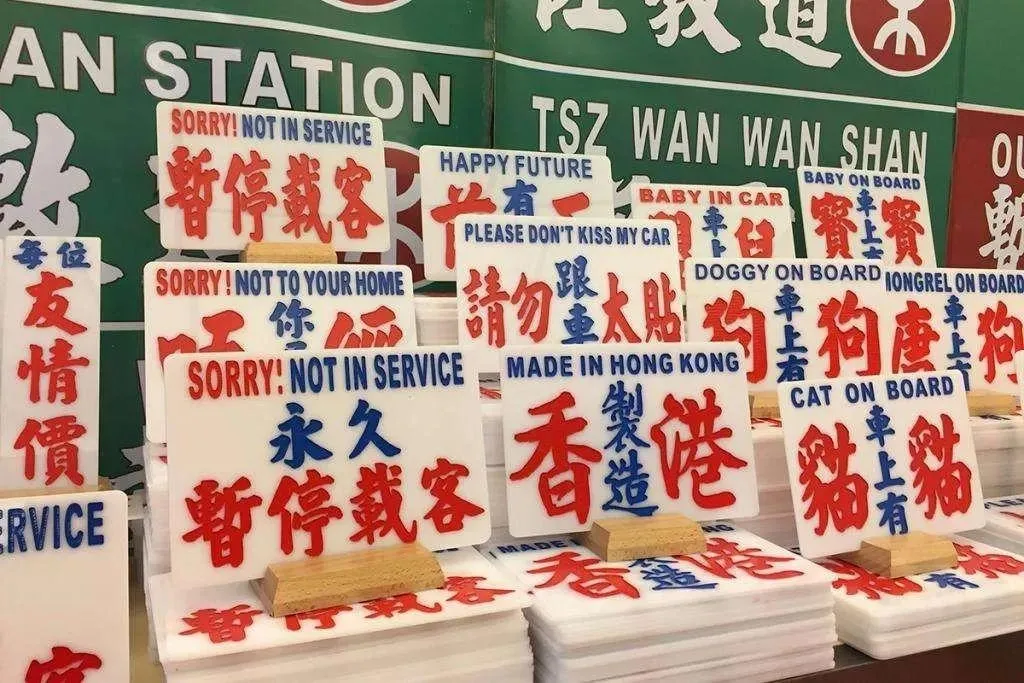
Since the 1950s, simplified Chinese characters have been officially adopted and widely used in Mainland China, both by the government and the general public. In contrast, Taiwan and Hong Kong have continued to use traditional Chinese characters as their standard writing system.
Many Chinese communities outside Mainland China also rely on traditional characters, particularly those formed by immigrants who left before the simplification reforms were introduced. As a result, traditional Chinese remains the dominant writing system in many Chinatowns around the world, where signage, menus, and publications often reflect older forms of written Chinese.
Simplified (简体) and Traditional (繁体) Chinese Characters
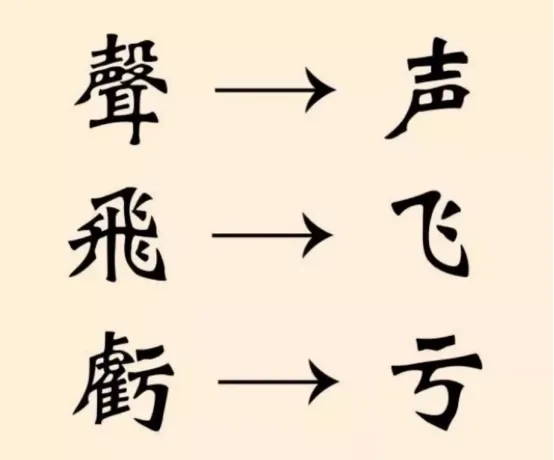
The term “Traditional Chinese” refers to written Chinese that uses the older, more complex forms of Chinese characters. In Mandarin, these characters are known as 繁体字 (fántǐzì) and are sometimes described as unsimplified characters in English-language contexts.
Beginning in the 1950s, the government of Mainland China introduced a series of writing system reforms aimed at simplifying Chinese characters. The primary motivation behind these changes was to improve literacy rates by reducing the difficulty of learning to read and write.
Character simplification focused largely on reducing the number of strokes required to write each character. By streamlining complex forms, the new characters were intended to be easier to memorize and faster to write. The results of this reform are known as simplified characters, or 简体字 (jiǎntǐzì).
To better understand how these two systems differ in practice, it helps to look at specific examples of traditional and simplified characters side by side.
Example Characters: Comparing Simplified and Traditional Forms
Looking at specific characters side by side is one of the most effective ways to understand how simplified and traditional Chinese differ. Some characters were only lightly modified, while others underwent more substantial changes.
Example 1: 龍 / 龙 (Dragon)
The character for “dragon” is a frequently cited example of simplification. In simplified Chinese, it is written as 龙 (lóng), while the traditional form is 龍.
| Simplified | Traditional |
|---|---|
| 龙 | 龍 |
The traditional character 龍 is visually complex and highly stylized, reflecting the dragon’s deep cultural significance in Chinese history and mythology. The simplified form 龙 dramatically reduces the number of strokes while preserving the overall shape and meaning.
This example highlights one of the main goals of simplification: reducing visual complexity while maintaining recognizability.
Example 2: 體 / 体 (Body)
Another clear comparison can be seen in the character for “body.” The simplified form is 体 (tǐ), while the traditional form is 體.
| Simplified | Traditional |
|---|---|
| 体 | 體 |
In the traditional character 體, multiple components combine to convey meaning, including elements related to physical form and structure. The simplified character 体 removes several of these components, resulting in a cleaner and more efficient form.
For learners, this often makes the simplified version easier to memorize and faster to write, especially at early stages.
Example 3: 語 / 语 (Language)
The character for “language” also demonstrates a common simplification pattern. In simplified Chinese, it is written as 语 (yǔ), while the traditional form is 語.
| Simplified | Traditional |
|---|---|
| 语 | 語 |
Both forms share the speech radical (讠 / 言), which signals a connection to speaking or language. The simplified version replaces the full 言 component with its abbreviated form 讠, a change applied consistently across many simplified characters.
This example shows how simplification often relied on systematic substitutions rather than one-off redesigns.
Example 4: 買 / 买 (Buy)
The character for “to buy” illustrates how simplification sometimes removed entire components. The simplified form is 买 (mǎi), while the traditional form is 買.
| Simplified | Traditional |
|---|---|
| 买 | 買 |
The traditional character 買 contains multiple components that historically related to trade and exchange. In the simplified form 买, these elements are removed or merged, producing a character that is much easier to write but less visually descriptive.
This kind of change is often cited in discussions about whether simplification sacrifices historical or semantic detail for efficiency.
What These Examples Show

Taken together, these examples demonstrate that simplification followed multiple strategies: reducing strokes, abbreviating recurring components, and standardizing handwritten forms. Some traditional characters retain visual clues to meaning or history, while simplified characters emphasize speed, consistency, and accessibility.
For learners, understanding these patterns can make either system easier to approach and less intimidating.
Chinese Radicals
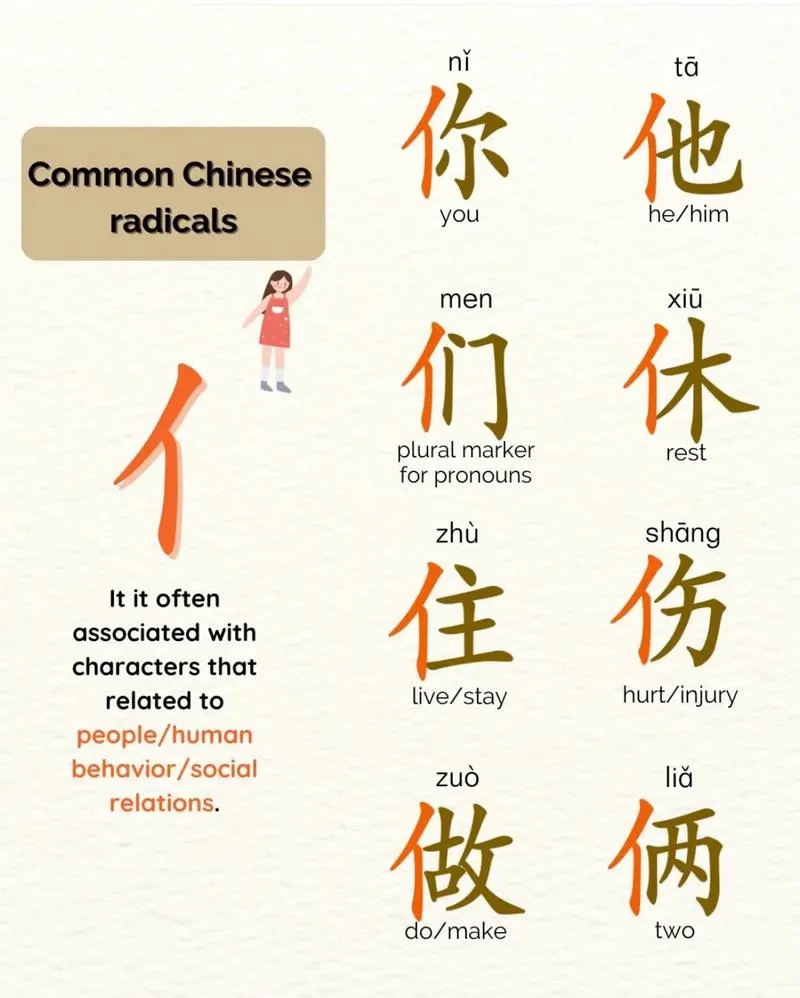
For learners who began with simplified Chinese, traditional characters can sometimes feel challenging. One reason is that the simplification process used multiple methods, rather than a single, consistent rule, to modify traditional forms.
That said, simplification was not entirely random. In many cases, reformers applied consistent changes to common radicals. For example, traditional characters that include the radical 車 were almost always written using its simplified form 车 (chē, “vehicle”) in simplified Chinese. Recognizing these recurring substitutions can make it easier to relate simplified characters back to their traditional forms.
However, there is no foolproof way to reconstruct a traditional character simply by looking at its simplified version, or vice versa. Some characters were altered in ways that are not immediately predictable, which means direct one-to-one conversion is not always possible.
Fortunately for learners, not all characters were simplified. Many characters remained unchanged because they already contained relatively few strokes and were considered easy to write. These unchanged characters are known as 传承字 (chuánchéngzì), or “inherited characters.”
The existence of 传承字 explains why learners who have only studied simplified Chinese may still recognize portions of traditional texts, such as newspapers in Taiwan or Hong Kong, even if they cannot read every character with ease.
At the end of this article, you’ll find a table of the 100 most common simplified and traditional Chinese characters. Characters that appear identical in both columns are examples of 传承字.
Traditional vs. Simplified Chinese: An Ongoing Educational Debate
In recent years, the question of whether Chinese language programs in the United States should teach traditional or simplified characters has become an increasingly prominent topic of discussion. While the debate is sometimes framed in cultural or political terms, it is more accurately understood as an educational and practical decision.
Educators and administrators from regions such as Taiwan and Hong Kong often advocate for the continued teaching of traditional characters. They emphasize the system’s deep historical roots and cultural significance, arguing that traditional forms preserve the original structure and meaning of Chinese characters.
On the other hand, many teachers, students, and parents with ties to Mainland China favor simplified characters. From this perspective, simplified Chinese is seen as more practical, particularly given Mainland China’s growing economic influence and the widespread use of simplified characters in modern media, education, and business.
In practice, simplified Chinese has become increasingly common in U.S. classrooms. A 2007 survey conducted by the Chinese Language Association of Secondary-Elementary Schools found that nearly 50% of schools taught only simplified characters, while 11% taught only traditional characters, and the remaining schools offered some combination of both systems.
This represented a significant shift from earlier decades. In 1994, approximately 40% of schools taught traditional characters, compared with just 17% that focused exclusively on simplified characters. Since then, the trend toward simplified Chinese instruction has continued to grow, reflecting changing global realities and learner priorities.
Which Script Should You Learn: Traditional or Simplified?

The choice between traditional and simplified Chinese characters largely depends on where you plan to use Chinese and how you intend to apply your language skills. For many learners whose goals involve living, working, or doing business in Mainland China, studying simplified characters is usually sufficient.
It is worth noting, however, that traditional characters have not disappeared entirely from Mainland China. They are still commonly seen in specific contexts, such as the names of universities, bookstores, historic landmarks, and cultural institutions. Traditional characters are also frequently used in branding and advertising, where they are associated with heritage, authenticity, and cultural depth.
Despite this continued presence, most people who plan to live and work on the Mainland find that simplified characters meet nearly all practical needs in daily life, education, and professional settings.
On the other hand, learning traditional characters is a logical choice for those planning to study, work, or reside in Taiwan or Hong Kong, where traditional writing remains the standard. Traditional characters are also particularly valuable for learners interested in pre-modern Chinese history, classical literature, or academic research, as they closely reflect the original forms used in classical Chinese texts.
Ultimately, both systems represent the same language. The most effective choice is the one that aligns best with your personal goals, location, and long-term interests.
Is Traditional Chinese the Same as Classical Chinese?
Despite common misconceptions, traditional Chinese characters 繁体字 (fántǐzì) and classical Chinese 文言文 (wényánwén) are not the same thing. They describe two entirely different aspects of the Chinese language.
The terms traditional and simplified refer solely to how individual characters are written, not to the language itself. Both traditional and simplified characters can be used to write modern vernacular Chinese 白话文. Regardless of which script is used, the vocabulary, sentence structure, and grammar remain identical. The only difference lies in the visual form of the characters.
Classical Chinese, by contrast, is a historical written language. It was used by scholars, officials, and intellectuals from ancient times up until the early 20th century. Unlike modern written Chinese, which is based on how people speak today, classical Chinese follows its own rules and conventions. It is concise, formal, and often highly condensed, making it quite different from any modern spoken variety of Chinese.
Because of this, classical Chinese is rarely used in full-length modern writing. However, it has not disappeared entirely. Elements of classical Chinese still survive in contemporary usage, most notably in idiomatic expressions known as 成语 (chéngyǔ). Many of these fixed expressions come directly from classical texts, which means that learners who study chéngyǔ are already encountering fragments of classical Chinese, often without realizing it.
Today, classical Chinese texts can be published using either traditional or simplified characters. In Mainland China, simplified characters are commonly used in textbooks and annotated editions, simply because modern readers are more familiar with them. This is true even though the original works were written using traditional characters 繁体字 (fántǐzì) and unchanged characters 传承字 (chuánchéngzì).
In short, traditional vs. simplified is a question of character form, while classical vs. modern Chinese is a question of language style and historical period. Understanding this distinction helps learners make sense of Chinese texts across different eras and regions.
New Perspectives from an Ancient Writing System
By this point, you should have a clear understanding of how simplified and traditional Chinese characters differ, as well as the historical reasons behind those differences. Learners who begin with simplified characters often find traditional forms more challenging at first, largely because of their greater visual complexity. Even so, becoming familiar with traditional characters is well worth the effort.

Studying traditional characters offers more than expanded reading ability. It provides valuable insight into the historical development of the Chinese writing system, showing how character form, meaning, and cultural values have evolved together over time. For many learners, this broader perspective leads to a deeper appreciation of Chinese characters as a sophisticated writing system in their own right, rather than merely symbols used to represent sound.
Simplified and Traditional Forms Compared
The table below highlights some of the most frequently used Chinese characters in modern written Chinese. Each entry shows the simplified form, its traditional equivalent, pīnyīn, and a core English meaning. Rather than listing every possible definition, meanings have been streamlined to the most common usage learners will encounter in daily reading.
| Simplified | Traditional | Pīnyīn | Core Meaning |
|---|---|---|---|
| 的 | 的 | de | possessive particle |
| 一 | 一 | yī | one |
| 是 | 是 | shì | to be |
| 不 | 不 | bù | not |
| 了 | 了 | le | completed action marker |
| 人 | 人 | rén | person |
| 我 | 我 | wǒ | I, me |
| 在 | 在 | zài | at, in |
| 有 | 有 | yǒu | to have; there is |
| 他 | 他 | tā | he |
| 这 | 這 | zhè | this |
| 为 | 為 | wéi | to do; for |
| 中 | 中 | zhōng | middle; in |
| 上 | 上 | shàng | above; on |
| 到 | 到 | dào | arrive; until |
| 说 | 說 | shuō | to speak |
| 国 | 國 | guó | country |
| 和 | 和 | hé | and |
| 也 | 也 | yě | also |
| 子 | 子 | zǐ | child |
| 时 | 時 | shí | time |
| 出 | 出 | chū | go out |
| 要 | 要 | yào | want; need |
| 下 | 下 | xià | below |
| 可 | 可 | kě | can; may |
| 你 | 你 | nǐ | you |
| 年 | 年 | nián | year |
| 生 | 生 | shēng | life; born |
| 会 | 會 | huì | can; meeting |
| 后 | 後 | hòu | after |
| 能 | 能 | néng | able to |
| 对 | 對 | duì | correct; toward |
| 家 | 家 | jiā | home; family |
| 天 | 天 | tiān | day; sky |
| 心 | 心 | xīn | heart; mind |
FAQ
Q: What is the main difference between simplified and traditional Chinese characters?
A: The difference lies only in how the characters are written. Simplified characters use fewer strokes, while traditional characters preserve older, more complex forms. The pronunciation and meaning remain the same.
Q: Are simplified and traditional Chinese different languages?
A: No. They are two writing systems for the same language. Both can be used to write modern Mandarin Chinese, and both represent the same words and grammar.
Q: Where are simplified Chinese characters used?
A: Simplified characters are primarily used in Mainland China and Singapore. They are also the most commonly taught system for Chinese learners worldwide.
Q: Where are traditional Chinese characters used?
A: Traditional characters are used in Taiwan, Hong Kong, and Macau, as well as by many overseas Chinese communities whose families emigrated before the 1950s.
Q: If I learn simplified Chinese, can I still read traditional characters?
A: Partially, yes. Many high-frequency characters are identical in both systems. However, full reading fluency in traditional texts requires additional study.
Q: Which writing system should beginners learn first?
A: This depends on your goals. Simplified Chinese is usually the most practical choice for beginners, especially if you plan to live or work in Mainland China. Traditional Chinese may be preferable for learners focusing on Taiwan, Hong Kong, or classical literature.