how to call father and mother in Chinese
Table of Contents [hide]
- Introduction to Chinese Kinship Terms for Parents
- How to Call Father in Chinese: Formal and Respectful Terms
- How to Call Father in Chinese: Common Everyday Terms
- Usage Scenarios for Father Terms: When to Use Which
- How to Call Mother in Chinese: Formal and Respectful Terms
- How to Call Mother in Chinese: Common Everyday Terms
- Usage Scenarios for Mother Terms: Context Matters
- Chinese Family Titles Reflect Filial Piety
- Quick Reference Table: Chinese Words for Mom and Dad
- FAQ
Introduction to Chinese Kinship Terms for Parents
In Chinese culture, how to call father and mother in Chinese is far more than a linguistic exercise—it’s a reflection of respect, hierarchy, and relational awareness embedded in daily life. Unlike English’s relatively uniform ‘mom’ and ‘dad’, Chinese family titles carry precise meaning based on generation, gender, formality, regional background, and even context—making Chinese family titles essential tools for navigating relationships. For instance, the most common term for father is bàba (爸爸, /bā bā/), used affectionately by children and widely accepted in casual settings like home or family gatherings. In more formal or respectful contexts—such as speaking to elders in front of others or writing letters—you might hear fùqin (父亲, /fù qīn/), a literary, honorific term meaning ‘father’. Some regions use yéye (爷爷, /yé ye/) for paternal grandfather—but notably, this is *not* used for one’s own father; confusing these can cause unintended offense. Similarly, mother is most often called māma (妈妈, /mā mā/) at home, over meals, or when seeking comfort. In formal speech or written documents, mǔqin (母亲, /mǔ qīn/) conveys solemn reverence—common in speeches, obituaries, or academic discussions about family structure. Regional variants also matter: in parts of southern China, āyí (阿姨, /ā yí/) may refer to mother among certain dialect groups, while niáng (娘, /niáng/) appears in classical poetry and northern dialects, carrying poetic or nostalgic weight. These distinctions reveal how Chinese kinship terms for parents function as social grammar—guiding tone, distance, and duty. Whether greeting relatives during Spring Festival, introducing parents to a partner, or filling out official forms, choosing the right Chinese words for mom and dad signals emotional closeness, cultural fluency, and ethical awareness. Understanding family members in Chinese language isn’t just about vocabulary—it’s about learning when to soften tone with bàba, when to elevate it with fùqin, and how small phonetic shifts mirror big values. Ultimately, how Chinese people call parents is rooted in xiào (孝, /xiào/), the Confucian virtue of filial piety—where language itself becomes an act of care. Speaking respectfully isn’t optional; it’s daily practice—honoring not only the person, but the role they embody in the family’s moral architecture.
How to Call Father in Chinese: Formal and Respectful Terms
When learning how to call father and mother in Chinese, mastering formal and respectful terms for ‘father’ is essential—not only for accuracy but for cultural appropriateness. In Mandarin, the most universally accepted formal term for one’s own father is fùqīn (父亲), pronounced with the fourth tone on fù and first tone on qīn. This term carries deep respect and is commonly used in writing, formal speeches, official documents, or when addressing elders in ceremonial contexts—such as during weddings, ancestral rites, or public introductions. It is also appropriate when referring to someone else’s father in polite conversation: *‘Zhè shì wǒ de fùqīn.’* (This is my father.) *‘Nín de fùqīn hǎo ma?’* (How is your father?) A second formal variant is bàba (爸爸), pronounced with the fourth tone on bà and light, neutral tone on ba. Though widely used in daily life—even by adults—it remains respectful and warm, especially in semi-formal settings like family gatherings with relatives or phone calls to older relatives. Unlike fùqīn, bàba is rarely used in written formal reports but appears frequently in literature, media, and education materials teaching Chinese family titles. For generational distinction, yéye (爷爷) — pronounced with the third tone on yě and light tone on ye — refers specifically to one’s *paternal grandfather*, not one’s father. Confusing this is common among beginners; remember: yéye = father’s father, never father himself. Similarly, wài yé (外爷), with the fourth tone on wài and third tone on yě, denotes maternal grandfather—but again, neither is a term for ‘father’. These distinctions reflect the precision embedded in Chinese kinship terms for parents and highlight why context matters deeply in how Chinese people call parents. In everyday usage, choosing between fùqīn and bàba depends on setting: use fùqīn in a university essay about family structure, during a formal toast at a banquet, or when speaking to a teacher about your family background; reserve bàba for calling your father on the phone, introducing him to friends, or writing a heartfelt WeChat message. Both are correct Chinese words for dad—but their tones, tones marks, and social weight differ meaningfully.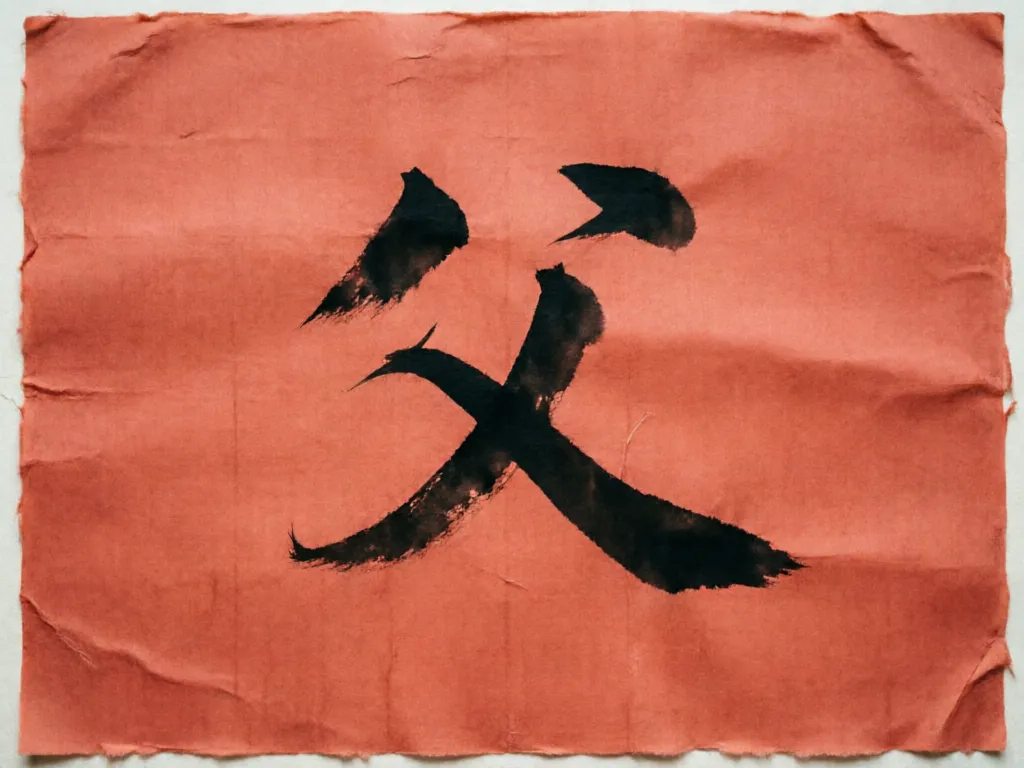 Understanding these terms is more than linguistic—it’s an entry point into Chinese values. At the heart of Chinese family titles lies *xiào* (孝), or filial piety: the ethical duty to honor, obey, and care for one’s parents and elders. This principle shapes speech, behavior, and intergenerational relationships across centuries. Using respectful terms like fùqīn isn’t just politeness—it’s a quiet affirmation of that enduring bond. When learners choose the right word—and pronounce its tones correctly—they don’t just name a family member; they participate, however modestly, in a living tradition of reverence. Learn more: Programs | Browse All Programs in One Place - RPL School.
How to Call Father in Chinese: Common Everyday Terms
When learning how to call father and mother in Chinese, the term for father is often the first kinship word beginners master — and it’s rich with nuance. The most common, universally understood informal term is bàba (爸爸), pronounced with a falling tone on both syllables (bà = fourth tone, ba = neutral tone). It’s warm, affectionate, and used daily by children of all ages — whether calling across a room (“Bàba, wǒ yào chī guǒzi!” — “Dad, I want fruit!”) or signing a birthday card. In formal or respectful contexts — like introducing your father to elders or teachers — many add a polite suffix: bàba remains standard, but some say bàba hǎo (爸爸好, “Hello, Dad”) as a gentle greeting. Regional variation adds texture to Chinese family titles. In parts of northern China — especially Shandong, Hebei, and Beijing — you’ll frequently hear yéye (爷爷) used *not* for grandfather (its standard meaning), but as an intimate, colloquial term for father. Yes — context matters! When a child in Jinan says “Yéye, bāng wǒ kāi mén!” (“Dad, help me open the door!”), they’re addressing their father, not their paternal grandfather. This usage relies heavily on local speech patterns and family habit — so while it’s widespread among older generations and rural families, younger urbanites may find it charmingly old-fashioned. Pronounce yéye with a rising tone on the first syllable (yé = second tone) and a light, clipped second syllable (ye = neutral tone). Other everyday variants include bābā (爸爸), with doubled ‘a’ — slightly more playful or tender, often used by toddlers or in writing (e.g., text messages: “Bābā, jīntiān wǒ dé le xiǎohónghuā!” — “Dad, I got a little red flower today!”); and lǎobǎ (老爸), literally “old dad”, a lighthearted, modern term popular among teens and young adults — think of saying “Hey, Old Man!” with a grin. It carries warmth, not disrespect, and appears frequently in WeChat chats or casual dinner-table banter. Understanding these terms helps learners grasp how Chinese people call parents not just linguistically, but relationally: tone, repetition, regional roots, and social setting all shape meaning. Whether you’re practicing with a language partner, writing a letter home, or preparing to meet your partner’s family, choosing the right Chinese words for mom and dad signals cultural awareness and emotional attunement. And remember — family members in Chinese language aren’t labeled in isolation; each title reflects position, generation, and respect. That’s why Chinese kinship terms for parents are never merely vocabulary — they’re living expressions of connection.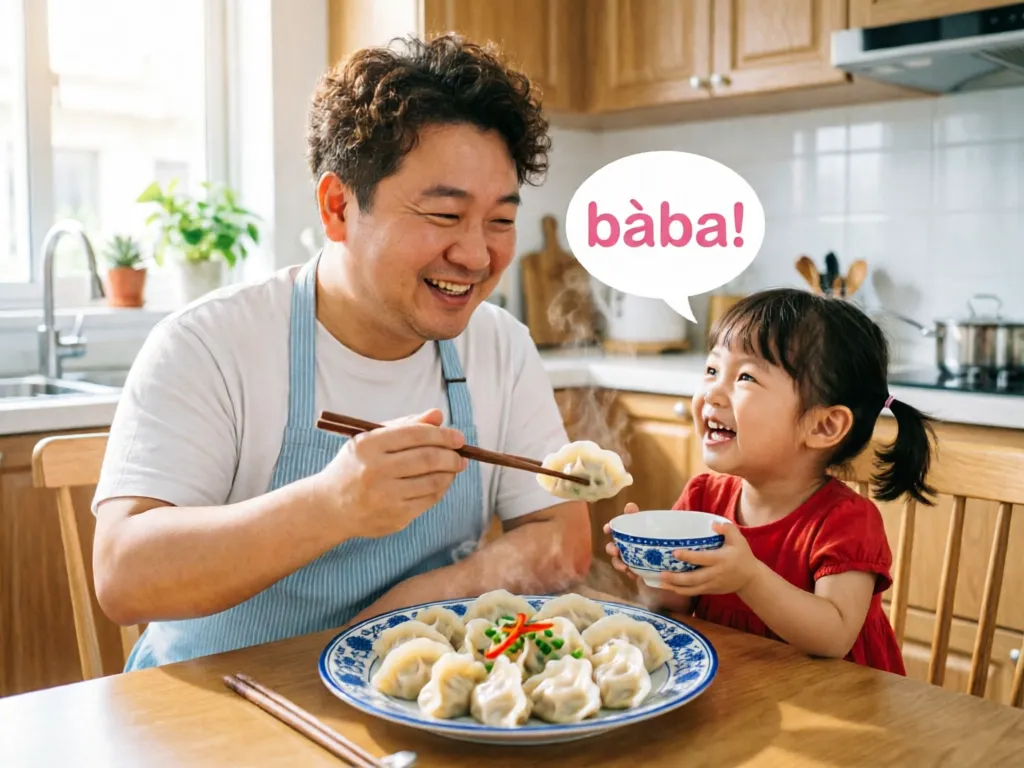 This deep-rooted relational awareness ties directly to Confucian-influenced filial piety (xiào, 孝): the ethical cornerstone that values care, obedience, gratitude, and reverence toward one’s parents. In daily life, it shows up quietly — answering calls promptly, serving tea before elders, remembering birthdays without prompting — not as rigid duty, but as heartfelt practice. How Chinese people call parents is, in essence, how they honor them.
Usage Scenarios for Father Terms: When to Use Which
When learning how to call father and mother in Chinese, understanding context is essential—especially for fathers, whose titles shift dramatically based on formality, audience, and setting. For father, the two most common terms are bàba (爸/爸, informal, affectionate) and fùqīn (父亲, formal, respectful). In daily life at home—eating dinner, joking around, or asking for advice—you’ll almost always hear bàba (pronounced “bah-bah”, with a rising tone on the first syllable and flat on the second). It’s warm, intimate, and used by children of all ages—even adults calling their dad while video-calling from abroad. When introducing your father to friends or colleagues, you’d still say bàba, but add a polite modifier: *“Zhè shì wǒ bàba”* (“This is my dad”).In contrast, fùqīn (foo-chin, with falling then rising tones) appears in formal writing—like wedding invitations, official documents, or condolence letters—or when speaking respectfully in front of elders or authority figures. For example, if your grandfather asks about family matters, replying *“Wǒ fùqīn jīntiān qù gōngsī le”* (“My father went to the office today”) signals deference and maturity. Rarely used in casual speech, fùqīn carries the weight of traditional Chinese family titles and reflects deep-rooted respect.
A third term, yéye (yeh-yeh), means “paternal grandfather”, but note: some regional dialects (e.g., Shanghainese or Hokkien-influenced families) may use variants like bàfu (bah-foo) or lǎobà (laow-bah) among older generations—though these are increasingly rare in Mandarin-speaking urban households. Always match the term to your listener: use bàba with peers, siblings, or your own children; switch to fùqīn in speeches, academic essays, or when addressing teachers or community leaders about your family.
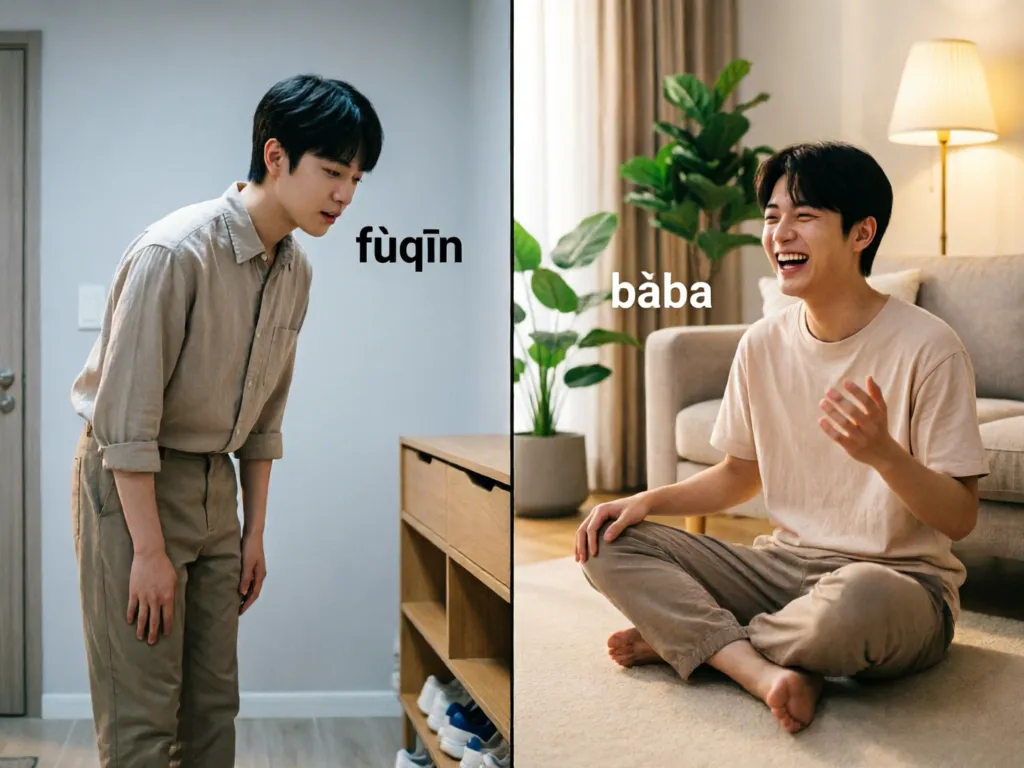
For mothers, parallel distinctions apply: māma (mah-mah, soft and familiar) dominates home life—calling her across the kitchen, texting “Māma, wǒ huíjiā chīfàn!” (“Mom, I’m coming home for dinner!”), or whispering secrets. In formal contexts—such as signing a legal consent form or writing a tribute for Mother’s Day—you’d use mǔqīn (moo-chin, with falling then rising tones), aligning with the gravity of Chinese kinship terms for parents. Regional alternatives like nǎinai (for maternal grandmother) or dialectal forms (e.g., āyí in parts of Fujian) exist but aren’t standard Mandarin. Crucially, how Chinese people call parents isn’t just linguistic—it’s relational. Choosing bàba over fùqīn, or māma over mǔqīn, silently communicates closeness, humility, or reverence.
This precision reflects the core of Chinese孝道 (xiào dào)—filial piety—a foundational value where language itself becomes an act of care. Using the right term honors hierarchy, expresses gratitude, and reinforces intergenerational bonds. It’s not about rigid rules, but mindful resonance: whether handing tea to your māma at breakfast or bowing slightly while addressing your fùqīn before elders, each word carries quiet devotion. That’s how family members in Chinese language stay connected—not just by blood, but by breath, tone, and intention.
How to Call Mother in Chinese: Formal and Respectful Terms
When learning how to call father and mother in Chinese, understanding the formal and respectful terms for ‘mother’ is essential—not just linguistically, but culturally. The most standard formal term is mǔqīn (母亲), pronounced with the third tone on mǔ (mǔ) and first tone on qīn (qīn). This term literally means “mother-kin” and is widely used in written contexts—such as official documents, letters, speeches, or academic writing—and in solemn oral settings like memorial ceremonies or formal introductions. It conveys deep respect without regional or generational bias, making it a cornerstone of Chinese family titles. A second formal yet historically evocative term is niángqīn (娘亲), with first tone on niáng (niāng) and first tone on qīn (qīn). Though less common in modern daily speech, niángqīn carries classical resonance—it appears frequently in Ming–Qing dynasty literature, opera, and historical dramas, where it expresses tender reverence, often in emotionally charged moments (e.g., a child reuniting with a long-lost mother). Today, some educated speakers use it deliberately in poetic or ceremonial contexts, such as wedding vows or ancestral rites, to evoke cultural continuity. It’s important to note that neither mǔqīn nor niángqīn is used for casual address at home. You won’t hear a teenager say “Mǔqīn, wǒ yào chī fàn!” (“Mother, I want to eat!”)—that would sound stiff or even theatrical. Instead, these terms appear in writing, formal speeches, or when referring to one’s mother *in the third person*: “Wǒ de mǔqīn shì yī wèi lǎo shī.” (“My mother is a teacher.”) In contrast, everyday spoken Chinese relies on affectionate, colloquial forms like māma (妈妈, māma, first tone + light tone) or regional variants like nǎinai (奶奶, nǎinai, third tone + fourth tone) in parts of Northern China—but those belong to informal registers, not this section’s focus on formality and respect. Understanding these distinctions helps learners navigate real-life usage: use mǔqīn when drafting a thank-you letter to your host family’s mother; choose niángqīn when reciting a traditional poem during Qingming Festival; and avoid both when ordering dumplings at the dinner table. These Chinese kinship terms for parents aren’t mere vocabulary—they’re linguistic vessels carrying centuries of filial awareness. Indeed, the very precision of Chinese family titles reflects a broader cultural value: xiào (孝), or filial piety—the ethical bedrock that shapes how Chinese people call parents, honor elders, and understand intergenerational duty. Respect isn’t just shown in action; it’s encoded in tone, character, and context.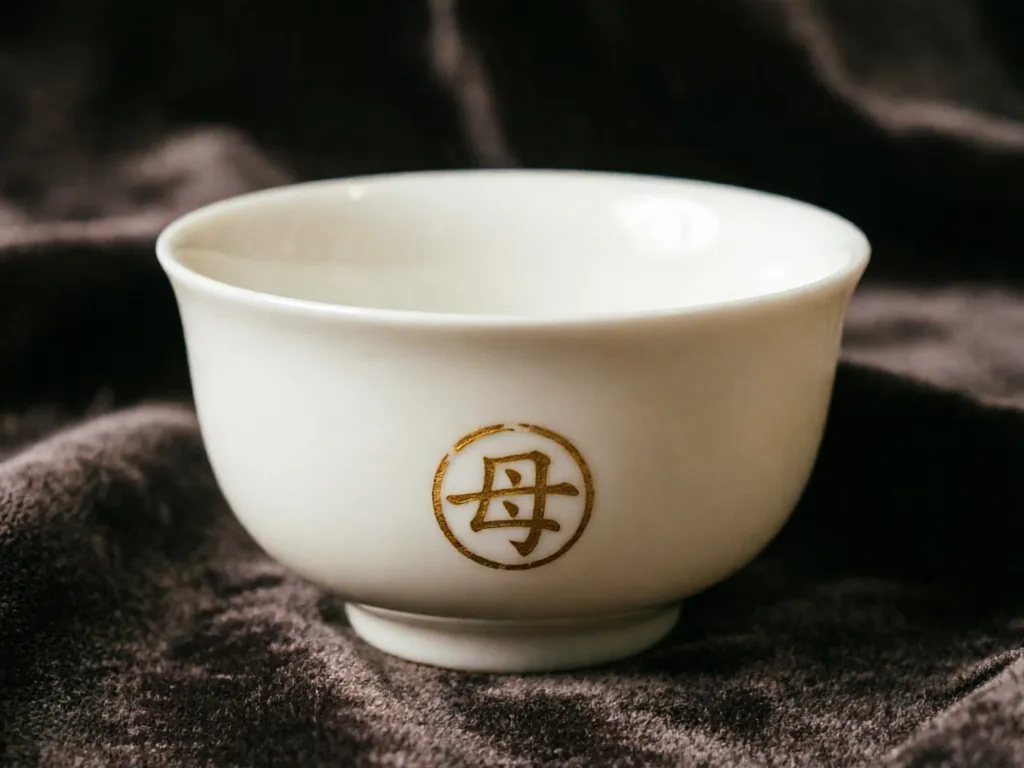 Learn more: Study Chinese | Programs & Services - RPL School.
How to Call Mother in Chinese: Common Everyday Terms
When learning how to call father and mother in Chinese, understanding the terms for ‘mother’ is essential—and rich with nuance. The most common, universally understood term is māma (妈妈), pronounced with a high, level first tone on both syllables (mā mā). It’s warm, neutral, and appropriate for children and adults alike—used daily at home, over video calls, or when introducing your mother to friends: *‘Zhè shì wǒ māma.’* (This is my mom.) A slightly more casual variant is mā (妈), with just one first-tone syllable—favored by teens and adults in relaxed settings, like texting (*‘Mā, wǒ huí jiā le!’*) or calling out across the kitchen. Tone accuracy matters: saying *má* (second tone) sounds like ‘hemp’, and *mǎ* (third tone) means ‘horse’—so always aim for clear, level *mā*. In some northern regions, especially among older generations or in rural communities, you might hear nǎi nǎi (奶奶) used affectionately for ‘mom’—but be cautious: this term *usually* means ‘paternal grandmother’, so context and regional familiarity are key. Less common but still heard in southern dialect-influenced speech are variants like māmā (with extra emphasis) or playful reduplications like māmā mā (‘Mommy-mom’) among very young children. When speaking to others about your mother—not directly to her—you’d use wǒ māma (my mom) or tā māma (his/her mom); avoid using just *māma* without a possessive pronoun in third-person reference, as it can sound abrupt. These Chinese family titles reflect deep cultural values: unlike English, where ‘mom’ often stands alone, Chinese kinship terms for parents almost always embed relational context—ownership, respect, and role. This ties directly to how Chinese people call parents: it’s rarely just naming—it’s affirming connection. Whether you’re practicing tones aloud, writing pinyin with tone marks (mā, māma), or choosing between formal and tender address, each choice signals care and awareness.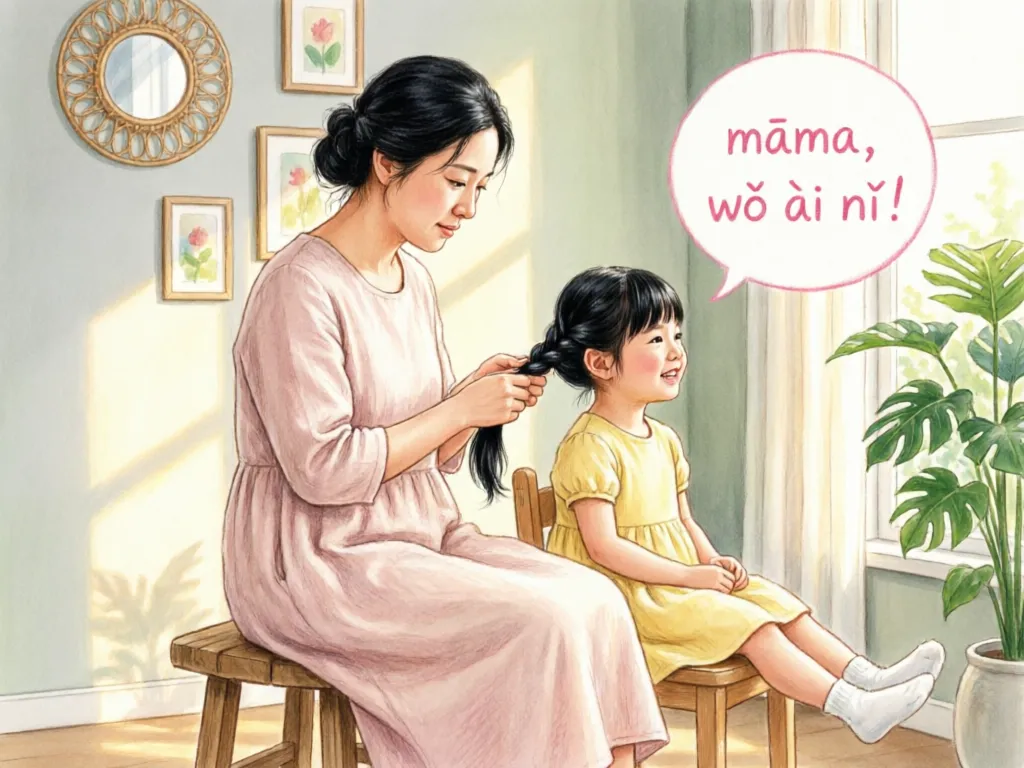 Finally, these everyday Chinese words for mom and dad sit within a broader framework of filial piety (*xiào*, 孝)—a cornerstone of Chinese ethics. Respecting elders isn’t abstract; it’s woven into language itself: the care in pronunciation, the warmth in repetition, the humility in using honorifics like *māma* instead of nicknames. Calling your mother *māma*, not just ‘Ma’, is a quiet act of reverence—a reminder that family members in Chinese language aren’t just labeled, they’re honored.
Usage Scenarios for Mother Terms: Context Matters
When learning how to call father and mother in Chinese, understanding the precise usage of mother terms is essential—context shapes both tone and respect. For everyday, warm, and informal interactions—especially with young children or during relaxed family moments—‘māma’ (妈 妈, /mā ma/) is overwhelmingly preferred. It’s soft, rhythmic, and affectionate; parents often use it when comforting toddlers, singing lullabies, or greeting their child after school. In contrast, ‘mā’ (妈, /mā/) is the clipped, efficient version—common in quick phone calls ('Mā, I’m running late!'), text messages, or when multitasking in the kitchen. Its brevity signals familiarity and comfort, not distance. Then there’s ‘mǔqīn’ (母 亲, /mǔ qīn/), a formal, literary term reserved for ceremonial or written contexts: graduation speeches, wedding toasts, official letters, or essays about family values. Using ‘mǔqīn’ in casual speech would sound stiff or even ironic—like saying ‘maternal parent’ at dinner. Less common but still meaningful is ‘niáng’ (娘, /niáng/), historically used in northern dialects and classical literature; today, it appears poetically (e.g., folk songs) or regionally (Shandong, Henan), sometimes evoking nostalgia or rural roots. How Chinese people call parents reflects deep cultural awareness—not just grammar, but relational nuance. A university student might text ‘Mā, I’ll be home Friday’ (using ‘mā’), then switch to ‘Māma’ during a joyful video call showing off her new internship badge, and finally write ‘To my beloved mǔqīn’ in a handwritten thank-you letter accompanying a birthday gift. These shifts aren’t arbitrary; they mirror Confucian-influenced expectations of appropriateness (yí, 宜)—choosing the right term for the right time, audience, and medium. Even among siblings, you’ll hear ‘māma’ when speaking *to* Mom, but ‘mǔqīn’ when speaking *about* her respectfully in front of elders. This sensitivity extends across all Chinese family titles: each term carries unspoken weight about closeness, hierarchy, and occasion. Understanding these distinctions helps learners avoid missteps—like using ‘mǔqīn’ to order takeout (‘Mǔqīn, please bring noodles!’ would raise eyebrows) or calling a grandparent ‘māma’ (a term strictly for one’s own mother). Ultimately, how to call father and mother in Chinese isn’t just vocabulary—it’s an entry point into Chinese kinship terms for parents, where language becomes a quiet act of care. This care is rooted in xiào (孝), the foundational Confucian virtue of filial piety: honoring parents through attentive listening, respectful address, and consistent action—not grand gestures, but daily choices like choosing ‘māma’ over ‘mā’ when your mother looks tired, or writing ‘mǔqīn’ in a card to signal that this moment matters.Chinese Family Titles Reflect Filial Piety
Chinese family titles reflect filial piety not through abstract ideals, but in the precise, context-sensitive words used every day—especially when addressing father and mother. How to call father and mother in Chinese is never merely about vocabulary; it’s a daily enactment of respect, hierarchy, and care. For father, common terms include ‘bàba’ (爸爸, informal, affectionate—used by children and adults alike in casual settings), ‘fùqīn’ (父亲, formal and literary—common in writing, speeches, or when speaking respectfully to elders or in solemn contexts), and ‘yéye’ (爷爷) *only* when referring to one’s paternal grandfather—not father—but this distinction underscores how carefully Chinese kinship terms for parents avoid ambiguity. In daily life, a child might say ‘Bàba, wǒ xiǎng chī miàn!’ (Dad, I want noodles!) at the dinner table, while an adult may begin a wedding toast with ‘Gǎnxiè fùqīn de xīn kǔ yǔ bāo róng’ (Thank you, Father, for your hard work and tolerance).For mother, the equivalents are equally nuanced: ‘māma’ (妈妈, warm and everyday—used across generations at home), ‘mǔqīn’ (母亲, formal and reverent—often found in essays, memorial inscriptions, or public addresses), and ‘nǎinai’ (奶奶) refers exclusively to the *maternal* grandmother—again highlighting how Chinese words for mom and dad embed relational clarity. A teenager texting her mom might write ‘Māma, wǒ huí jiā le’ (Mom, I’m home!), whereas in a university graduation speech, she might say ‘Wǒ yǒngyuǎn gǎn jī mǔqīn de wú sī fùchū’ (I will forever cherish Mother’s selfless sacrifice). These distinctions aren’t linguistic quirks—they’re grammatical expressions of duty.
This precision extends to other family members in Chinese language: uncles, aunts, and cousins all have distinct terms based on generation, lineage (paternal vs. maternal), age order, and marital status—no English-style ‘uncle’ or ‘aunt’ shortcuts allowed. Such specificity ensures that each person’s role—and the responsibilities tied to it—is unmistakable. When Chinese people call parents, they don’t just name a relationship; they affirm their place within a moral framework where speech itself is ethical action.
At its core, this system embodies xiào (孝)—filial piety—not as passive obedience, but as active, attentive stewardship. It means remembering which title fits which setting, using ‘bàba’ to comfort and ‘fùqīn’ to honor, choosing ‘māma’ to share joy and ‘mǔqīn’ to express solemn gratitude. In modern China, even amid urbanization and global influence, these Chinese family titles remain deeply alive—not fossilized relics, but living tools that shape how children listen, how adults speak up, and how elders feel seen. To learn how to call father and mother in Chinese is, ultimately, to begin understanding how language carries love, duty, and continuity in every syllable.
Quick Reference Table: Chinese Words for Mom and Dad
| Term | Pinyin | Usage Context |
|---|---|---|
| Father | bàba (informal) bèi bei (childlike, affectionate) | At home with young children; casual family talk |
| Mother | māma (informal) mèi mei (playful, toddler speech) | Daily address at home; used when speaking to or about one’s mother |
| Respectful Terms | fùqīn (father) mǔqīn (mother) | Formal writing, speeches, or honoring elders publicly |
| In Chinese culture, filial piety (xiào) is foundational—honoring parents through respectful language, care, and duty reflects deep-rooted moral values passed across generations. | ||